Puzzle Bookmill · runs in your browser
Puzzle books, made and checked, ready to print.
Pick the puzzles, the paper size and how hard. Puzzle Bookmill makes every puzzle, solves each one again to check it, lays the book out on real pages and hands over the files a printer asks for.
Puzzle Bookmill runs in a browser now, and is being tried out by its first few users. It is not on sale yet, and there is no date for that.
No key yet? Write to hello@bookpublishingsystems.com and ask to be one of the first users.
- 151kinds of puzzle and math practice
- Age 2 upbooks for toddlers, children and grown-ups
- 5steps, from an empty book to its files
- Everypuzzle solved again, to check it
Real pages
Straight off the press.
Every page here was made by Puzzle Bookmill, for a practice book. Nothing was drawn for this site. Press one to see it larger.
Which pages to show
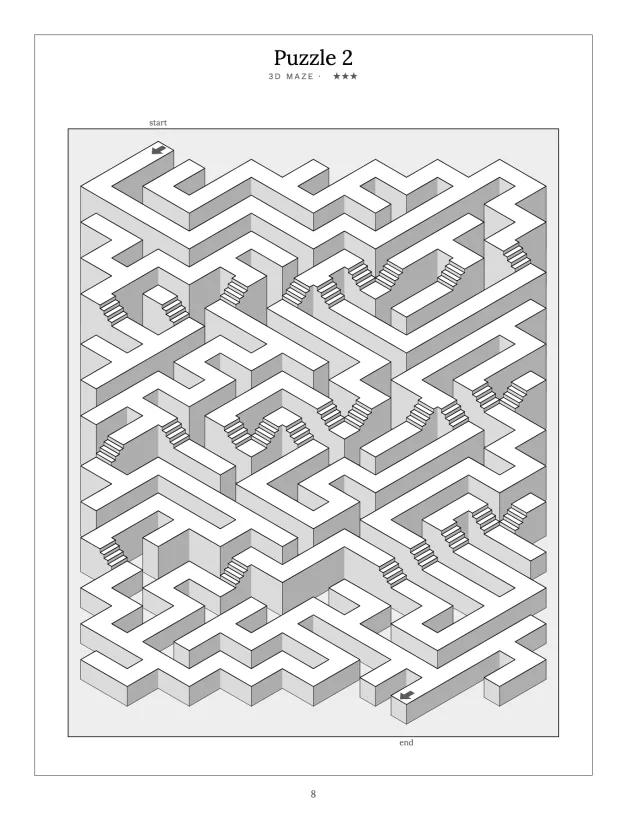 3D mazeMazes and drawing
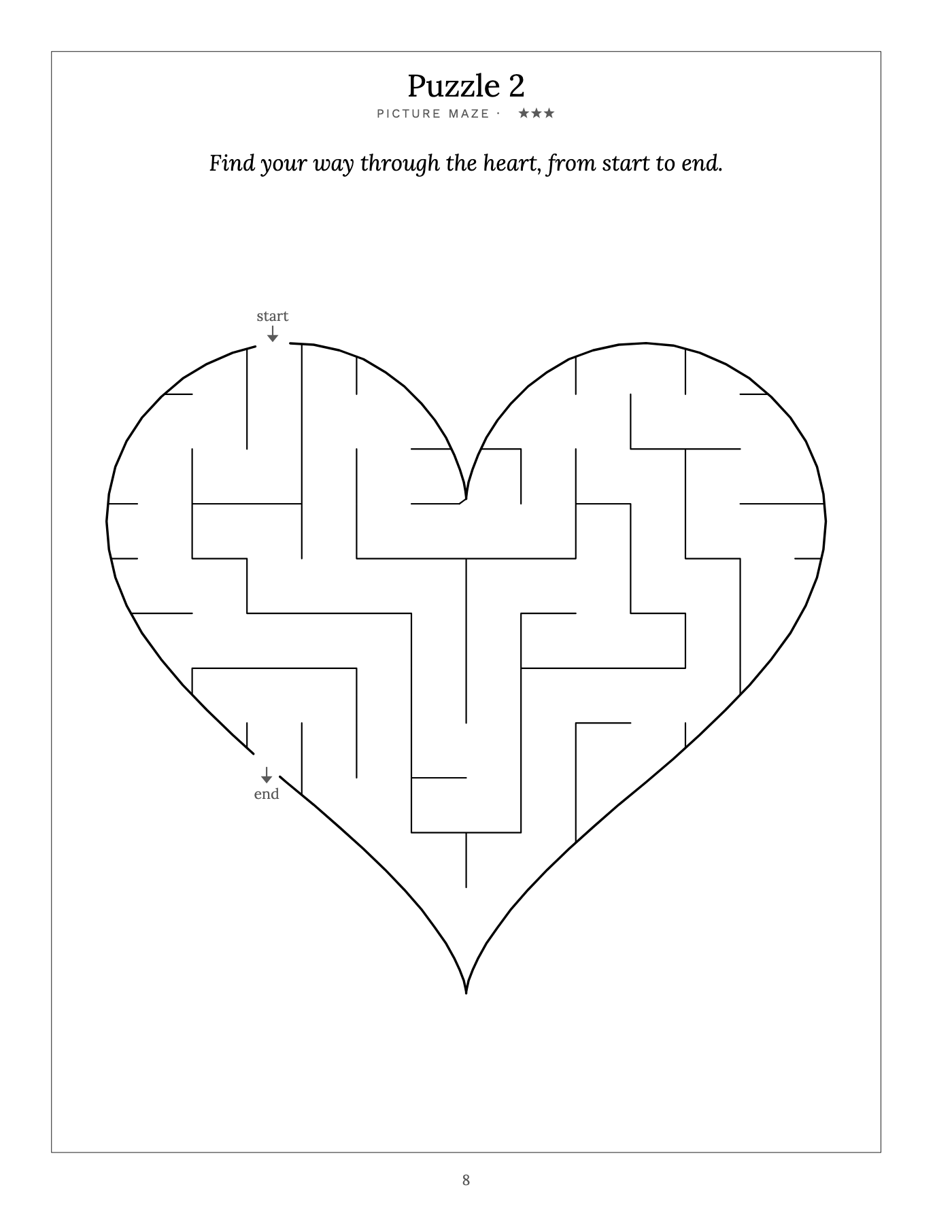
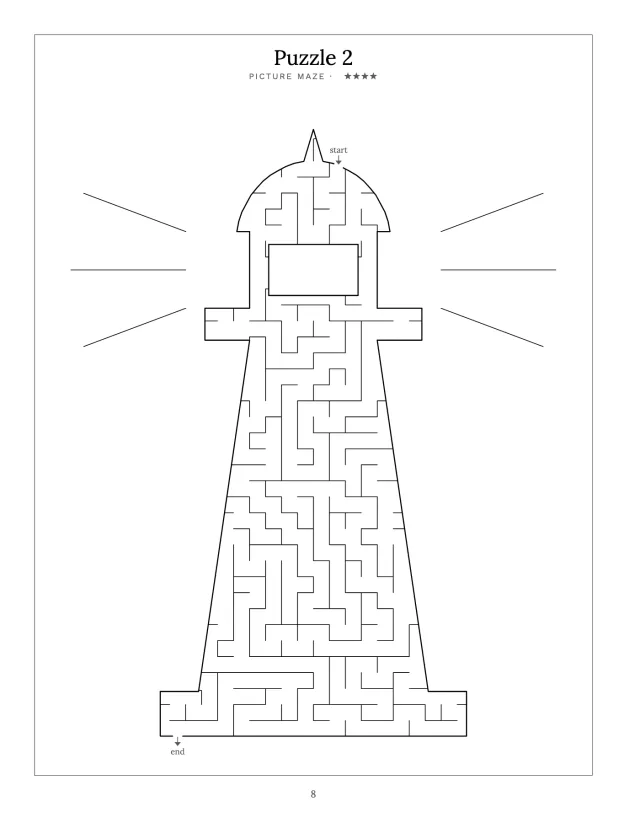 Picture mazeMazes and drawing
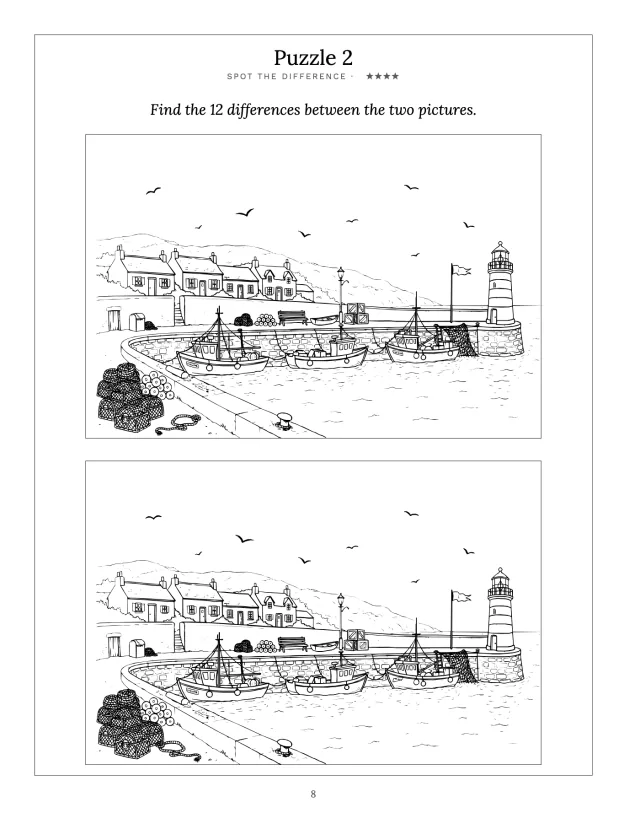 Spot the differenceMazes and drawing
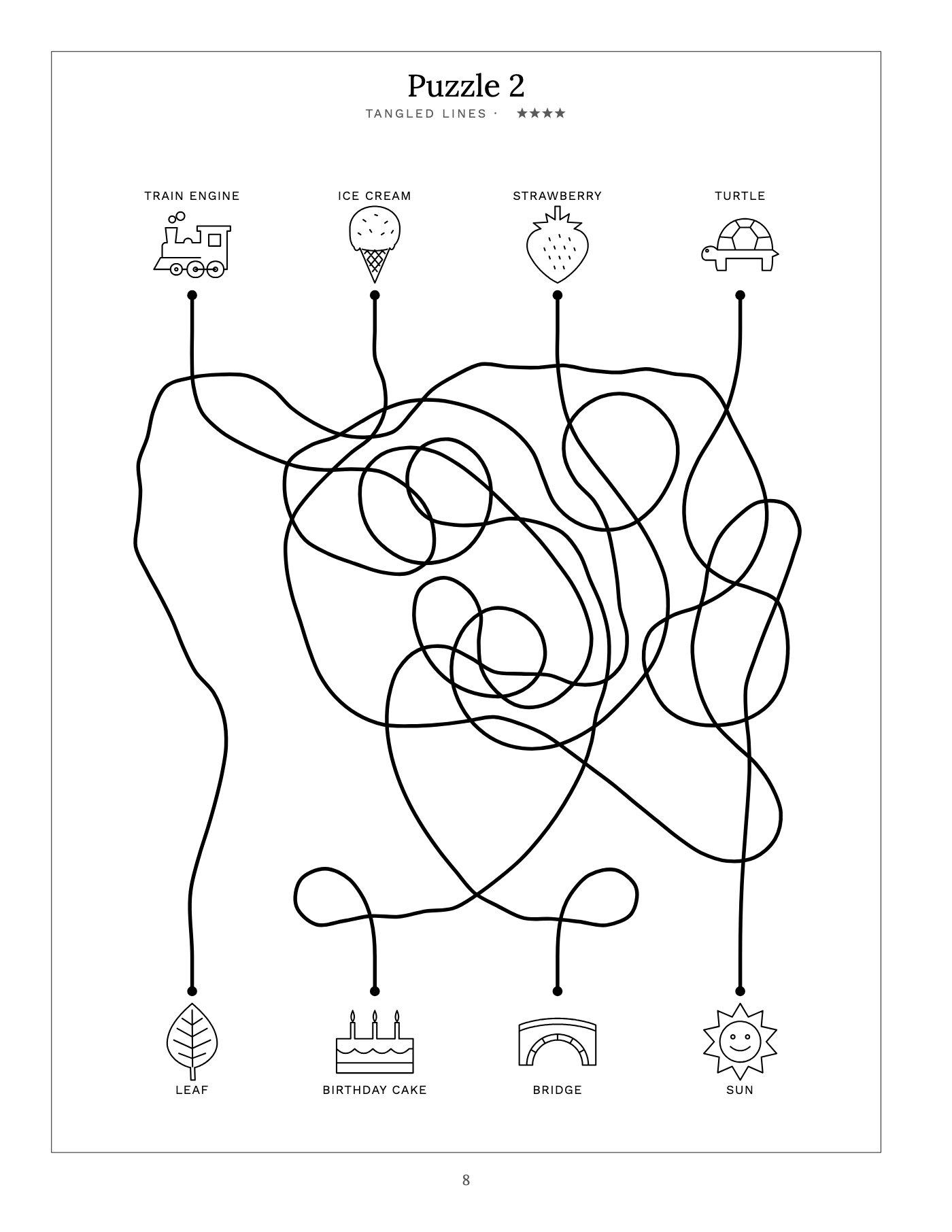
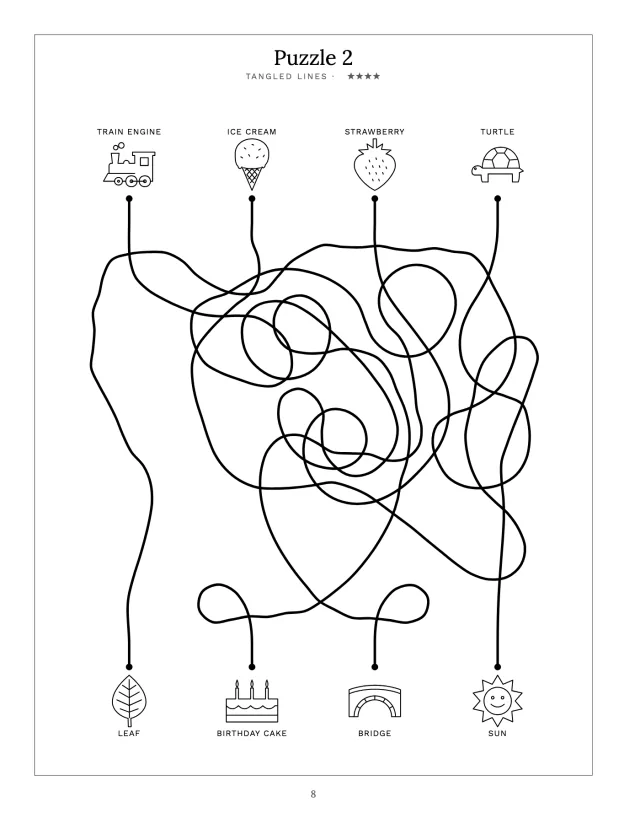 Tangled linesMazes and drawing
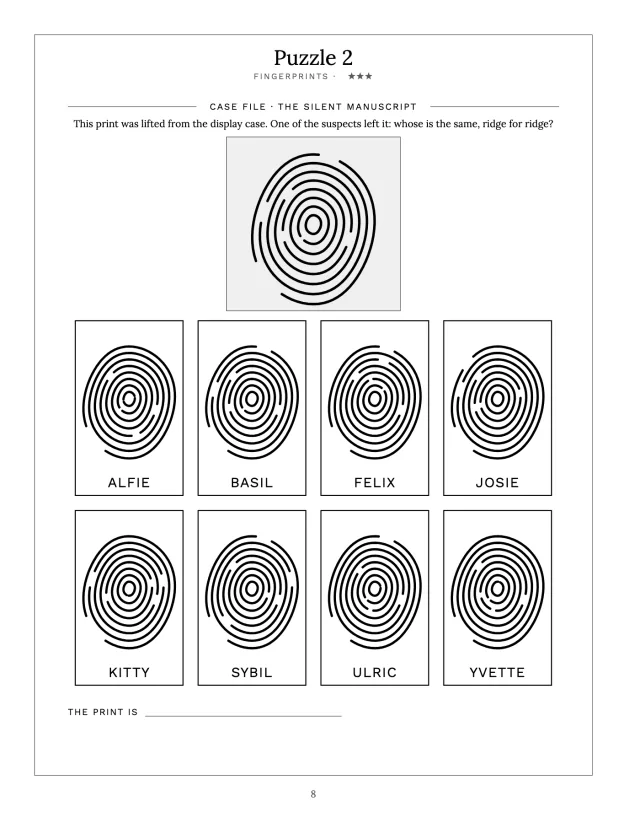 FingerprintsDetective
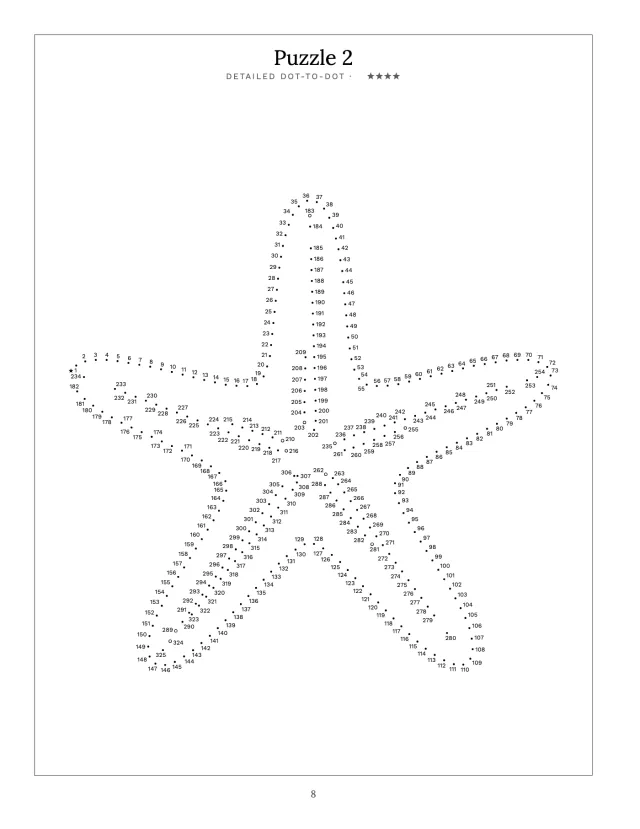 Detailed dot-to-dotMazes and drawing
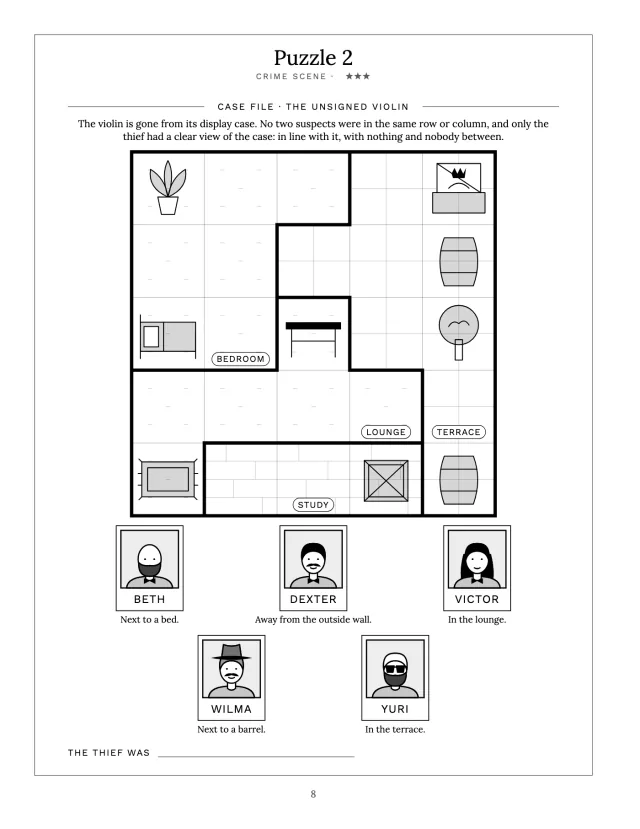 Crime sceneDetective
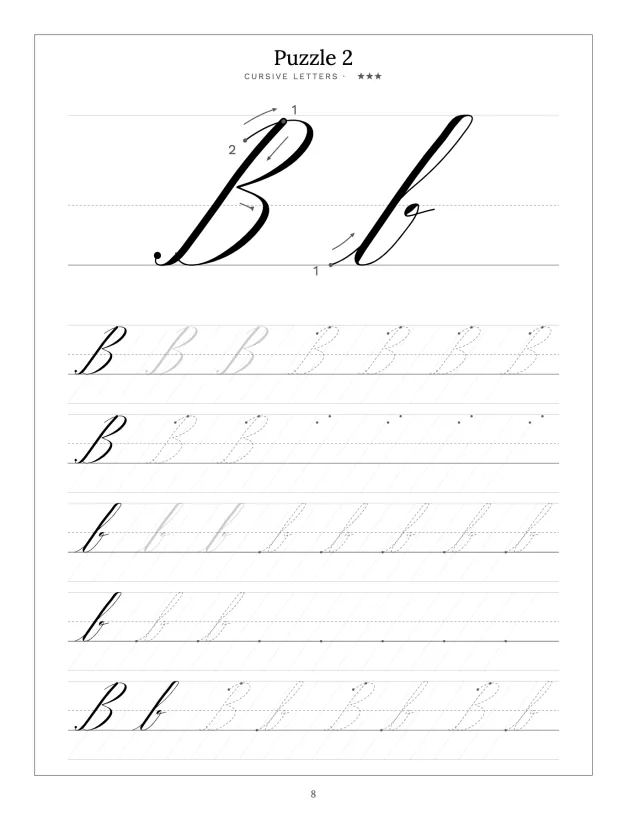 Cursive lettersMazes and drawing
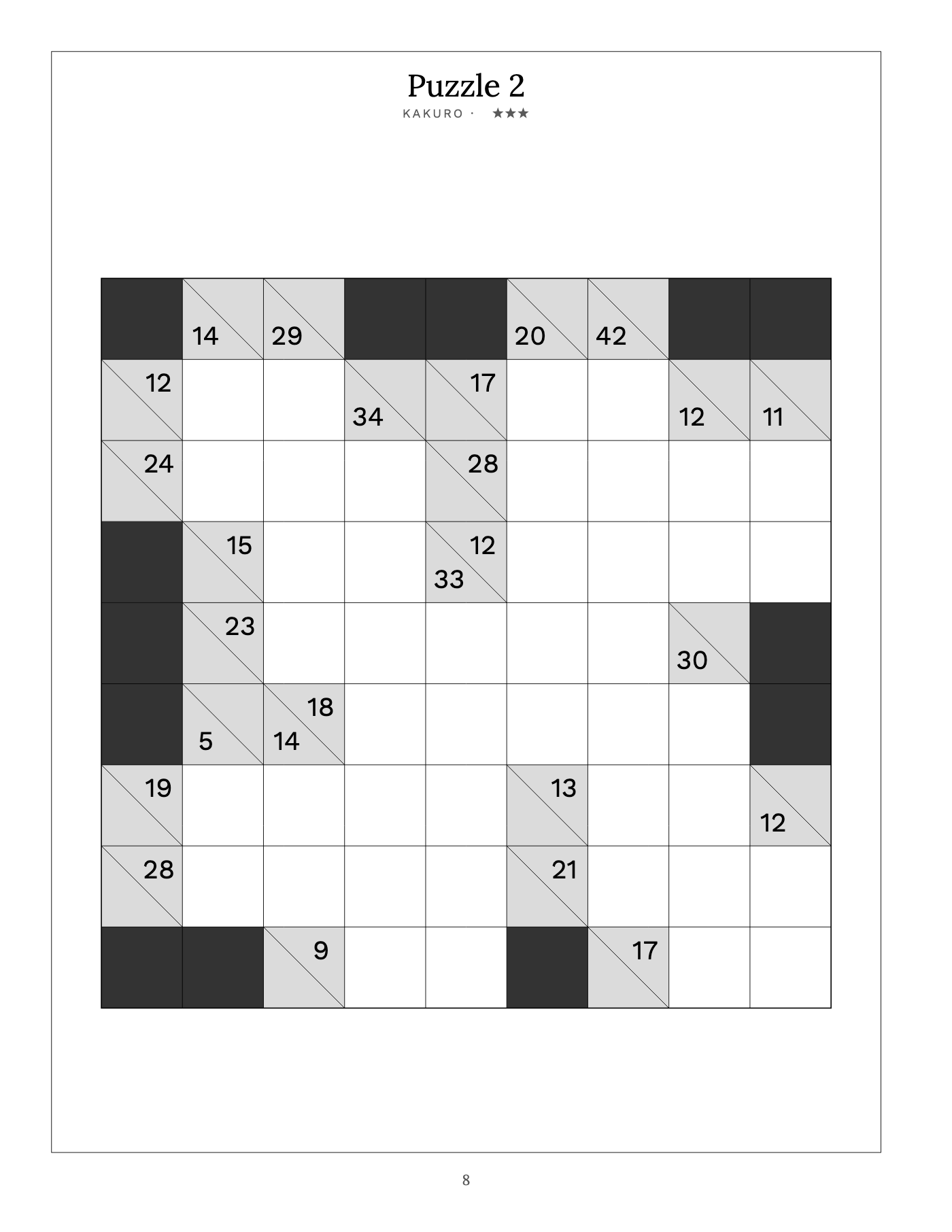
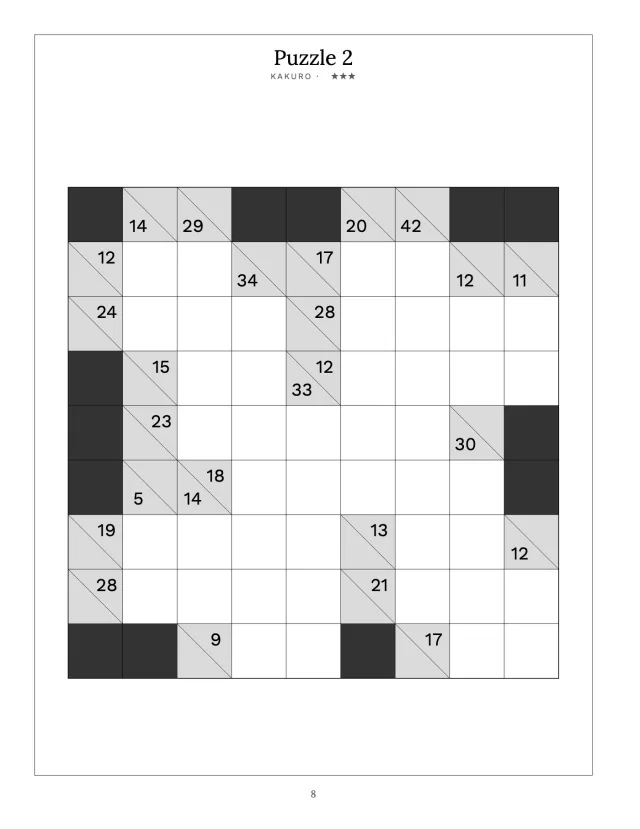 KakuroWords and numbers
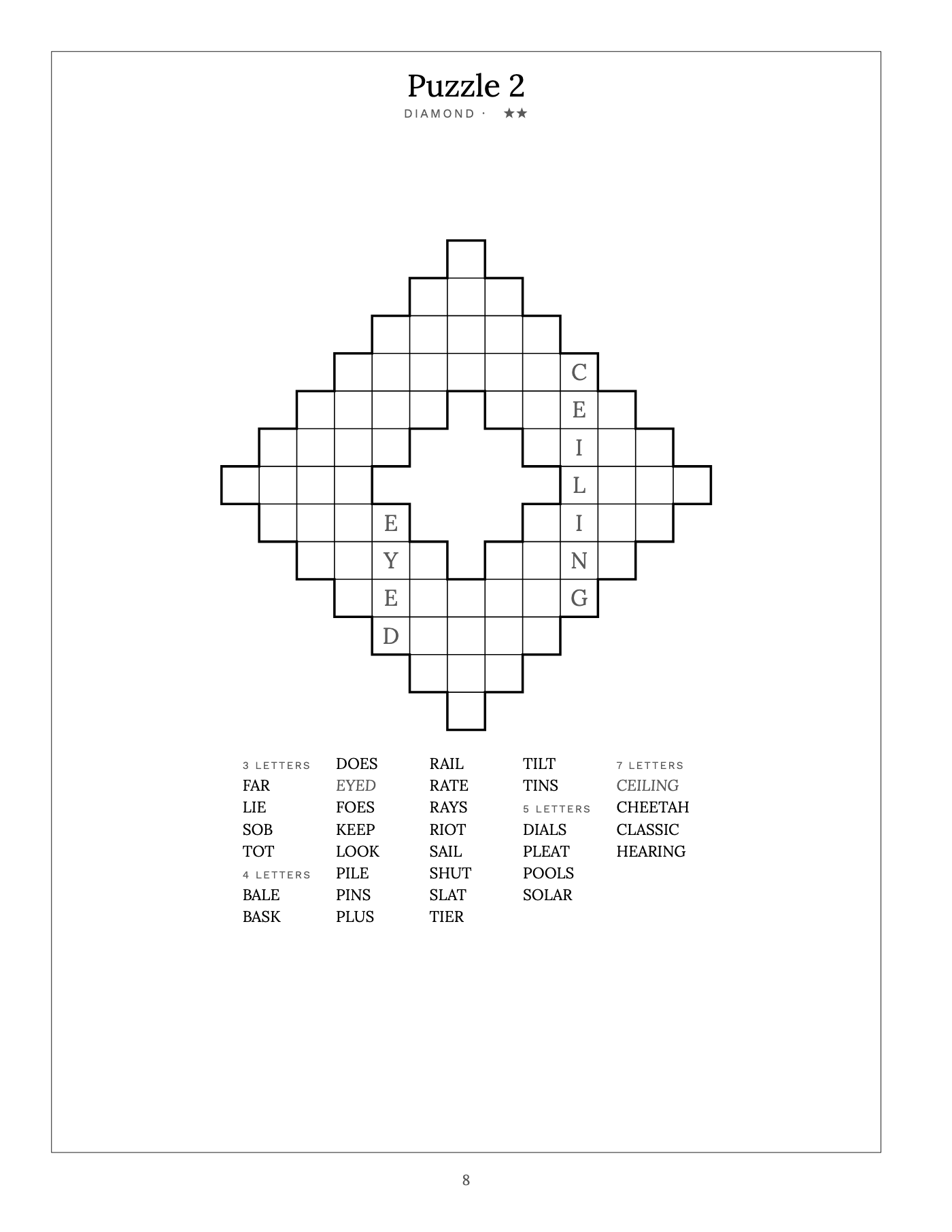
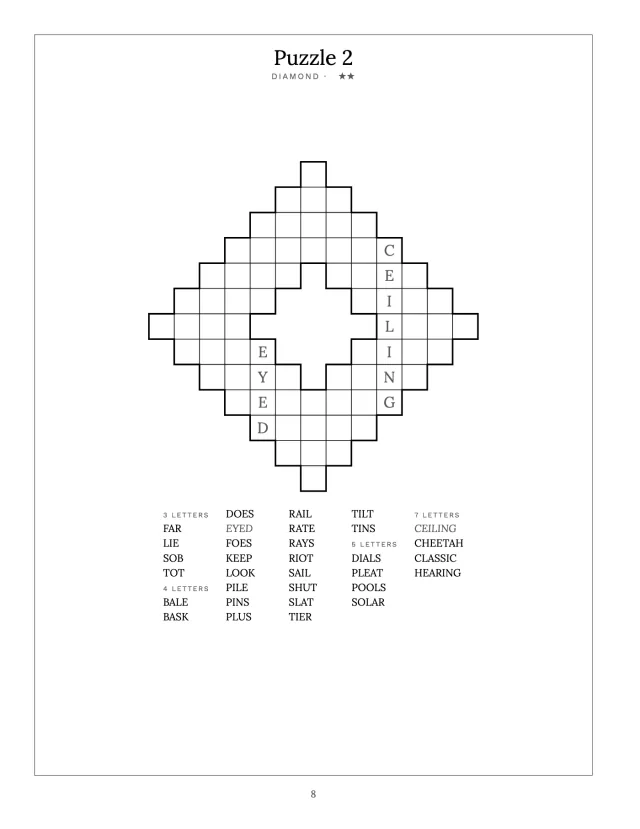 Shape fill-inWords and numbers
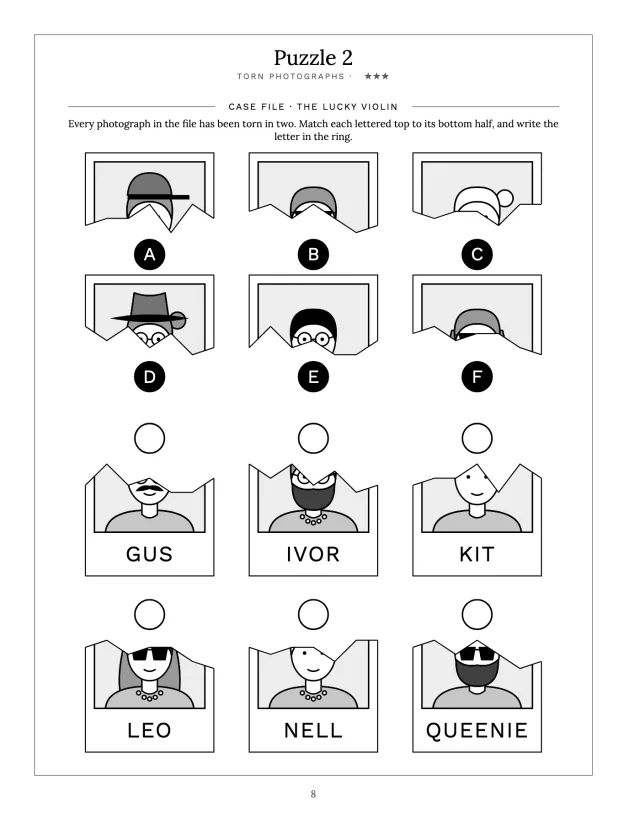 Torn photographsDetective
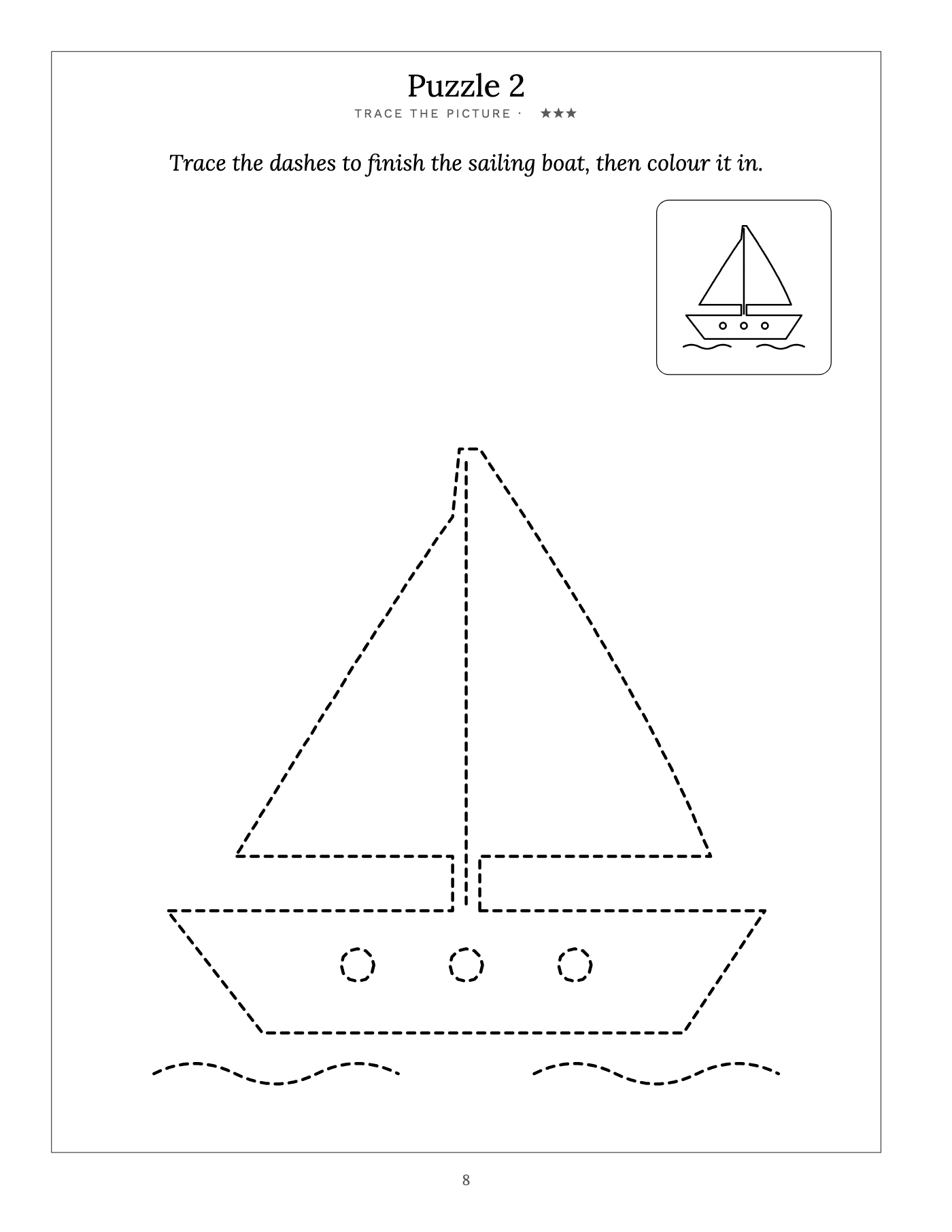
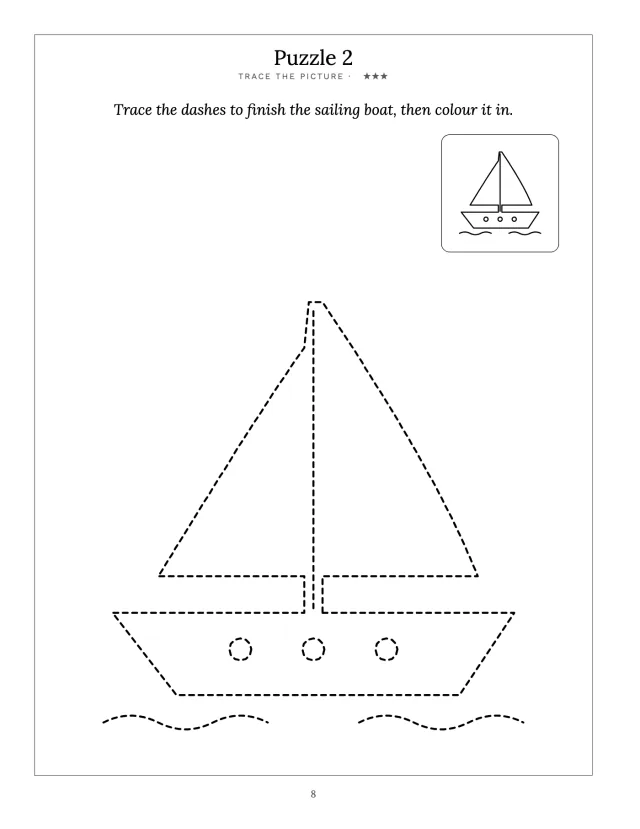 Trace the pictureFor children
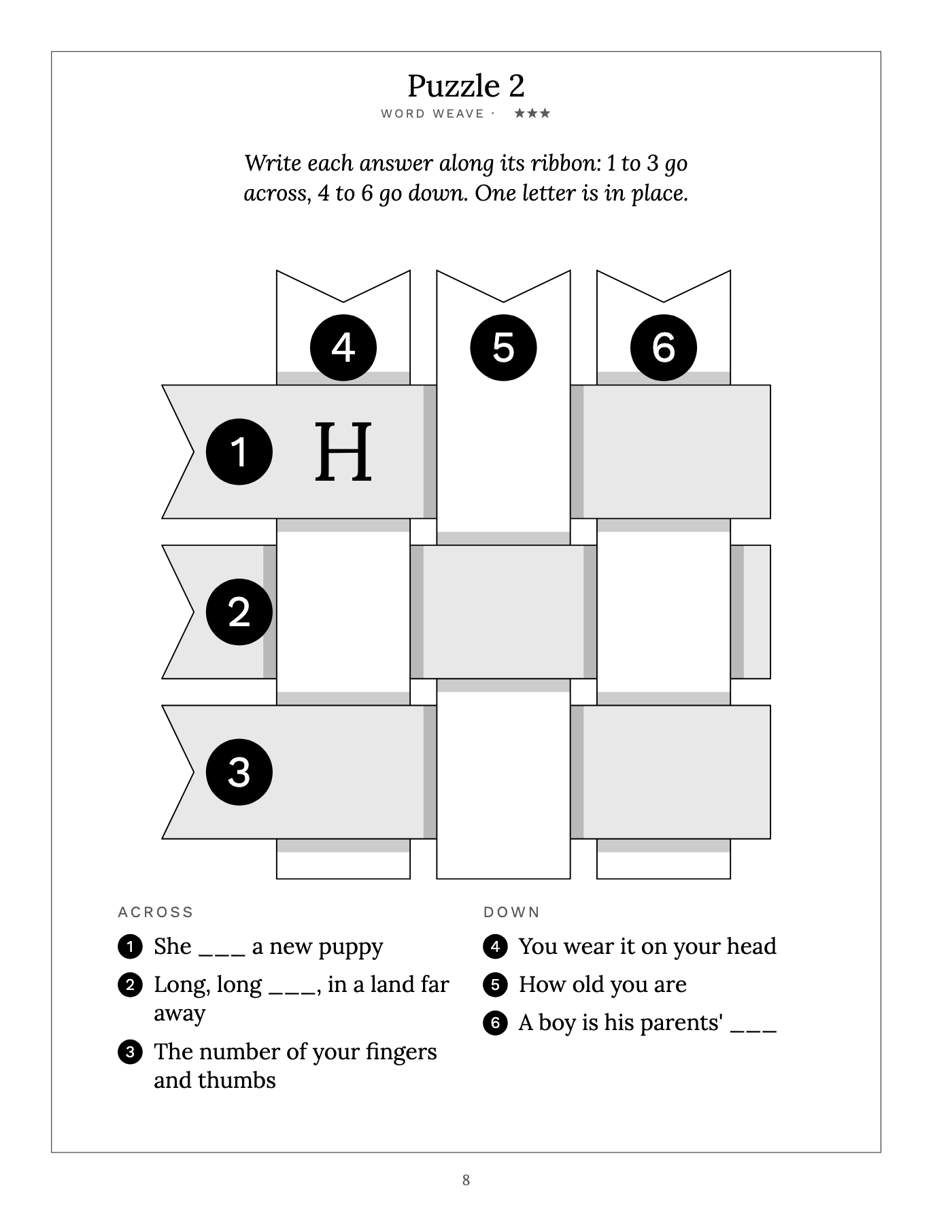
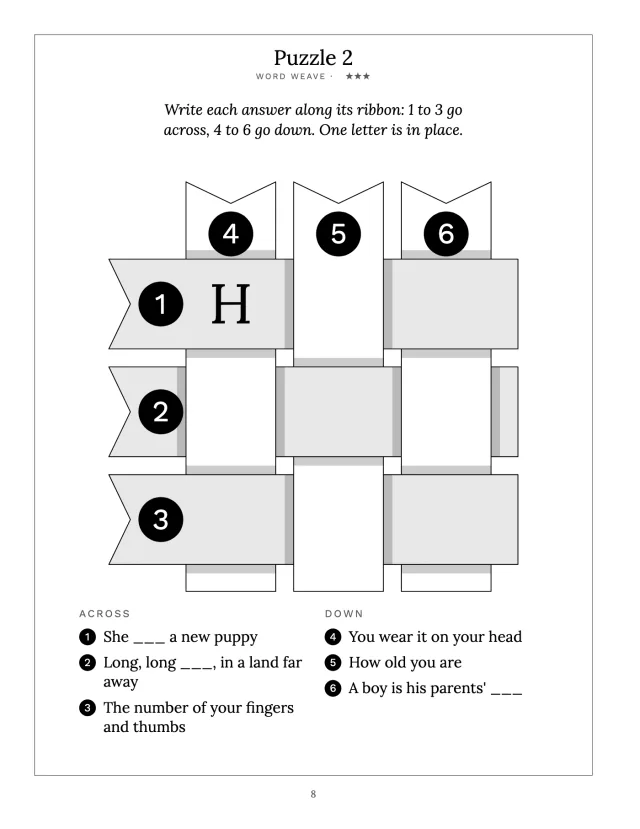 Word weaveFor children
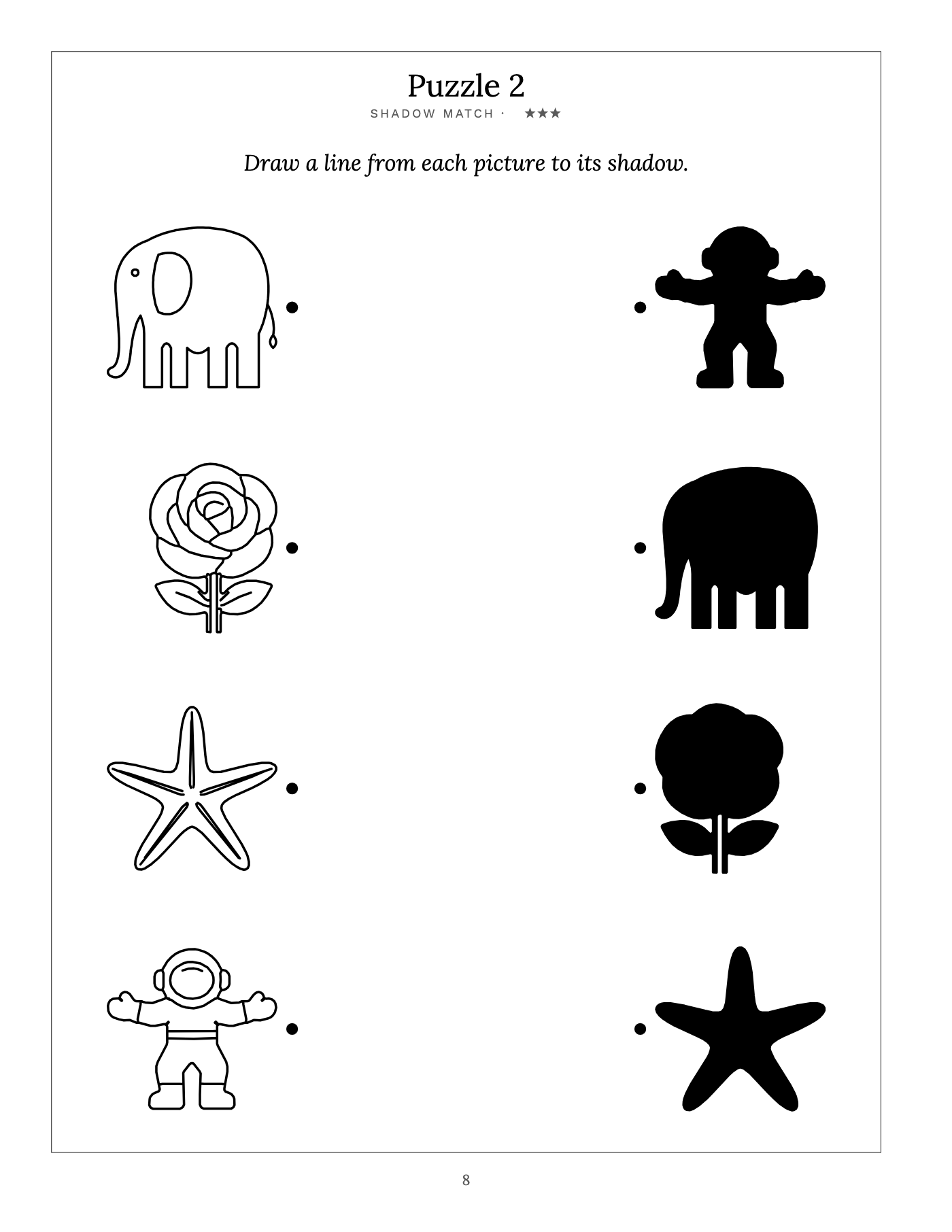
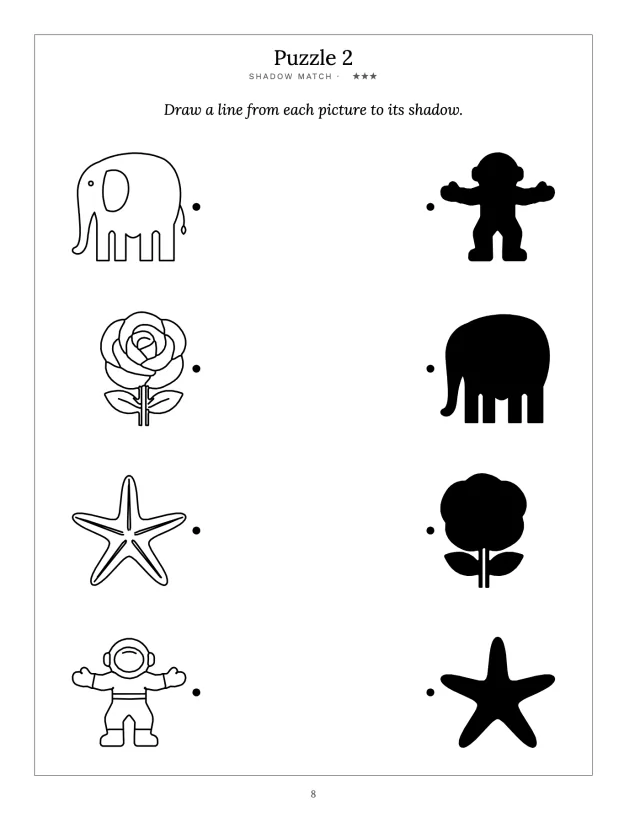 Shadow matchFor children
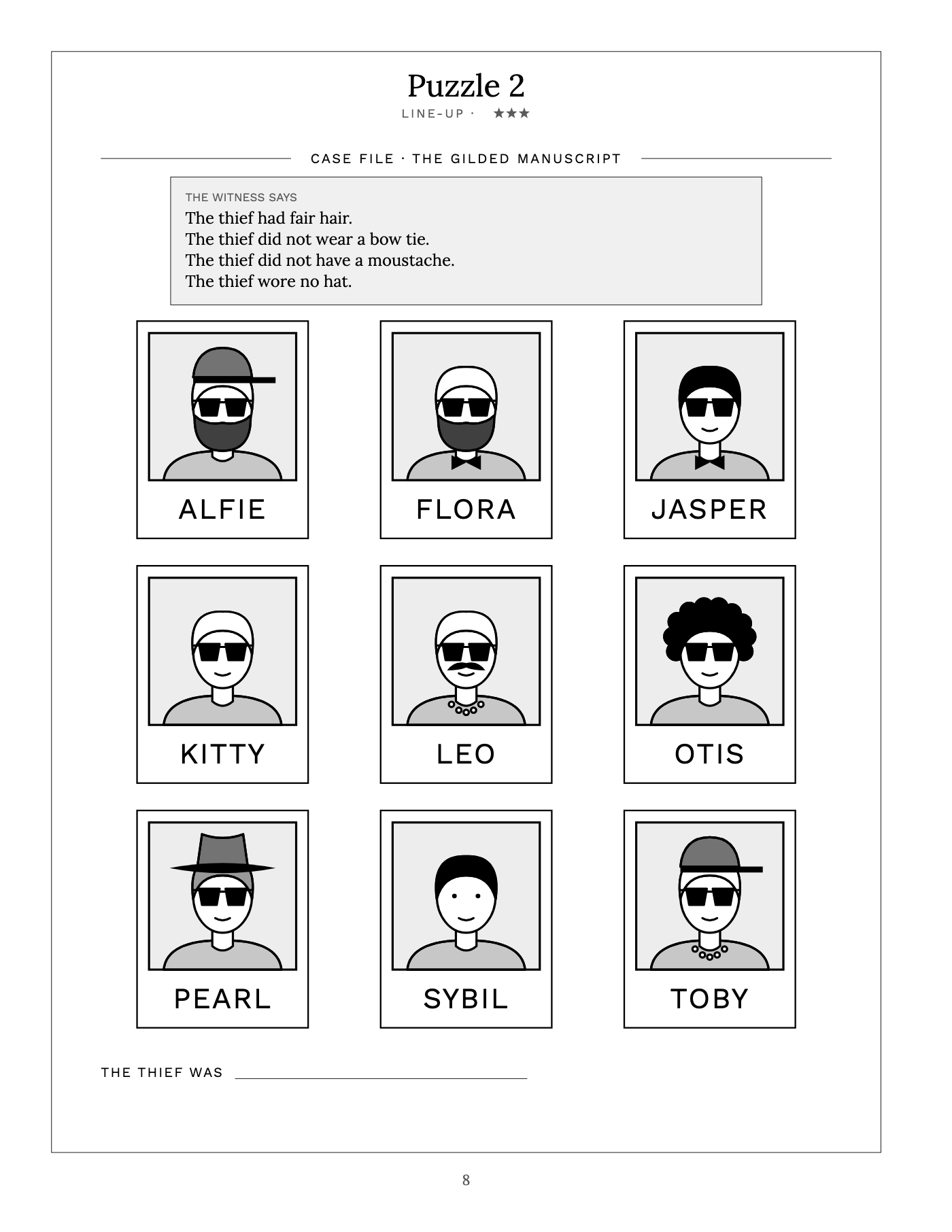
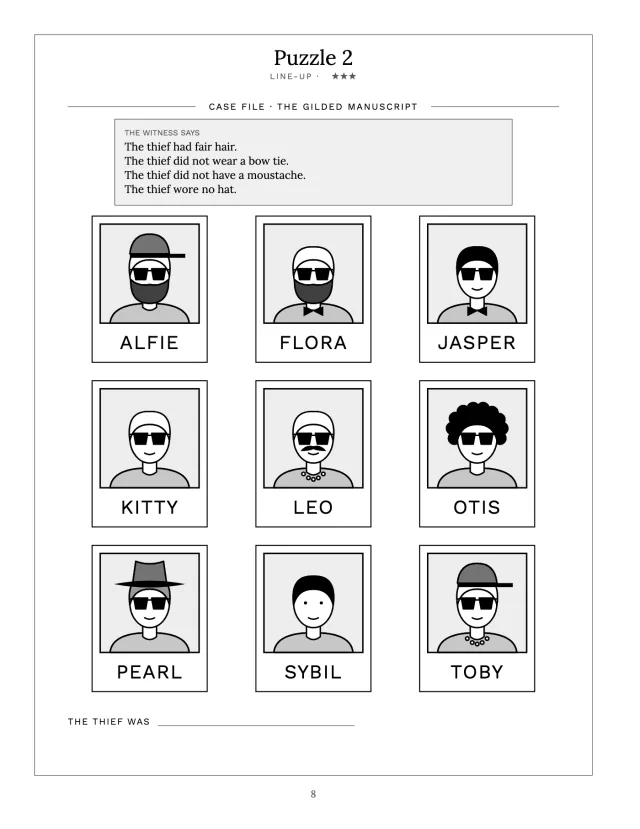 Line-upDetective
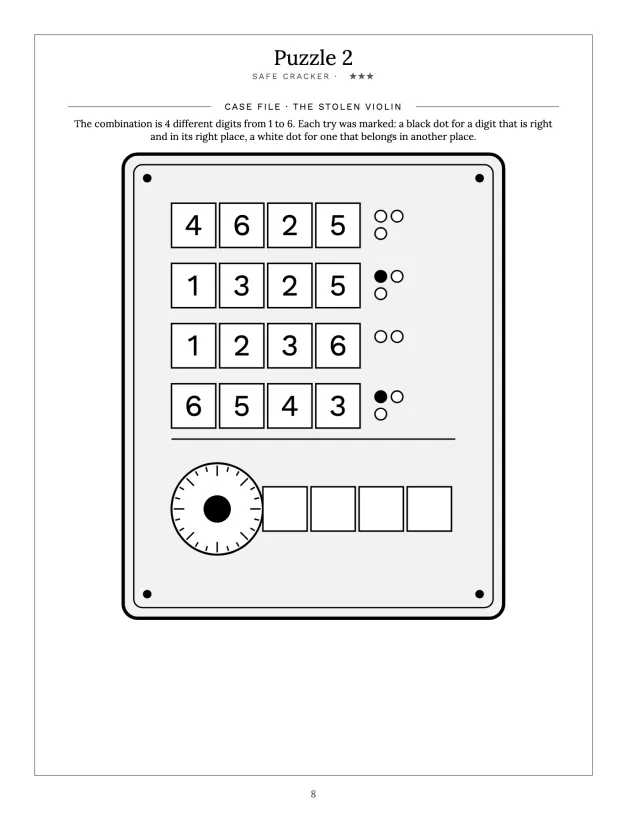 Safe crackerDetective
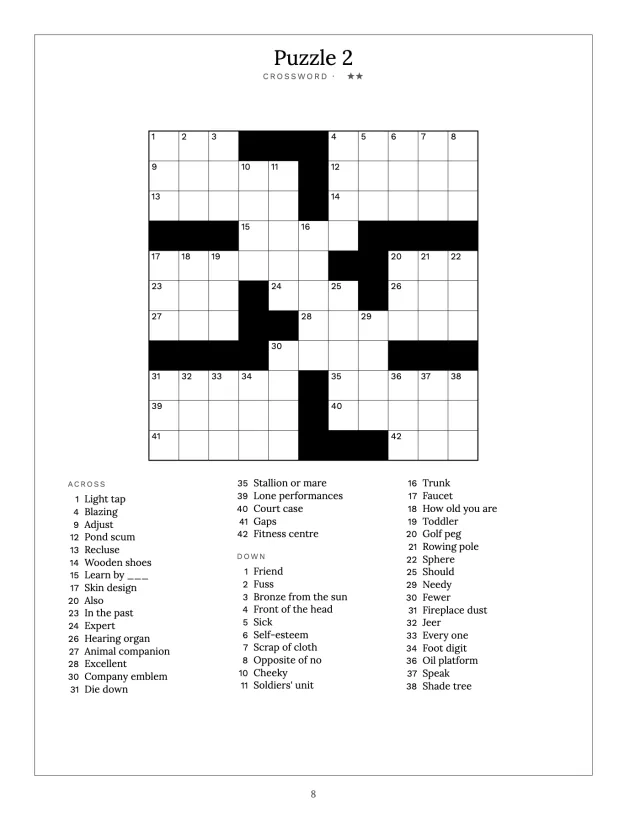 CrosswordWords and numbers
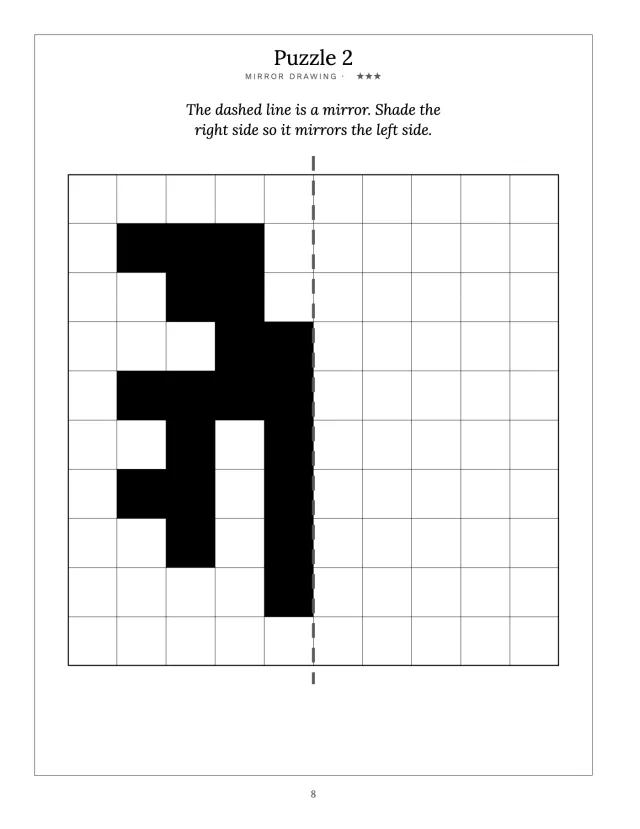 Mirror drawingFor children
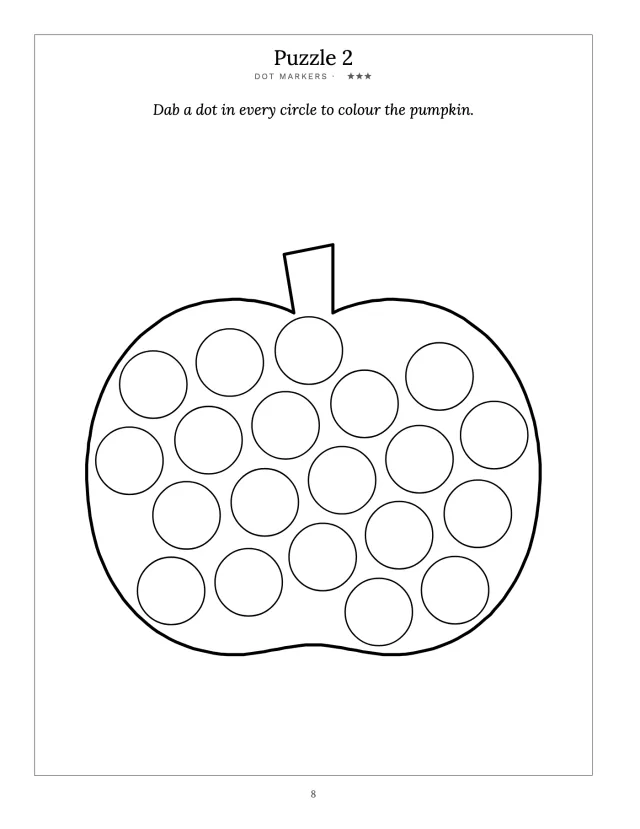 Dot markersFor children
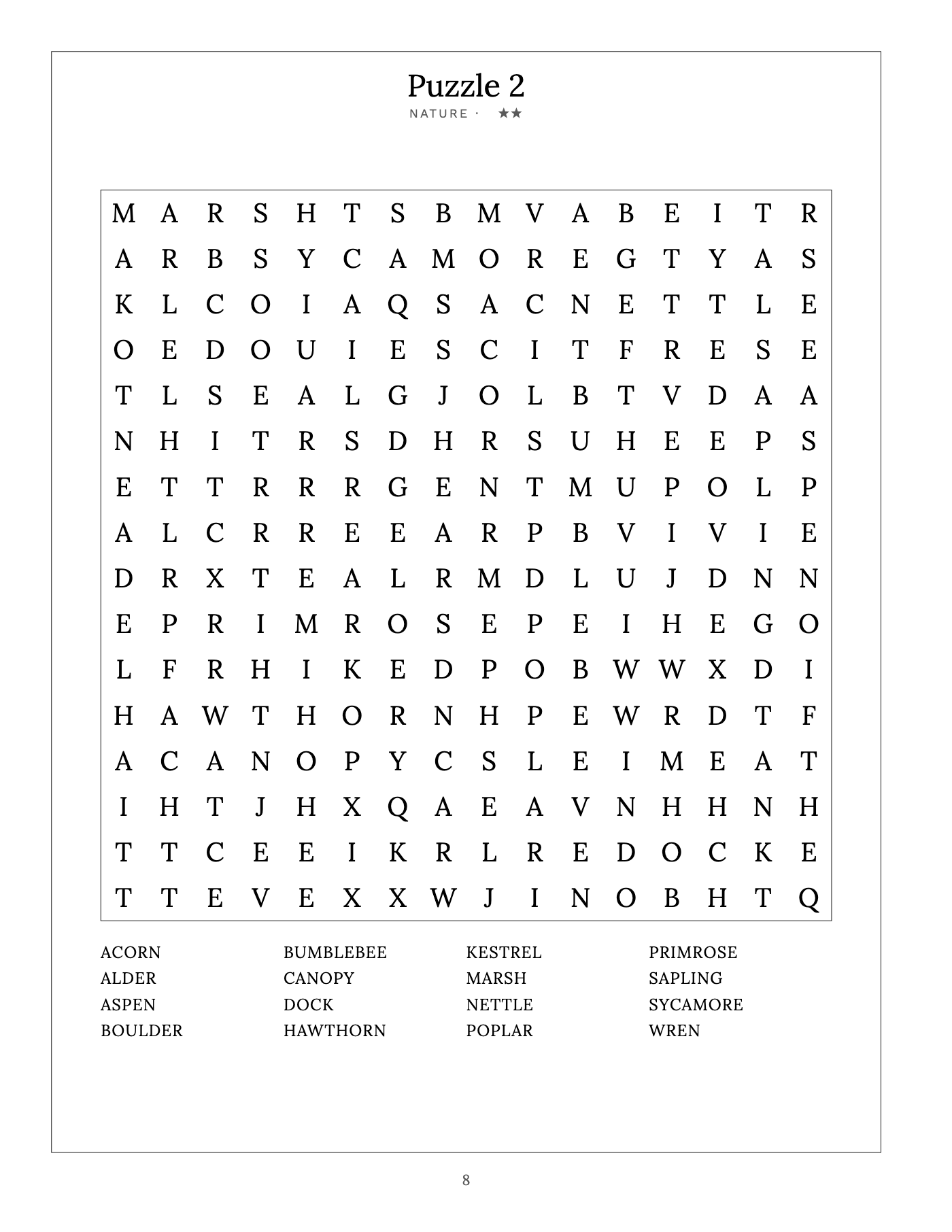
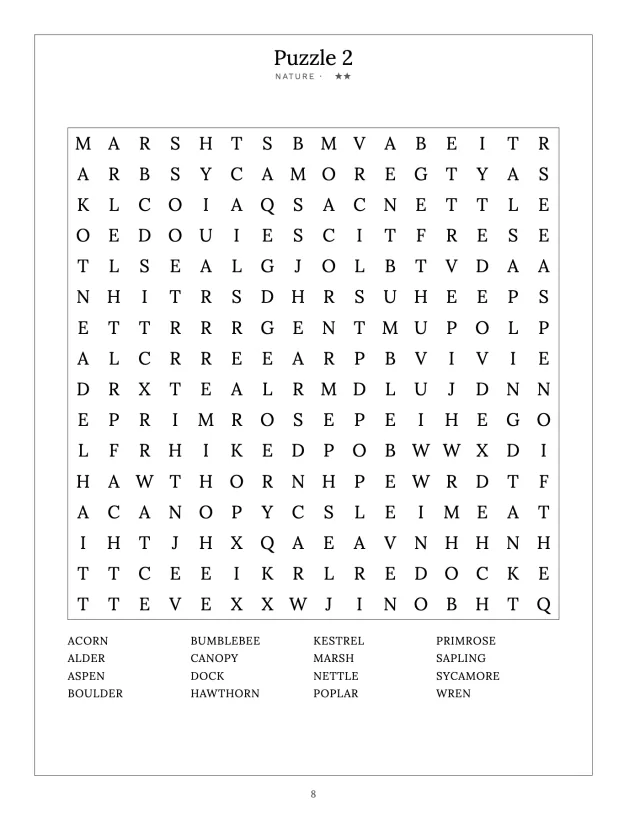 Word searchWords and numbers
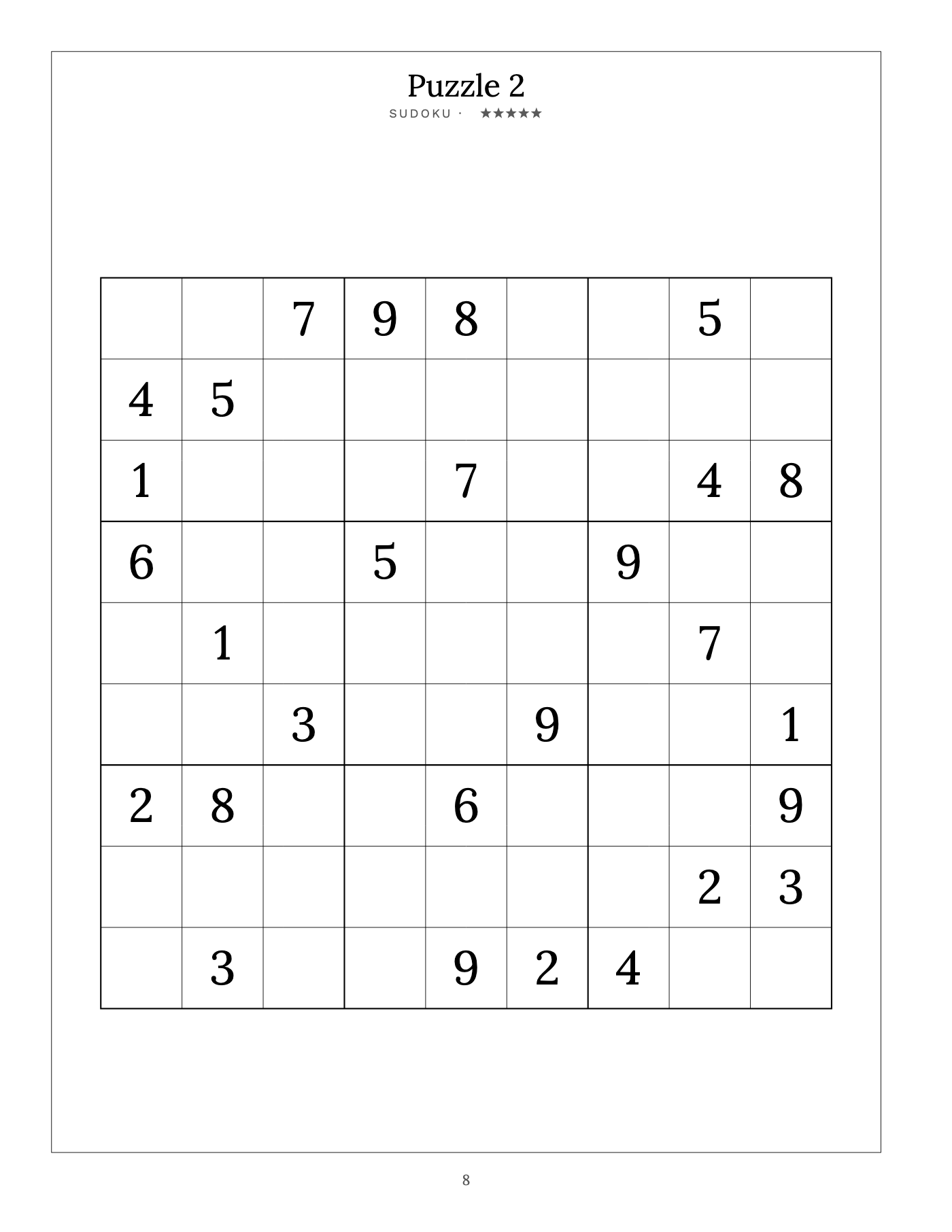
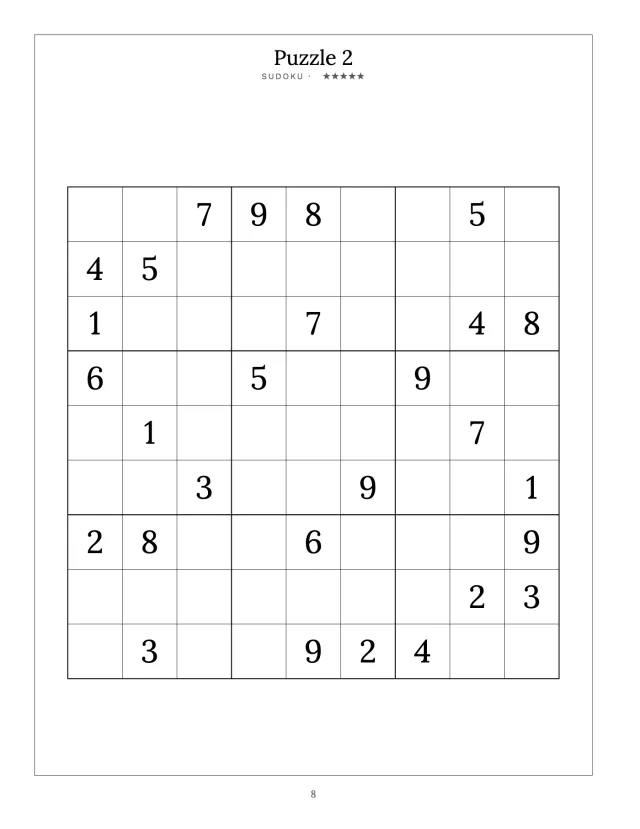 SudokuWords and numbers
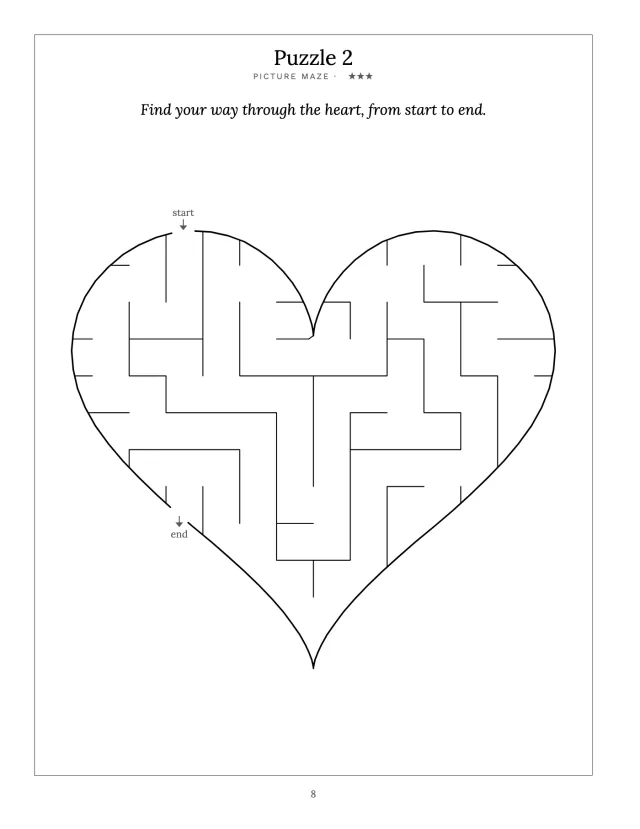 Picture mazeFor children
New · Math practice
Math worksheets, for every age.
Nineteen kinds of math practice, from sums to 5 to long division, fractions and equations. Each is made for an age, from 5–6 up to grown-ups, and the age decides what every level practises. Every answer is worked out again to check it, and the answers go at the back of the book.
Pick an age
Press an age: a real page made for it, and what each kind practises at it.
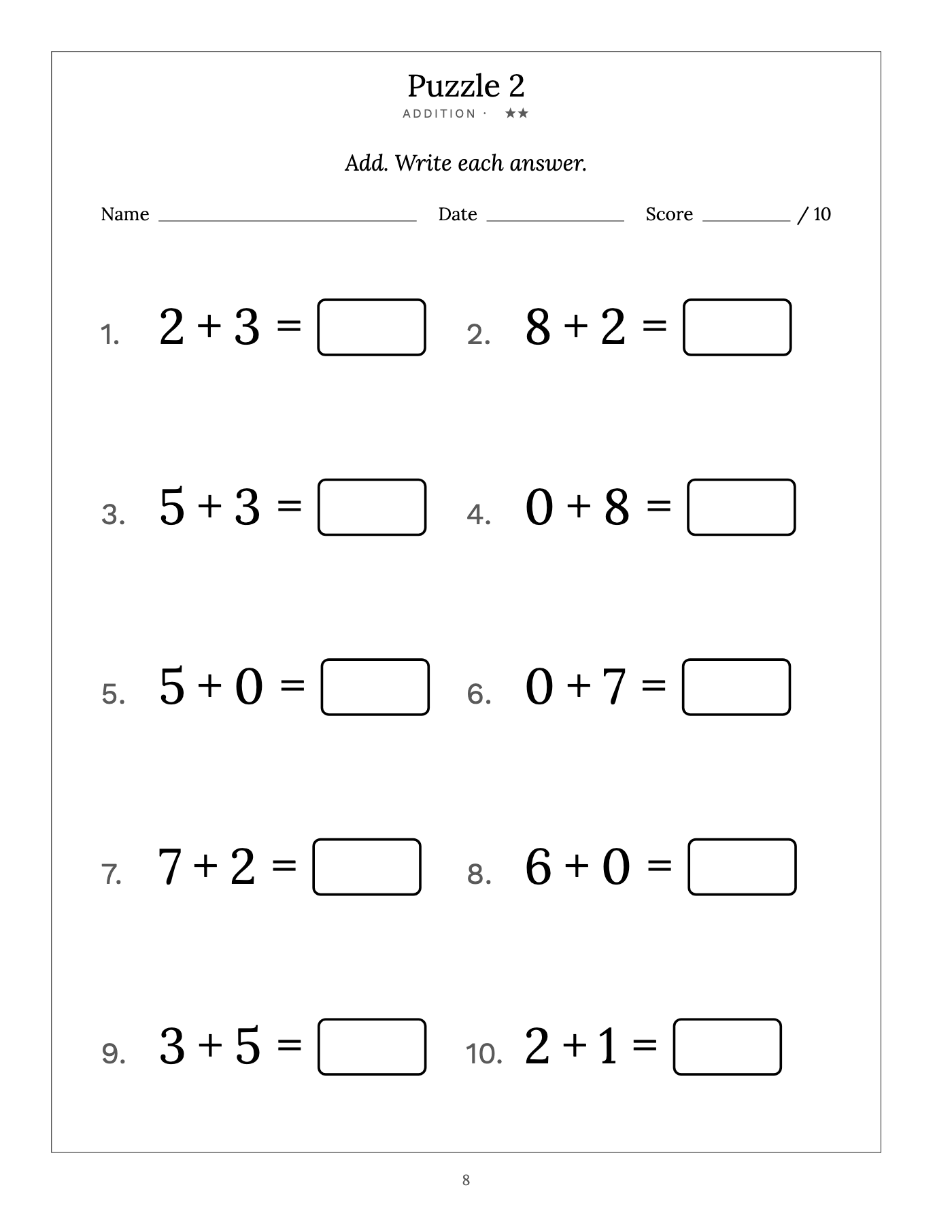
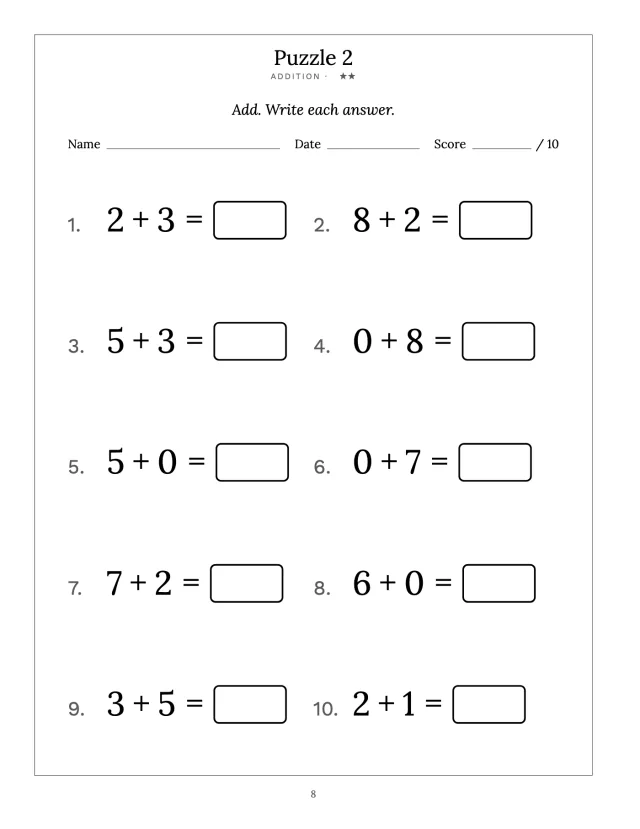 AdditionEasy: Sums to 10
Ages 5–6 kindergarten
6 kinds. What each practises, from Gentle to Fiendish:
- AdditionSums to 5 →, up to Sums to 20, crossing ten
- SubtractionTake away within 5 →, up to Within 20, crossing ten: 14 − 6
- Mixed operations, + and −Within 10 →, up to Within 100
- Comparing numbersNumbers to 10 →, up to Sums and numbers: 3 + 4 ☐ 8
- Number patternsCounting on by ones →, up to Counting by 2s, 5s and 10s
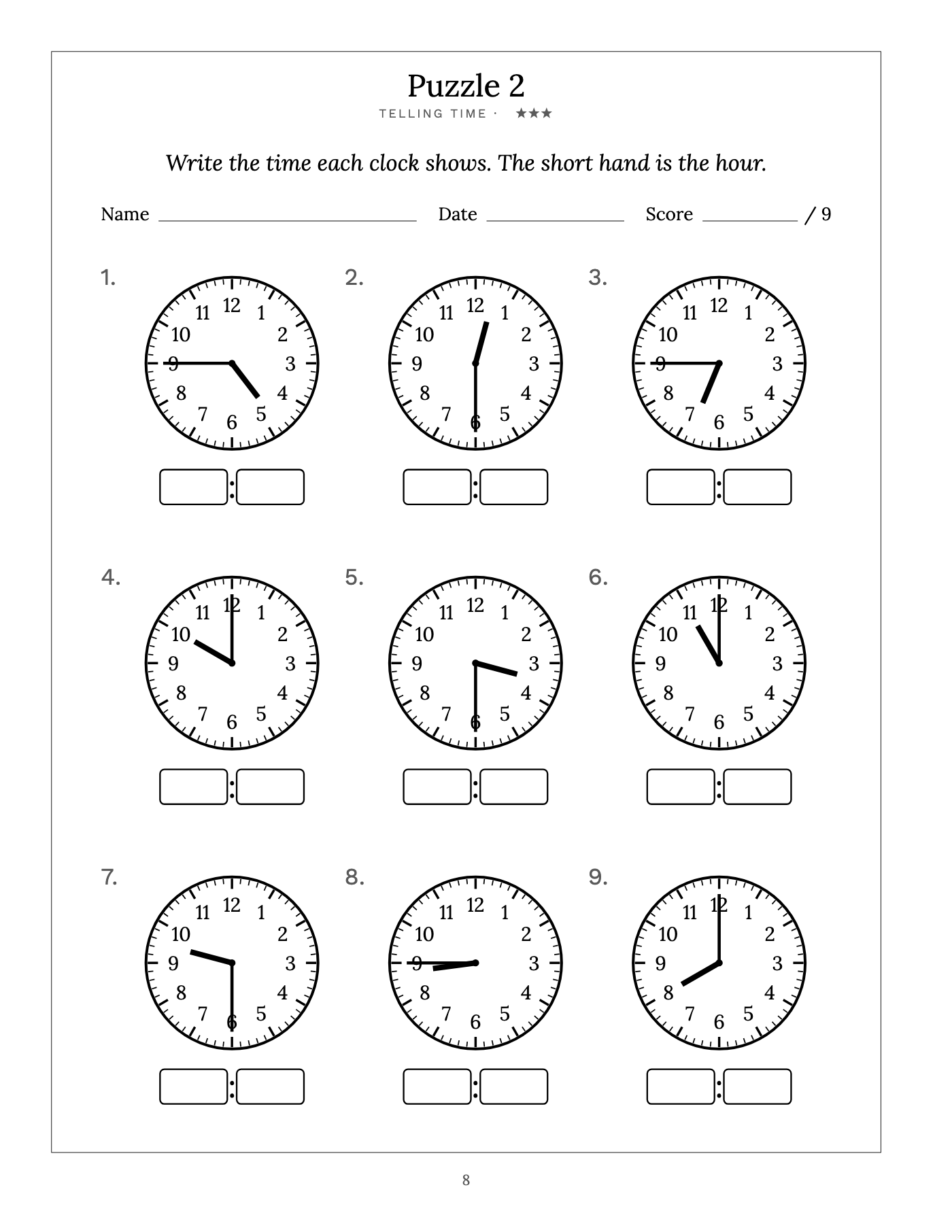
- Telling timeO'clock →, up to Quarter past and quarter to
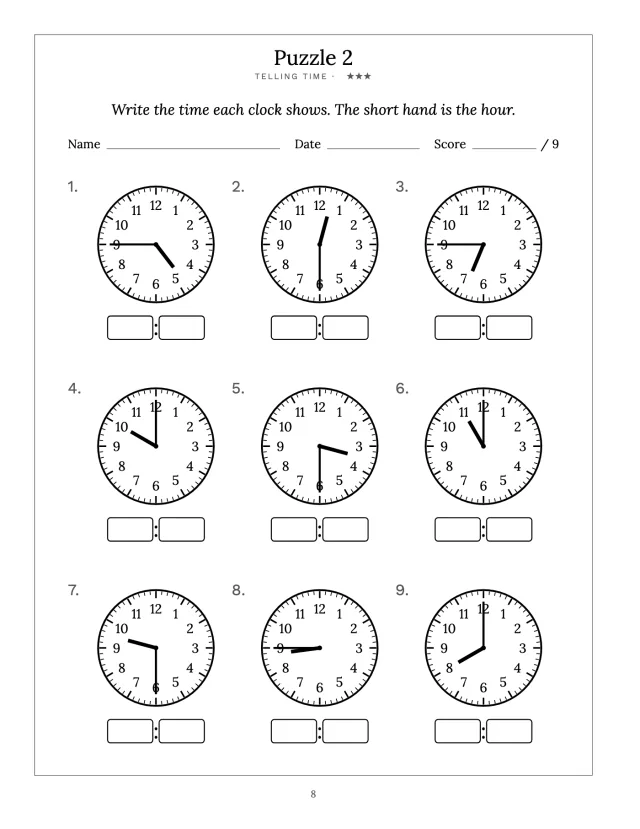 Telling timeMedium: Quarter past and quarter to
Ages 6–7 grade 1
9 kinds. What each practises, from Gentle to Fiendish:
- AdditionSums to 10 →, up to 2-digit + 2-digit, no carrying
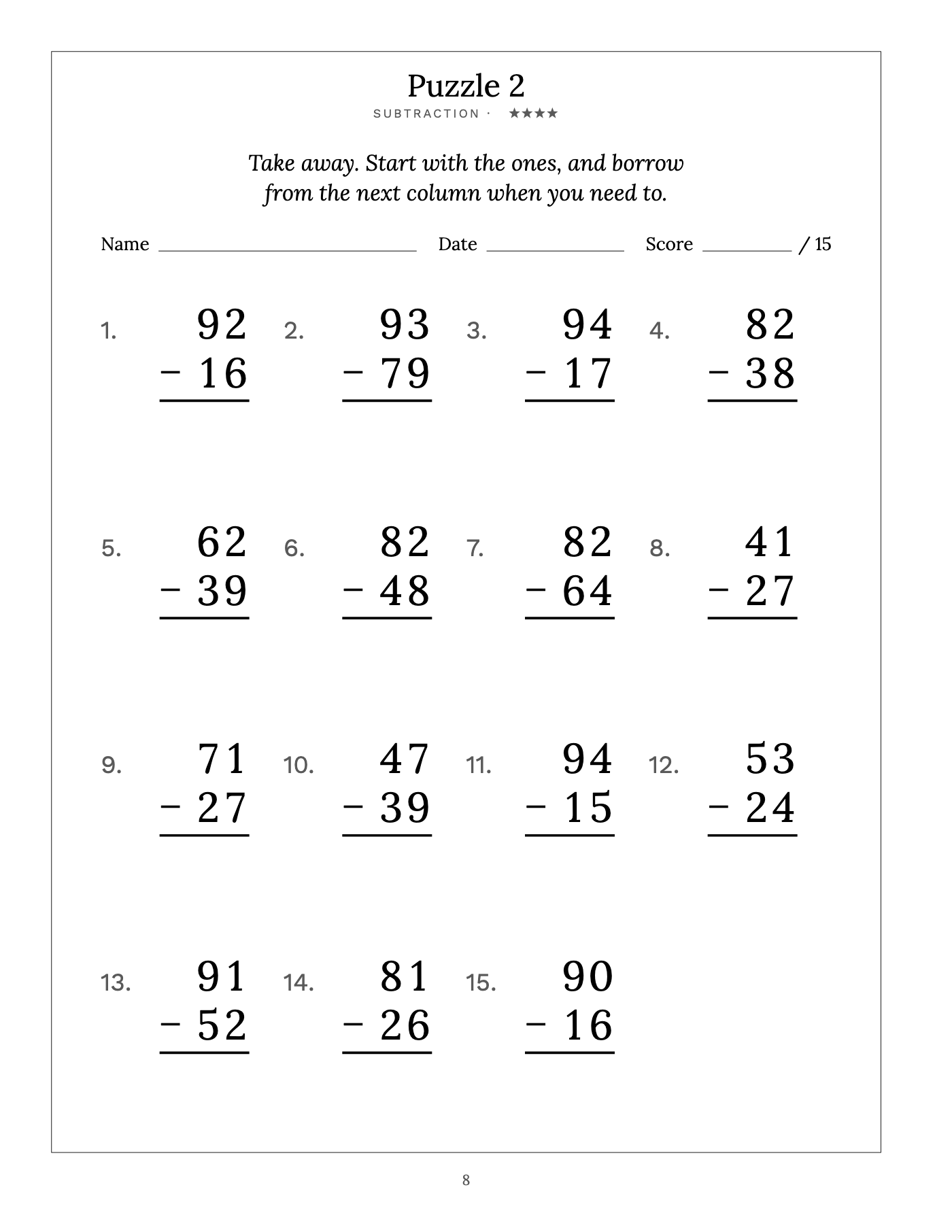
- SubtractionTake away within 10 →, up to 2-digit − 2-digit, no borrowing
- MultiplicationTimes 2, 5 and 10 →, up to Tables to 12 × 12
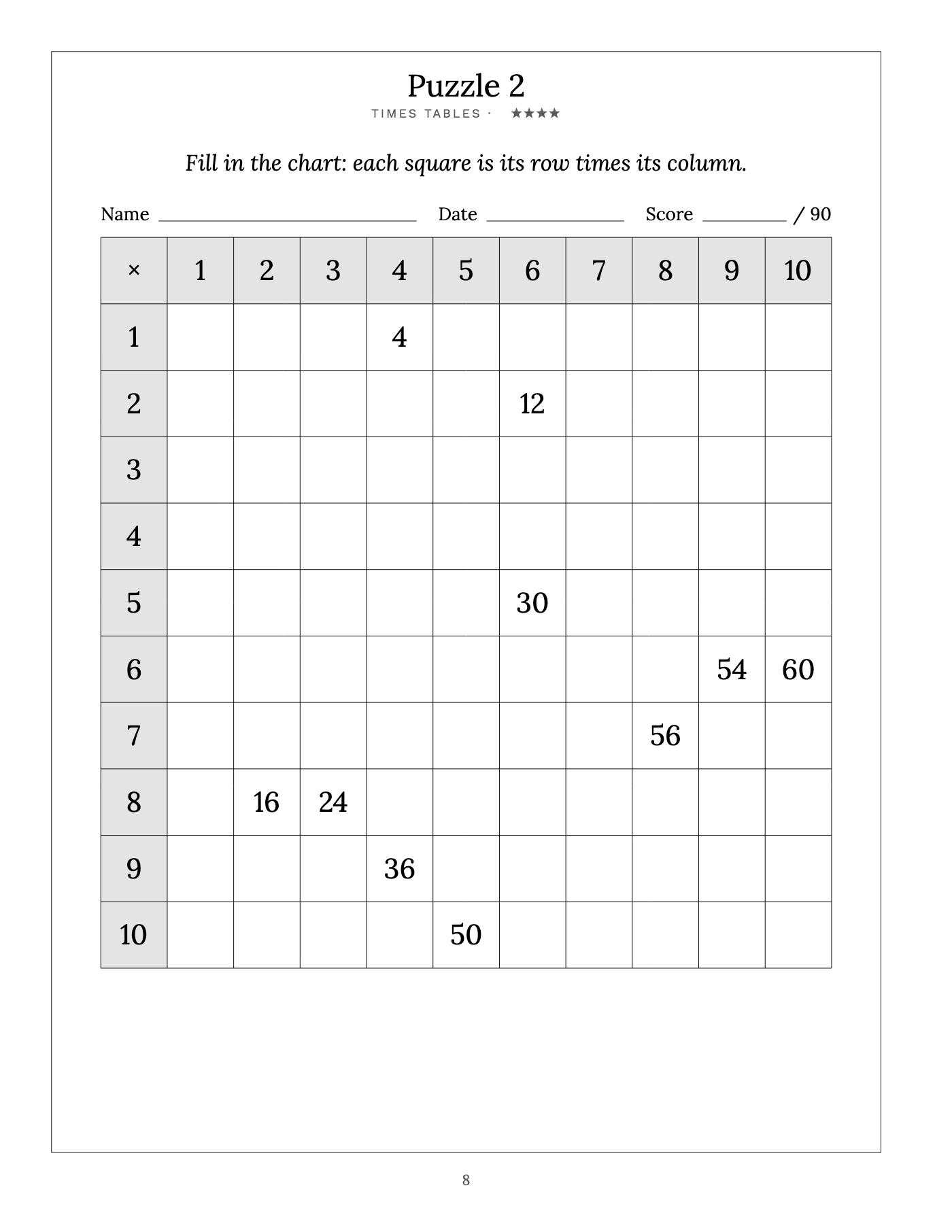
- Times tablesOne table, × 1 to × 10, mixed up →, up to A chart to 10 × 10, half filled in
- Mixed operations, + and −Within 10 →, up to 2-digit numbers
- Comparing numbersNumbers to 20 →, up to Numbers to 1,000
- Place valueTens and ones: 47 = 4 tens 7 ones →, up to The value of a digit: 352
- Number patternsCounting on by ones →, up to Counting by 3s, 4s and up
- Telling timeO'clock →, up to Five minutes
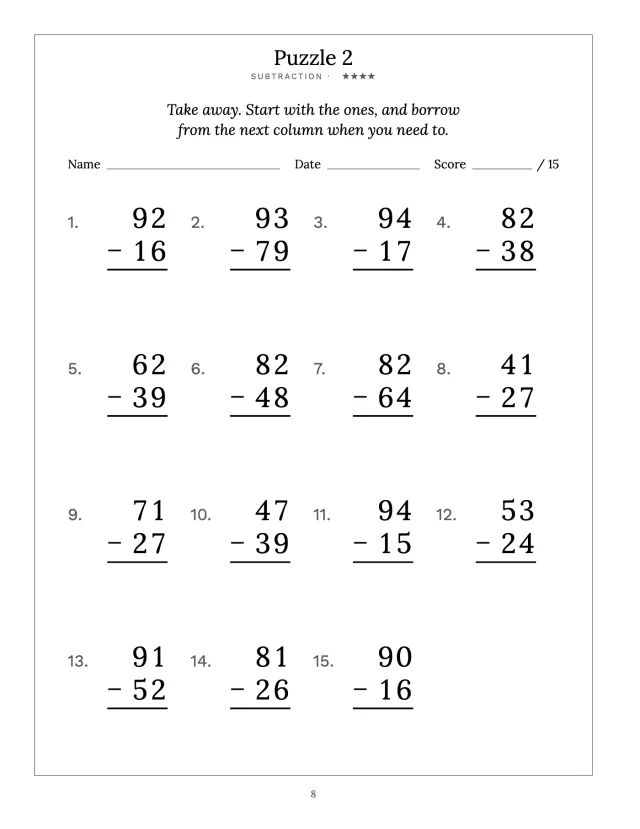 SubtractionHard: 2-digit − 2-digit, borrowing
Ages 7–8 grade 2
11 kinds. What each practises, from Gentle to Fiendish:
- AdditionSums to 20, crossing ten →, up to 3-digit + 2-digit
- SubtractionWithin 20, crossing ten: 14 − 6 →, up to 3-digit − 2-digit
- MultiplicationTimes 2, 5 and 10 →, up to Tens and hundreds: 30 × 4, 7 × 100
- DivisionSharing by 2, 5 and 10 →, up to 2-digit ÷ 1-digit
- Times tablesOne table, × 1 to × 10, mixed up →, up to One table, times and divide
- Mixed operations, + and −Within 20 →, up to 3-digit numbers
- Comparing numbersNumbers to 100 →, up to Big numbers, to a million
- Place valueTens and ones: 47 = 4 tens 7 ones →, up to Expanded form: 4,207 = 4,000 + 200 + 7
- RoundingTo the nearest 10 →, up to To the nearest 10, 100 or 1,000
- Number patternsCounting by 2s, 5s and 10s →, up to Doubling and halving
- Telling timeO'clock and half past →, up to Any minute
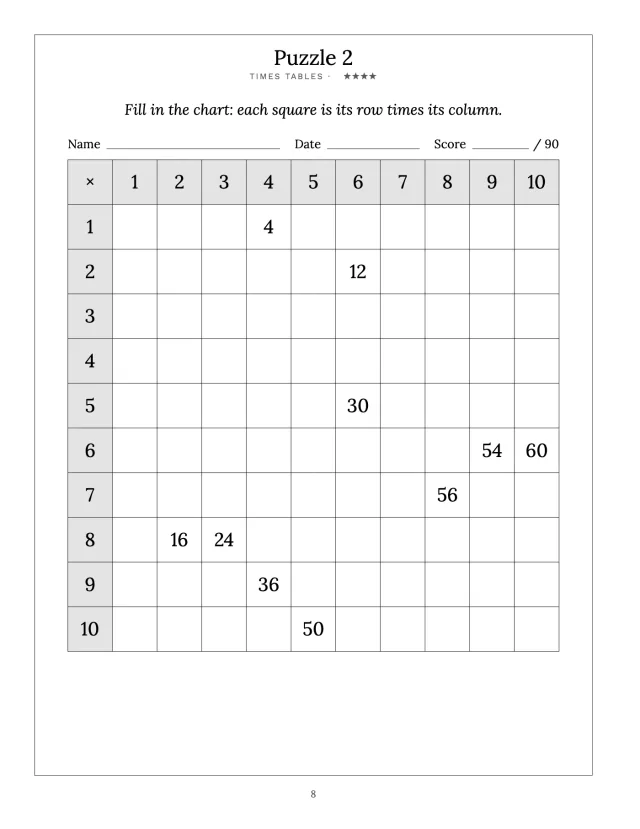 Times tablesHard: A chart to 10 × 10, a few filled in
Ages 8–9 grade 3
12 kinds. What each practises, from Gentle to Fiendish:
- Addition2-digit + 2-digit, carrying →, up to Three 2-digit numbers
- Subtraction2-digit − 2-digit, borrowing →, up to Across zeros: 400 − 167
- MultiplicationTables to 5 × 10 →, up to 2-digit × 1-digit
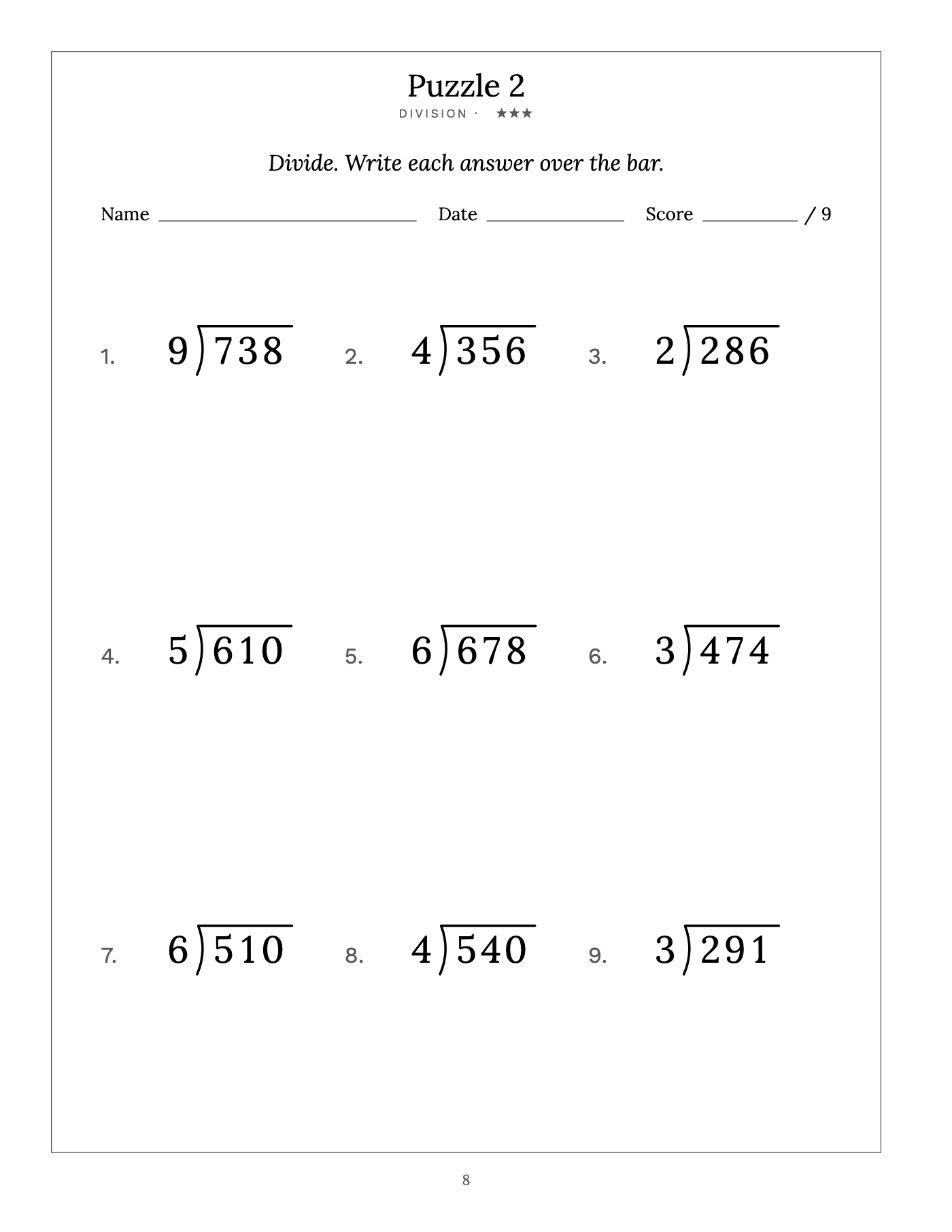
- DivisionFacts to 100 ÷ 10 →, up to 3-digit ÷ 1-digit
- Times tablesOne table, × 1 to × 12, mixed up →, up to One table, times and divide
- Mixed operations, all four signsWithin 20, and tables to 10 × 10 →, up to 3-digit numbers, × and ÷ by 1 digit
- FractionsEquivalent fractions: 2/3 = ☐/12 →, up to A fraction of a number: 3/4 of 20
- Comparing numbersNumbers to 1,000 →, up to Fractions: 2/3 ☐ 3/5
- Place valueHundreds, tens and ones →, up to Expanded form: 4,207 = 4,000 + 200 + 7
- RoundingTo the nearest 10 →, up to Decimals to the nearest whole number
- Number patternsCounting by 3s, 4s and up →, up to Back through nought
- Telling timeQuarter past and quarter to →, up to Any minute
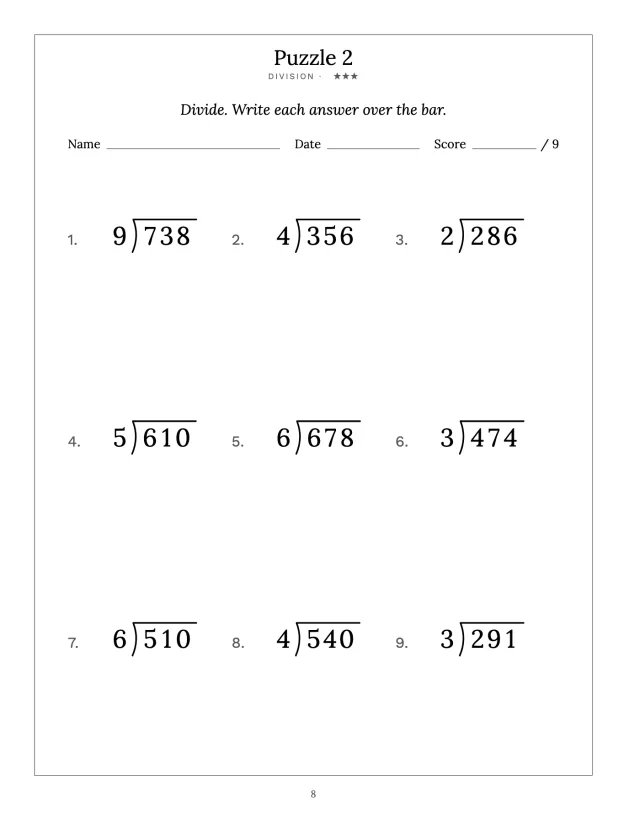 DivisionMedium: 3-digit ÷ 1-digit, as long division
Ages 9–10 grade 4
15 kinds. What each practises, from Gentle to Fiendish:
- Addition3-digit + 3-digit, carrying →, up to 5-digit + 5-digit
- Subtraction3-digit − 3-digit, borrowing →, up to Across zeros: 5,003 − 1,268
- MultiplicationTables to 12 × 12 →, up to 4-digit × 1-digit
- DivisionFacts to 144 ÷ 12 →, up to 3-digit ÷ 2-digit
- Times tablesOne table, a number left out →, up to A chart with its numbers mixed up
- Mixed operations, all four signsWithin 100, and tables to 12 × 12 →, up to 4-digit numbers, × and ÷ by 2 digits
- Order of operationsTwo steps: 3 + 4 × 5 →, up to Three steps, brackets: (8 − 2) × 3 + 4
- FractionsEquivalent fractions: 2/3 = ☐/12 →, up to Top-heavy and mixed: 17/5 = 3 2/5
- DecimalsAdd, tenths: 3.4 + 2.5 →, up to Times and divide by 10, 100 and 1,000
- EquationsOne step: x + 7 = 15 →, up to One step, all four signs
- Comparing numbersBig numbers, to a million →, up to Fractions: 2/3 ☐ 3/5
- Place valueThe value of a digit: 352 →, up to Decimals: the value of a digit in 3.47
- RoundingTo the nearest 100 →, up to To one decimal place
- Number patternsSteps of 25, 50, 100 and 1,000 →, up to Add the two before
- Telling timeQuarter past and quarter to →, up to Any minute
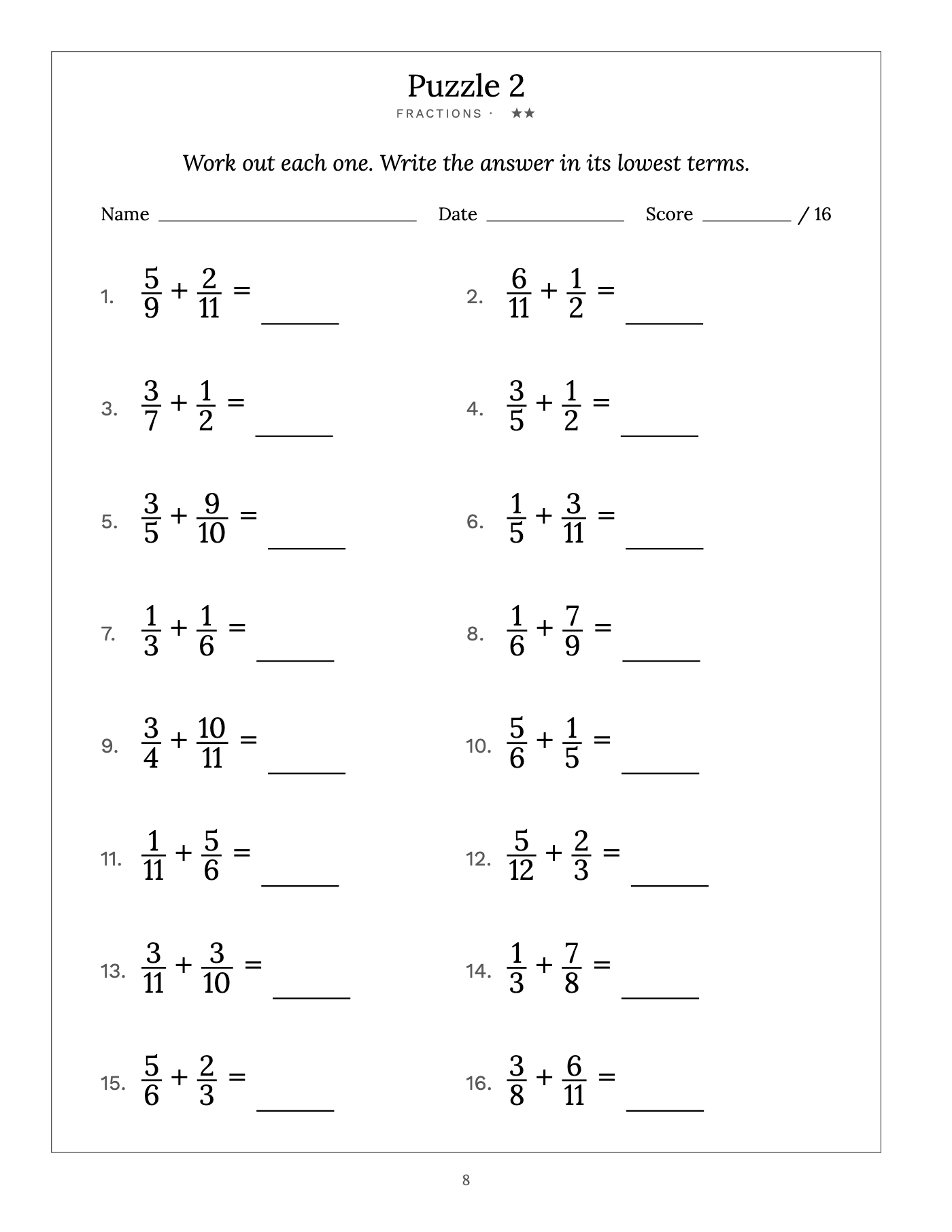
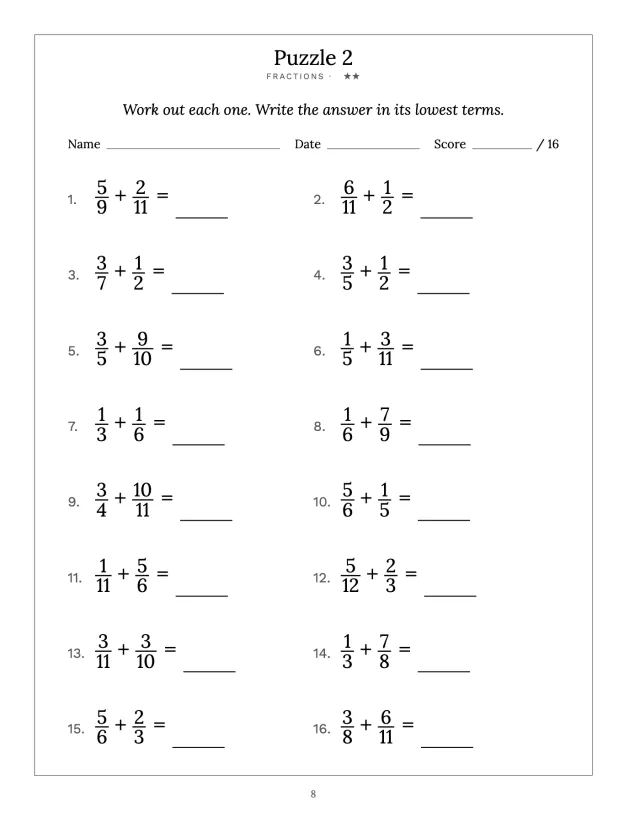 FractionsEasy: Add, different bottom numbers
Ages 10–11 grade 5
18 kinds. What each practises, from Gentle to Fiendish:
- Addition4-digit + 3-digit →, up to 6-digit + 6-digit
- Subtraction4-digit − 3-digit →, up to 6-digit − 6-digit
- Multiplication2-digit × 1-digit →, up to 4-digit × 2-digit
- Division2-digit ÷ 1-digit →, up to 4-digit ÷ 2-digit
- Times tablesTwo tables at once →, up to A chart with its numbers mixed up
- Mixed operations, all four signsWithin 100, and tables to 12 × 12 →, up to 4-digit numbers, × and ÷ by 2 digits
- Order of operationsTwo steps: 3 + 4 × 5 →, up to Powers: 2 + 3² × 4
- Negative numbersAdd and take away, −10 to 10 →, up to Times and divide, −10 to 10
- FractionsLowest terms: 6/8 = ☐ →, up to Multiply fractions: 2/3 × 3/5
- DecimalsAdd, tenths: 3.4 + 2.5 →, up to Times a whole number: 2.4 × 3
- PercentagesFractions and decimals as percents: 3/4 = ☐% →, up to Any percent of a number: 17% of 300
- ExponentsSquares to 10² →, up to Powers of 2, 3 and 5
- Square rootsSquare roots to √100 →, up to Cube roots to ∛1000
- EquationsOne step: x + 7 = 15 →, up to Two steps: 3x + 5 = 20
- Comparing numbersBig numbers, to a million →, up to Fractions: 2/3 ☐ 3/5
- Place valueExpanded form: 4,207 = 4,000 + 200 + 7 →, up to Decimals: the value of a digit in 3.47
- RoundingTo the nearest 10, 100 or 1,000 →, up to To two decimal places
- Number patternsSteps of 25, 50, 100 and 1,000 →, up to Add the two before
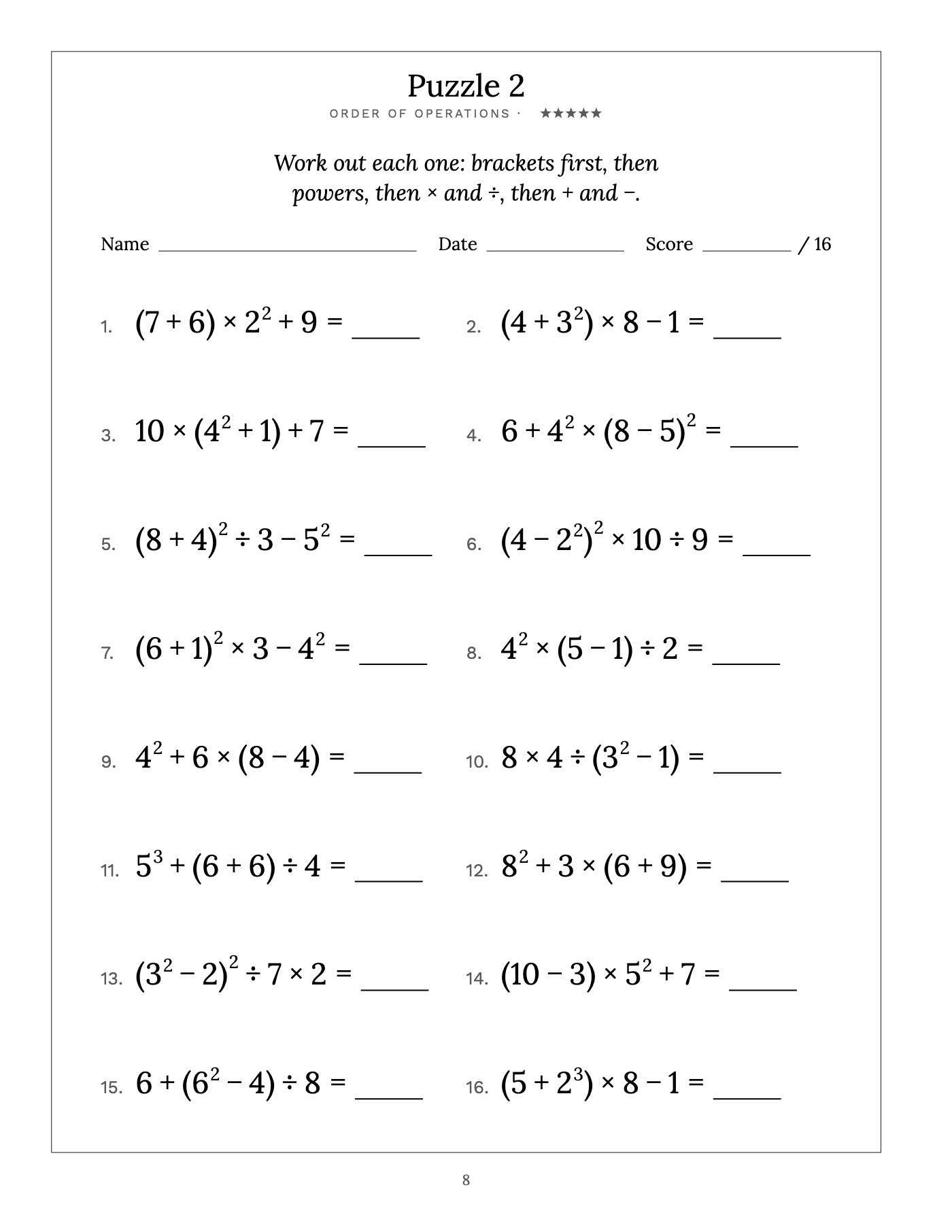
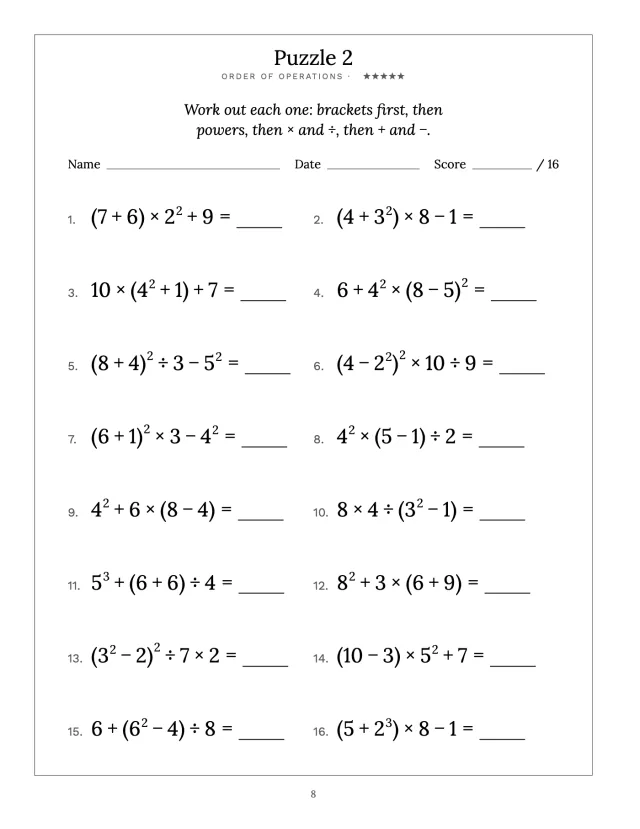 Order of operationsFiendish: Powers and brackets: (2 + 3)² − 4 × 5
Ages 11–12 grade 6
18 kinds. What each practises, from Gentle to Fiendish:
- Addition4-digit + 4-digit →, up to 7-digit + 7-digit
- Subtraction4-digit − 4-digit →, up to 3-digit, answers below zero
- Multiplication3-digit × 1-digit →, up to 4-digit × 2-digit
- Division3-digit ÷ 1-digit →, up to 5-digit ÷ 2-digit
- Times tablesTwo tables at once →, up to A chart with its numbers mixed up
- Mixed operations, all four signsWithin 100, and tables to 12 × 12 →, up to 4-digit numbers, × and ÷ by 2 digits
- Order of operationsTwo steps, brackets: (3 + 4) × 5 →, up to Powers and brackets: (2 + 3)² − 4 × 5
- Negative numbersAdd and take away, −10 to 10 →, up to All four, −20 to 20
- FractionsAdd, different bottom numbers →, up to Mixed numbers, add and take away
- DecimalsAdd, hundredths: 12.45 + 3.7 →, up to Divided by a whole number: 7.2 ÷ 3
- PercentagesFractions and decimals as percents: 3/4 = ☐% →, up to Any percent of a number: 17% of 300
- ExponentsSquares to 10² →, up to Powers multiplied: 2³ × 3²
- Square rootsSquare roots to √100 →, up to Roots in a sum: √36 + √64
- EquationsOne step: x + 7 = 15 →, up to Brackets: 3(x + 2) = 21
- Comparing numbersDecimals: 0.5 ☐ 0.45 →, up to Fractions: 2/3 ☐ 3/5
- Place valueExpanded form: 4,207 = 4,000 + 200 + 7 →, up to Decimals: the value of a digit in 3.47
- RoundingDecimals to the nearest whole number →, up to To 1, 2 or 3 significant figures
- Number patternsSteps of 25, 50, 100 and 1,000 →, up to Add the two before
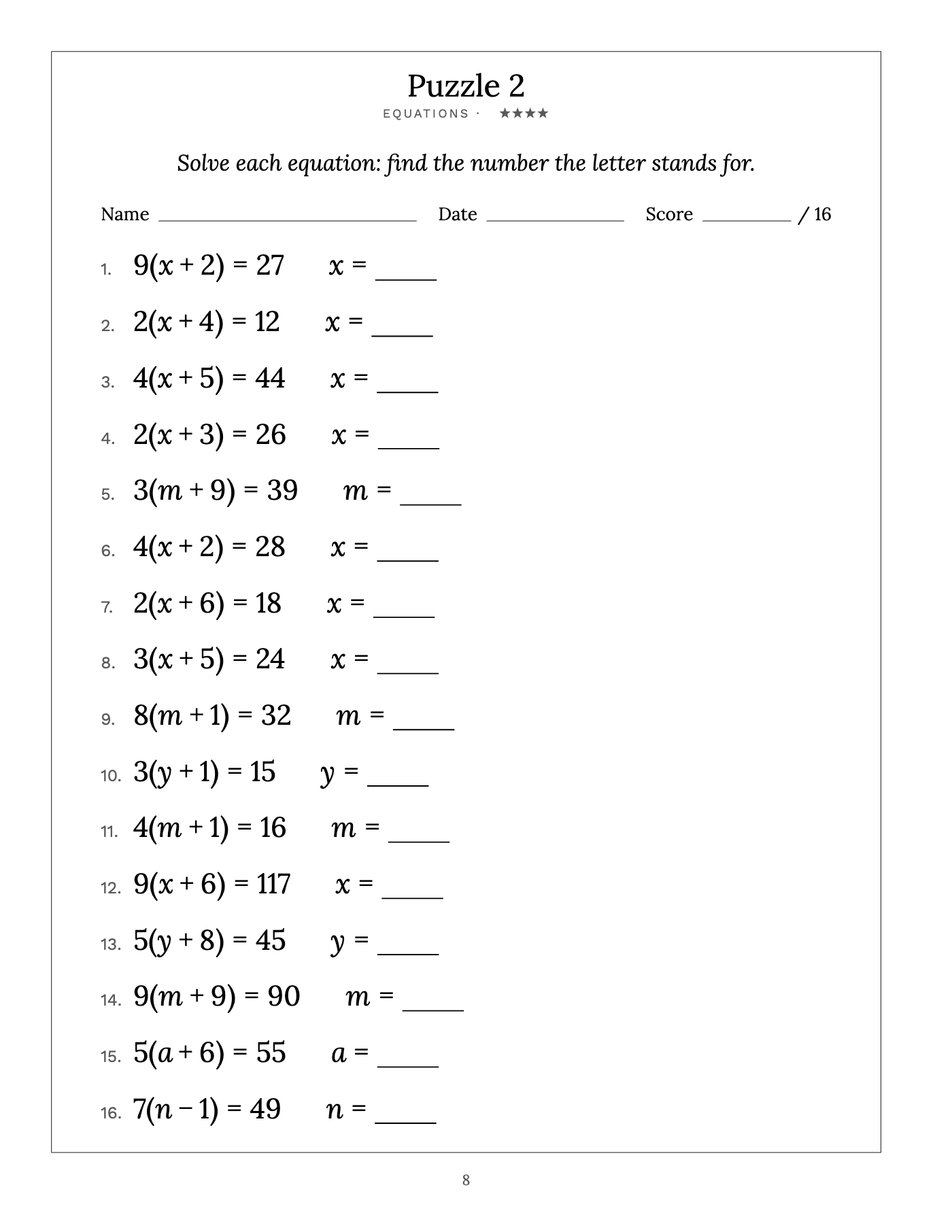
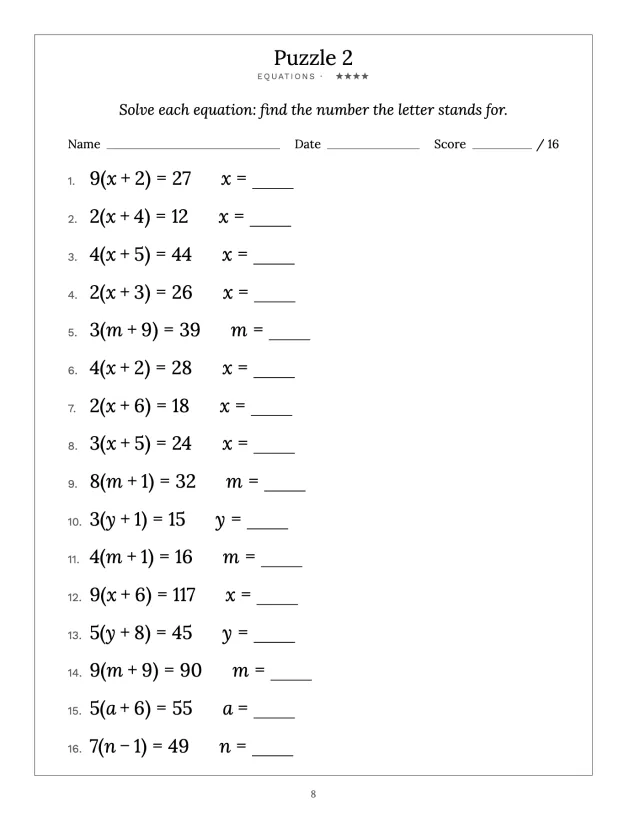 EquationsHard: Brackets: 3(x + 2) = 21
Ages 12–14 grades 7 and 8
18 kinds. What each practises, from Gentle to Fiendish:
- Addition4-digit + 4-digit →, up to 7-digit + 7-digit
- Subtraction5-digit − 5-digit →, up to 4-digit, answers below zero
- Multiplication2-digit × 2-digit →, up to 4-digit × 3-digit
- Division4-digit ÷ 1-digit →, up to 5-digit ÷ 3-digit
- Times tablesTwo tables at once →, up to A chart with its numbers mixed up
- Mixed operations, all four signsWithin 100, and tables to 12 × 12 →, up to 4-digit numbers, × and ÷ by 2 digits
- Order of operationsThree steps: 12 − 3 × 2 + 8 →, up to Brackets in brackets: 2 × [3 + (8 − 5)]
- Negative numbersAdd and take away, −20 to 20 →, up to All four, −20 to 20
- FractionsAdd, different bottom numbers →, up to Mixed numbers, times and divide
- DecimalsTimes a whole number: 2.4 × 3 →, up to All four, mixed places
- PercentagesPercents of a number: 35% of 80 →, up to Any percent of a number: 17% of 300
- ExponentsSquares to 20² →, up to Laws of powers: 2³ × 2⁴ = 2^☐
- Square rootsSquare roots to √225 →, up to Roots in a sum: √36 + √64
- EquationsOne step, all four signs →, up to Letters on both sides: 5x − 3 = 2x + 9
- Comparing numbersDecimals: 0.5 ☐ 0.45 →, up to Fractions: 2/3 ☐ 3/5
- Place valueExpanded form: 4,207 = 4,000 + 200 + 7 →, up to Decimals: the value of a digit in 3.47
- RoundingDecimals to the nearest whole number →, up to To 1, 2 or 3 significant figures
- Number patternsBack through nought →, up to Add the two before
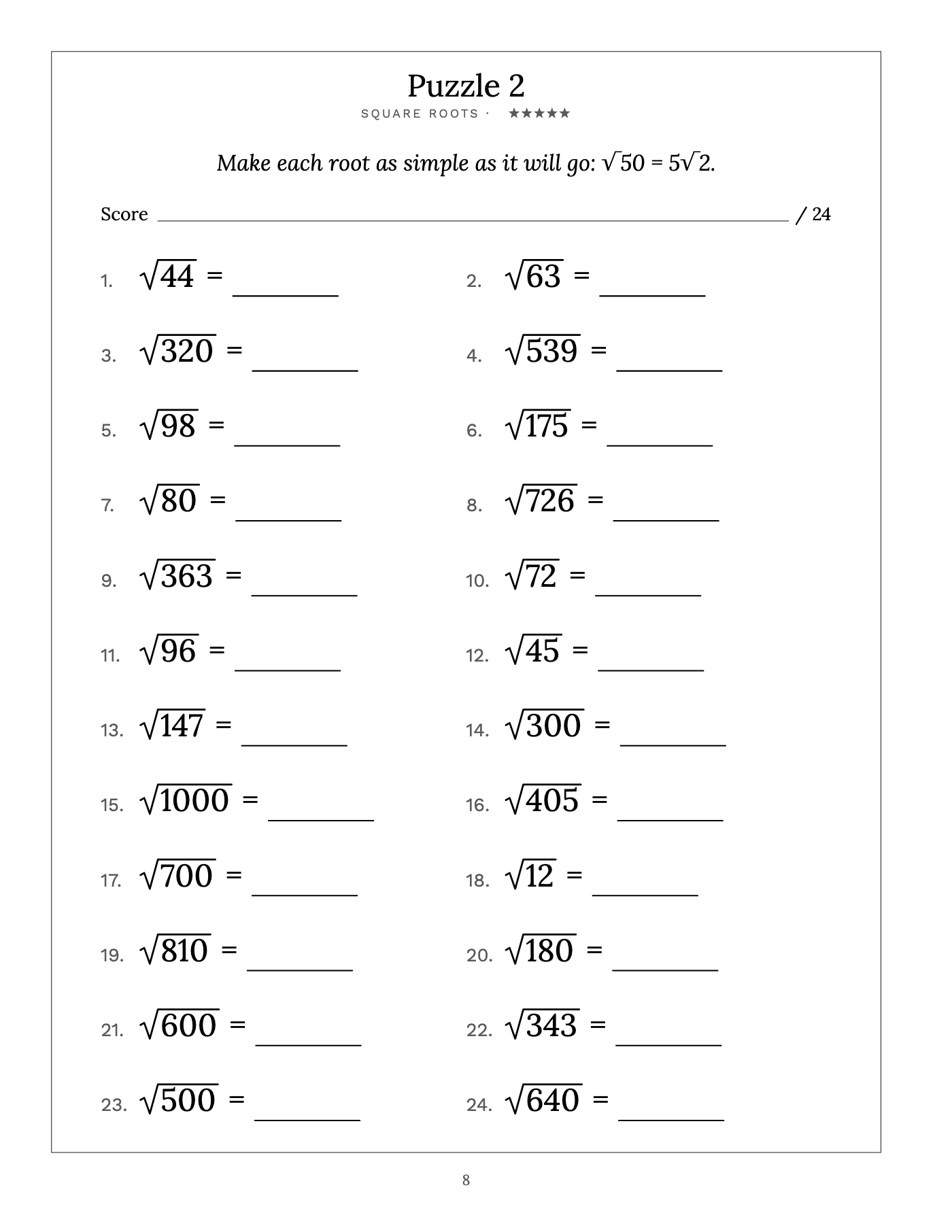
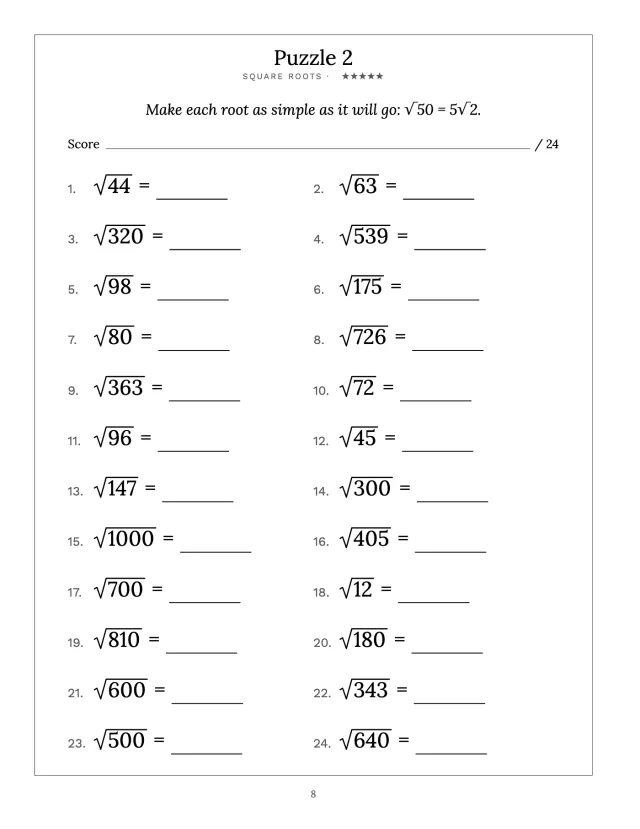 Square rootsFiendish: Made simple: √50 = 5√2
Ages 14 and up high school
18 kinds. What each practises, from Gentle to Fiendish:
- Addition4-digit + 4-digit →, up to 7-digit + 7-digit
- Subtraction5-digit − 5-digit →, up to 4-digit, answers below zero
- Multiplication2-digit × 2-digit →, up to 4-digit × 3-digit
- Division4-digit ÷ 1-digit →, up to 5-digit ÷ 3-digit
- Times tablesTwo tables at once →, up to A chart with its numbers mixed up
- Mixed operations, all four signsWithin 100, and tables to 12 × 12 →, up to 4-digit numbers, × and ÷ by 2 digits
- Order of operationsThree steps, brackets: (8 − 2) × 3 + 4 →, up to A fraction bar: (12 + 6) ÷ (5 − 2)
- Negative numbersAdd and take away, −100 to 100 →, up to Three numbers: −4 + 7 − (−2)
- FractionsAdd, different bottom numbers →, up to Mixed numbers, times and divide
- DecimalsTimes a whole number: 2.4 × 3 →, up to All four, mixed places
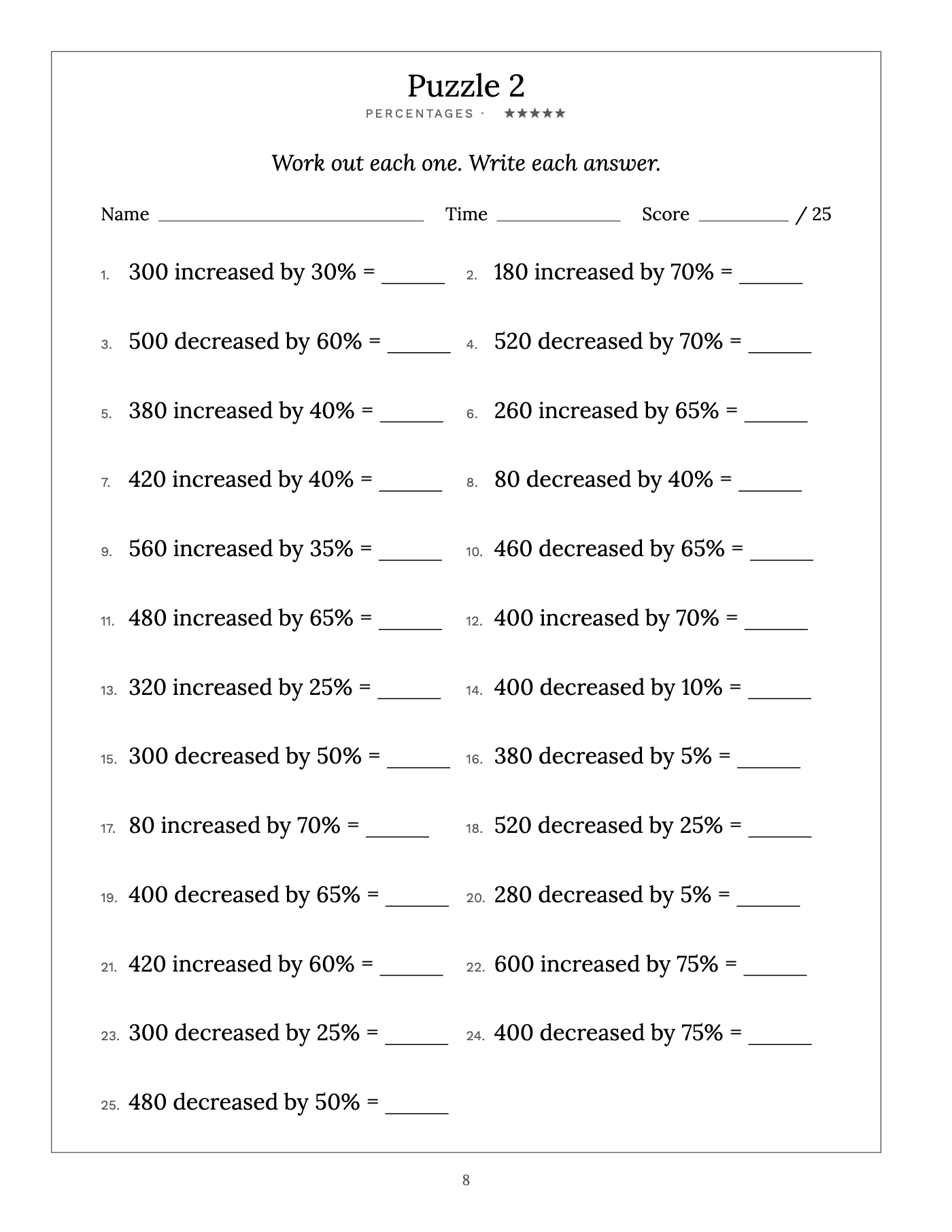
- PercentagesAny percent of a number: 17% of 300 →, up to Up or down by a percent: 80 increased by 15%
- ExponentsNegative bases: (−3)², −3² →, up to Standard form: 4.5 × 10³
- Square rootsSquare roots to √400 →, up to Made simple: √50 = 5√2
- EquationsTwo steps: 3x + 5 = 20 →, up to Brackets on both sides: 2(x + 5) = 3(x − 1)
- Comparing numbersDecimals: 0.5 ☐ 0.45 →, up to Fractions: 2/3 ☐ 3/5
- Place valueExpanded form: 4,207 = 4,000 + 200 + 7 →, up to Decimals: the value of a digit in 3.47
- RoundingTo one decimal place →, up to To 1, 2 or 3 significant figures
- Number patternsBack through nought →, up to Add the two before
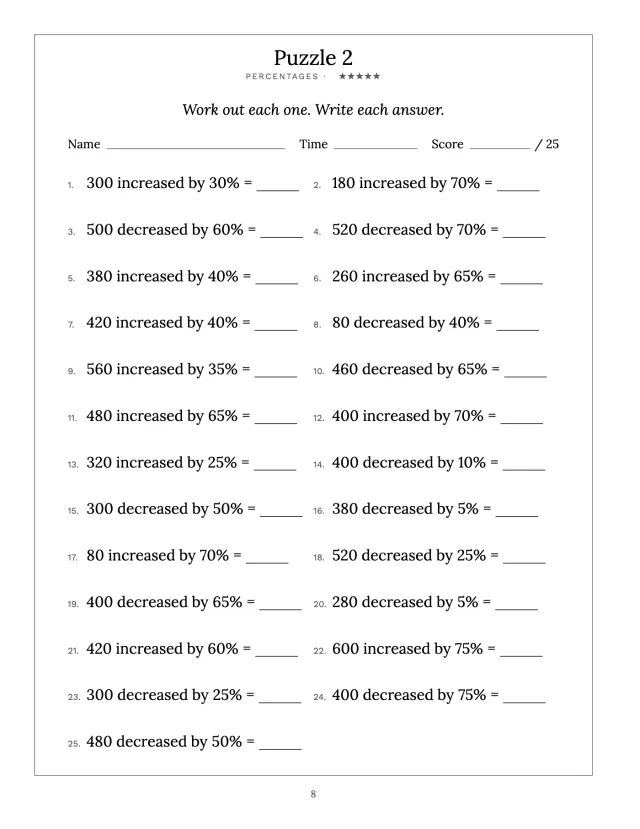 PercentagesFiendish: Up or down by a percent: 80 increased by 15%
Grown-ups brain training
18 kinds. What each practises, from Gentle to Fiendish:
- Addition2-digit + 2-digit, carrying →, up to 4-digit + 4-digit
- Subtraction2-digit − 2-digit, borrowing →, up to 4-digit − 4-digit
- MultiplicationTables to 12 × 12 →, up to 2-digit × 2-digit
- DivisionFacts to 144 ÷ 12 →, up to 3-digit ÷ 2-digit
- Times tablesTwo tables at once →, up to A chart with its numbers mixed up
- Mixed operations, all four signsWithin 100, and tables to 12 × 12 →, up to 4-digit numbers, × and ÷ by 2 digits
- Order of operationsTwo steps: 3 + 4 × 5 →, up to Powers and brackets: (2 + 3)² − 4 × 5
- Negative numbersAdd and take away, −20 to 20 →, up to Three numbers: −4 + 7 − (−2)
- FractionsLowest terms: 6/8 = ☐ →, up to Mixed numbers, add and take away
- DecimalsAdd, hundredths: 12.45 + 3.7 →, up to Divided by a whole number: 7.2 ÷ 3
- Percentages10%, 20%, 25% and 50% of a number →, up to Up or down by a percent: 80 increased by 15%
- ExponentsSquares to 10² →, up to Laws of powers: 2³ × 2⁴ = 2^☐
- Square rootsSquare roots to √225 →, up to Made simple: √50 = 5√2
- EquationsOne step, all four signs →, up to Fractions: x/4 + 3 = 7
- Comparing numbersBig numbers, to a million →, up to Fractions: 2/3 ☐ 3/5
- Place valueExpanded form: 4,207 = 4,000 + 200 + 7 →, up to Decimals: the value of a digit in 3.47
- RoundingTo the nearest 10, 100 or 1,000 →, up to To 1, 2 or 3 significant figures
- Number patternsSteps of 25, 50, 100 and 1,000 →, up to Add the two before


Set it your way
The age decides, unless you do.
Each of these is a choice in the kind’s own panel, on step 2.
The age
From ages 5–6 up to grown-ups, asked first. It decides what each of the five levels practises.
Each level
Keep the age’s step for a level, or pick any step of the kind for it, level by level.
How many on a page
From 4 to 100, never more than the age can read. Left alone, as many as suit the age.
How it is written
Across, in columns with the digits lined up, or as long division under its bracket.
Carrying and remainders
Carrying and borrowing never, sometimes or in every sum; remainders never, sometimes or always.
The number left out
The answer, the first number, the second, or any of them: 7 + ☐ = 10.
Tables and signs
One times table or any, or a different one each page; + and −, × and ÷, or all four on a page.
Fractions and clocks
Answers over 1 as mixed numbers or top-heavy; clocks to read, hands to draw, or some of each.
The page itself
The answer in a box or on a line; name, date, time and score at the top; the problems numbered; a line saying what to do; large print.
Ready-made
Eight math books, ready to make.
Choose math practice at step 1, and they are behind the Ready-made books button on step 2. Take one as it is, or change anything in it.
- Math workbook, ages 5–6Adding, taking away, comparing, counting on and the clock, made for ages 5 to 6
- Addition and subtractionFifty pages of each for ages 6 to 7, from sums to 10 to two digits
- Times tablesA table to a page, mixed up, then charts to fill in, for ages 8 to 9
- Math workbook, ages 8–9All four operations, place value, rounding and first fractions, made for ages 8 to 9
- Multiplication and long divisionFifty pages of each for ages 9 to 10, in columns and under the bracket
- Fractions, decimals and percentsForty pages of each for ages 10 to 11, Gentle to Fiendish
- Pre-algebra, ages 12–14The order of operations, negative numbers, exponents, roots and equations
- Mental math for grown-upsAdding, taking away, times, divide and percents in your head, Gentle to Fiendish
Inside the app
Five steps, named across the top.
Real pictures of the version you sign in to, taken with a made-up customer and made-up books. Press a step to see it, and its picture to see that larger.
Which step to show


Whatever the book
The same five steps, any kind of puzzle.


What it does for you
The work it takes off your hands.
151 kinds of puzzle and math
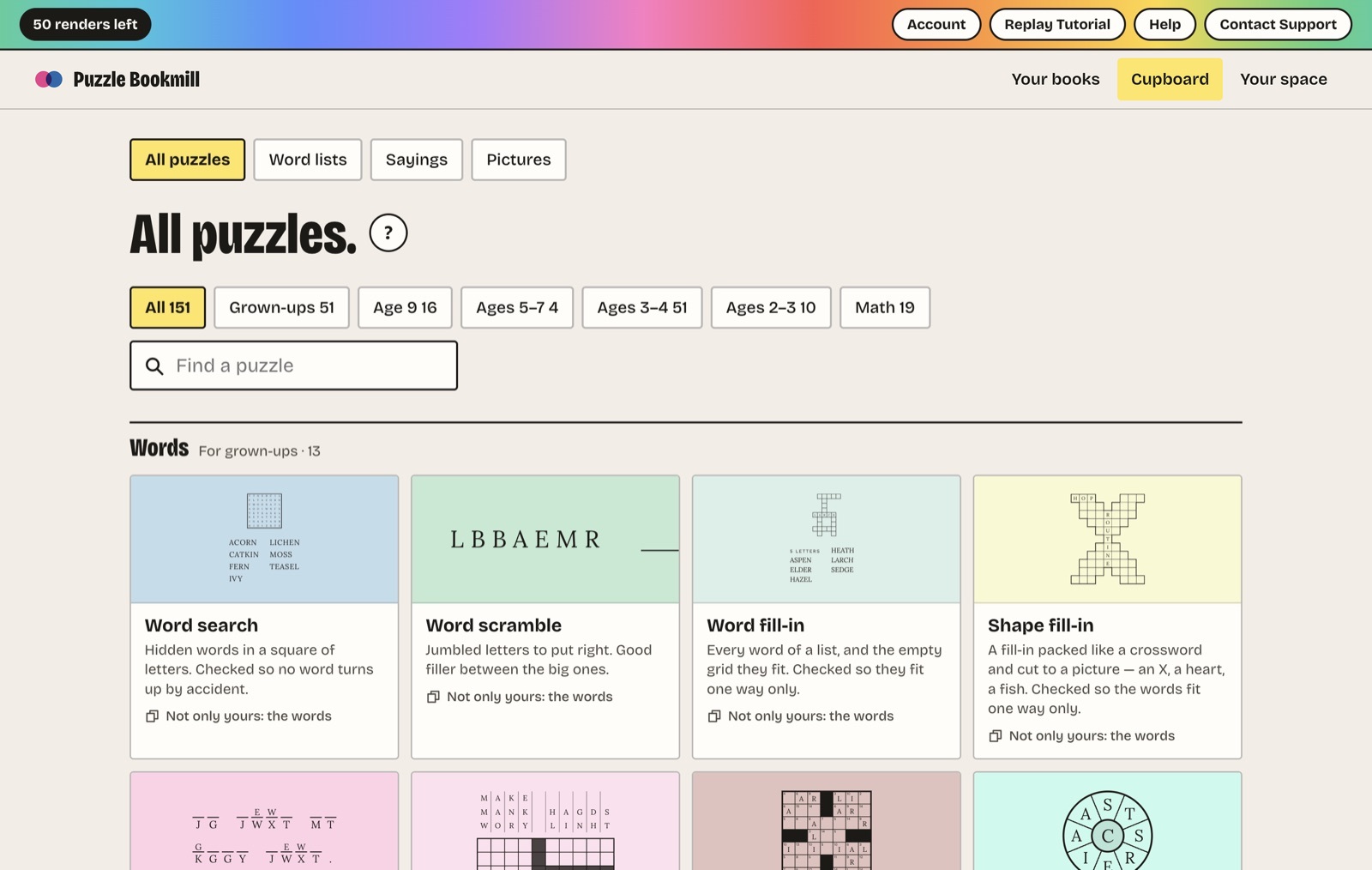
Word searches, mazes, sudoku, cryptograms, logic grids, detective puzzles and many more, for grown-ups and for children from age 2 to 9, and math practice for every age from 5 up.
Every puzzle checked
It makes every puzzle, then solves each one again to check it, and measures every page against the margins before you save.
Laid out to the rules
Margins, spine and page counts follow Amazon KDP’s rules for the paper size you pick.
Everything a listing needs
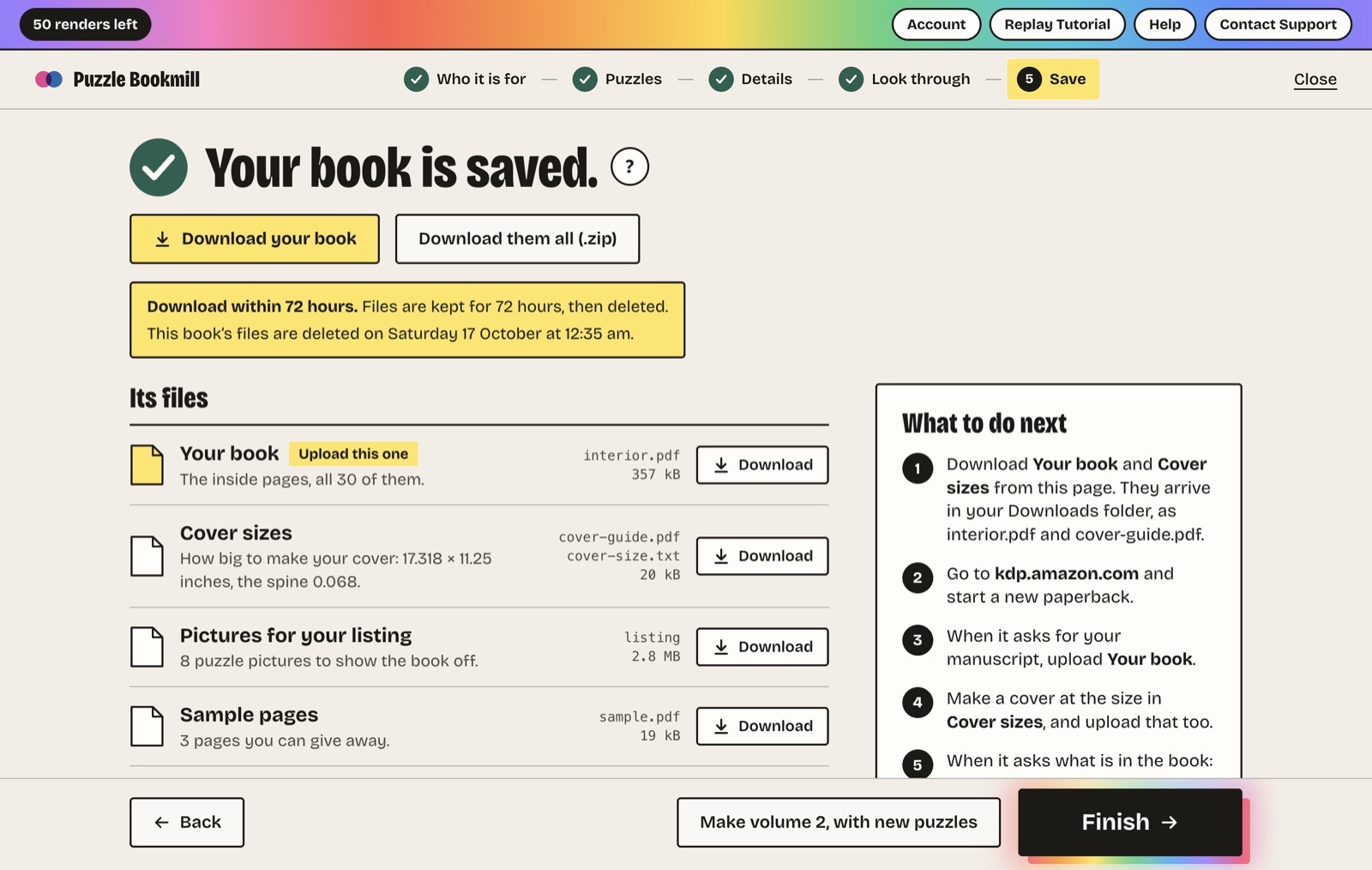
The interior PDF, a sample PDF, pictures for the listing and a guide to the cover’s exact size.
Never the same puzzle twice
It remembers every puzzle it has printed, so a new book does not repeat an old one.
Your own puzzles, or a ready-made book
Click a puzzle to put it in the book, and a panel opens beside it: how many, and how hard. Or take a ready-made book as it is. Then give the book its name.
Change any puzzle
Look through the whole book before you save it. Click a puzzle to swap it for another, or to make it easier or harder.
Nothing to install
Puzzle Bookmill runs in your browser. Sign in, and the first time a tutorial points at what to click. Skip it if you like: Replay Tutorial, in the bar at the top, plays it again.
The puzzles
151 kinds, every one by name.
The underlined kinds have a page further up the page, on the wall or under Math practice: press one to see it.
- 51Grown-ups
- 16Age 9
- 4Ages 5–7
- 51Ages 3–4
- 10Ages 2–3
- 19Math practice
For grown-ups 51
Words · 13
- Word search
- Word scramble
- Word fill-in
- Shape fill-in
- Cryptogram
- Drop quote
- Codeword
- Word wheel
- Word ladder
- Letter grid
- Odd word out
- Rebus
- Categories
Newspaper · 4
- Typesetter
- Word weave
- Word pyramid
- Word spiral
Logic · 8
- Nonogram
- Star Battle
- Shikaku
- Binairo
- Bridges
- Battleships
- Minesweeper
- Murder mystery
Detective · 10
- Crime scene
- Line-up
- Blind spot
- Safe cracker
- Night visit
- Snapshots
- The trail
- Fingerprints
- Torn photographs
- Coded note
Mazes · 4
Pictures and drawing · 5
- Connect the dots
- Detailed dot-to-dot
- Spot the difference
- How to draw
- Cursive letters
Classics · 2
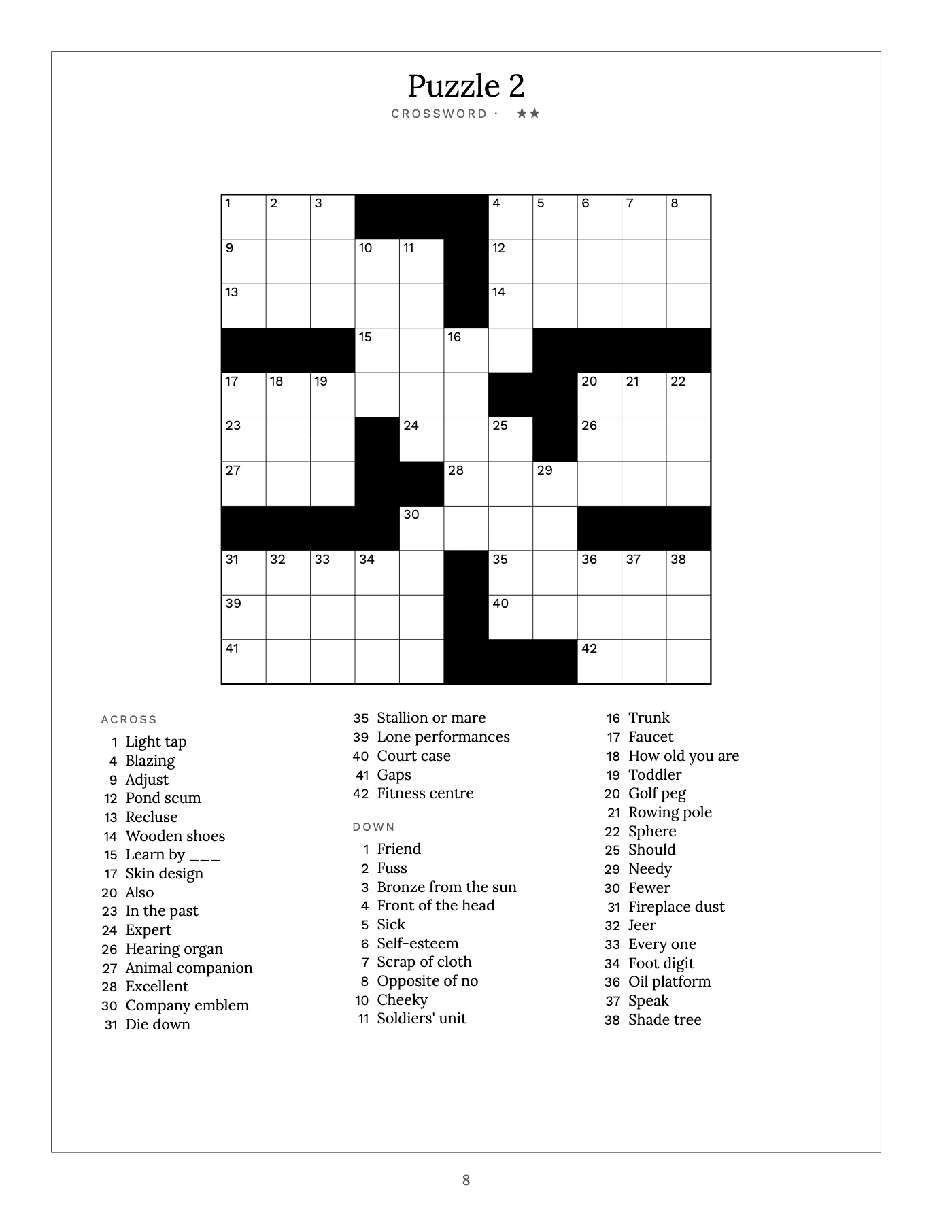
- Crossword
- Paper games
For children 81
Age 9 · 16
- Secret code
- Word ladder
- Words in a word
- Typesetter
- Word weave
- Word pyramid
- Word spiral
- Math maze
- Number pyramid
- Math cages
- Math squares
- Logic grid
- Mystery picture
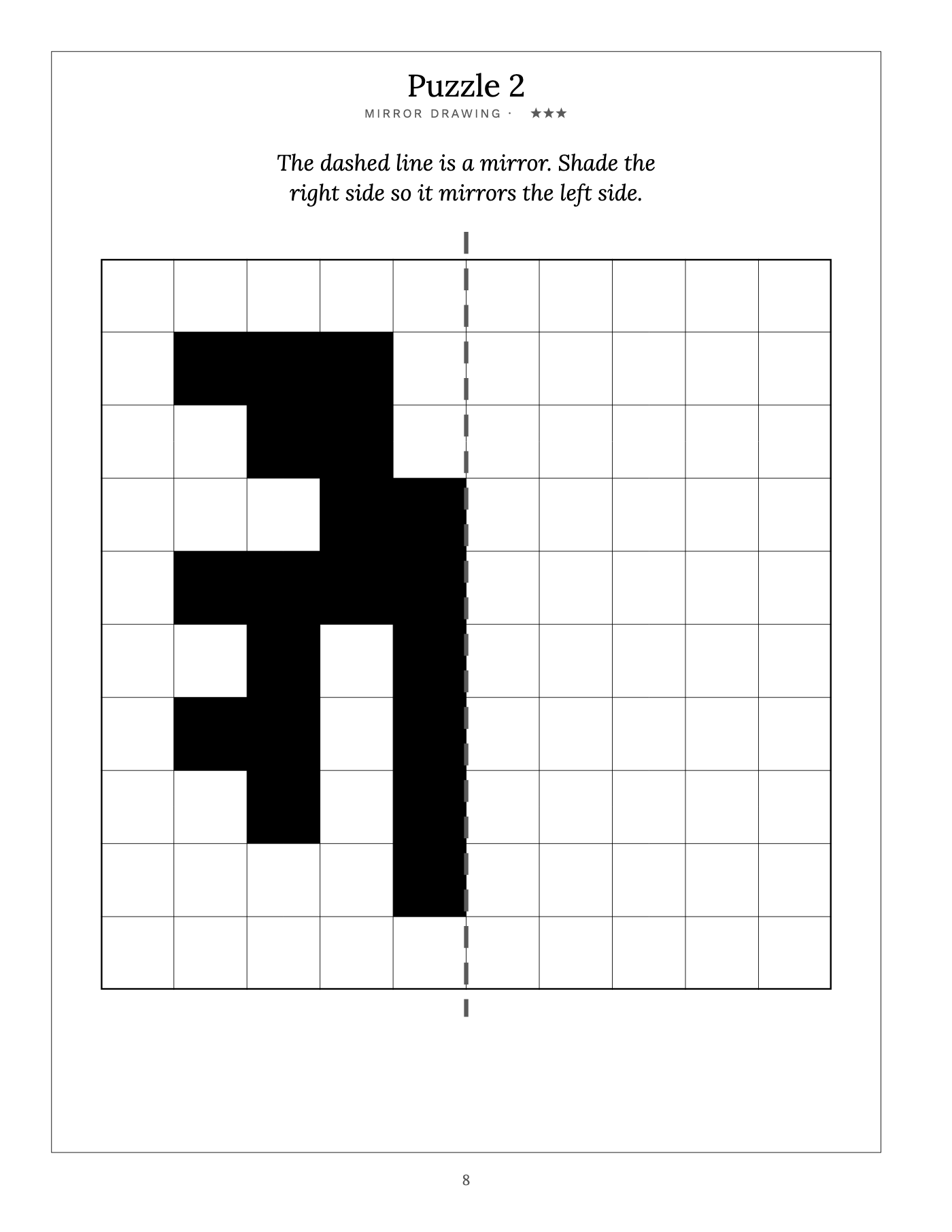
- Mirror drawing
- Spot the difference
- Picture maze
Ages 5–7 · 4
- Trace the letters
- Sight words
- Picture word search
- First sums
Ages 3–4: tracing and drawing · 11
- Trace the lines
- First strokes
- Trace the picture
- Draw the other half
- Trace the numbers
- Dot to dot to 10
- Dot markers
- Draw the spots
- Copy the picture
- Hidden picture
- Finish the picture
Ages 3–4: looking and matching · 14
- Shadow match
- Odd one out
- Spot the difference
- Shape hunt
- I spy
- Match the halves
- Find the pairs
- Who has gone?
- Upside down
- Which way?
- Peekaboo
- Close-up
- Missing piece
- Match the patterns
Ages 3–4: counting and sizes · 14
- Count them
- Which has more?
- Match the number
- Number train
- Number hunt
- First graph
- One each
- Shape robots
- Big and small
- The right size
- Towers
- Long and short
- Full and empty
- Seesaw
Ages 3–4: thinking and finding the way · 12
- Sort them
- What goes together?
- What comes next?
- Oops!
- Picture sudoku
- Where is it?
- Bigger in real life
- Follow the line
- Find the way
- Picture path
- Stepping stones
- Follow the arrows
Ages 2–3 · 10
- Colour it in
- Colour the parts
- Trace the shapes
- Stay on the road
- Dot the trail
- Find the same
- Big and little
- One, two, three
- Which shape?
- Happy or sad?
Math practice, for every age 19
Adding and taking away · 2
Times and dividing · 3
- Multiplication
- Division
- Times tables
Mixed and negative · 3
- Mixed operations
- Order of operations
- Negative numbers
Fractions, decimals and percents · 3
- Fractions
- Decimals
- Percentages
Powers, roots and equations · 3
- Exponents
- Square roots
- Equations
Numbers and time · 5
- Comparing numbers
- Place value
- Rounding
- Number patterns
- Telling time
What comes out
One folder, with everything a book needs.
You may sell the books you make with Puzzle Bookmill.
The interior PDF
The whole book, as a printer wants it.
A sample PDF
A few pages to give away.
Printable PDFs
The book for a home printer, on Letter and on A4, if you ask for them.
Listing pictures
Eight single puzzles for the photographs on a listing.
A cover size guide
The spine and the whole cover measured out, for whoever makes the cover.
A check report
Every check and its numbers, with the book’s other files.
Good to know
Three numbers, said plainly.
Each is said in the app too, where it matters, and a bar at the top of every page says how many renders you have left.
280 pages
The most a book can have. Puzzle Bookmill says so wherever it counts a book’s pages, and does not save a longer one.
50 renders
One render is one book saved into its files. Your account has 50, shared by the apps on your licence, and your first book in each app is free: it does not use a render. Looking through a book, swapping its puzzles and downloading it again use none.
72 hours
Download within 72 hours. A saved book’s files are kept for 72 hours, then deleted. The book itself stays in Your books, and saving it again makes its files again, which uses another render.
It goes on sale when it is ready.
Puzzle Bookmill runs in a browser now, and is being tried out by its first few users. It is not on sale yet, and there is no date for that.
For people whose licence key names Puzzle Bookmill.
No key yet? Write to hello@bookpublishingsystems.com and ask to be one of the first users.
Also from Book Publishing Systems
Writing a book, not a puzzle book?
AI Writer writes a full-length book, chapter by chapter, on your own AI account. Compositor turns your manuscript into a print book and an ebook for KDP, in your own browser. Both are on a page of their own, with the other software.
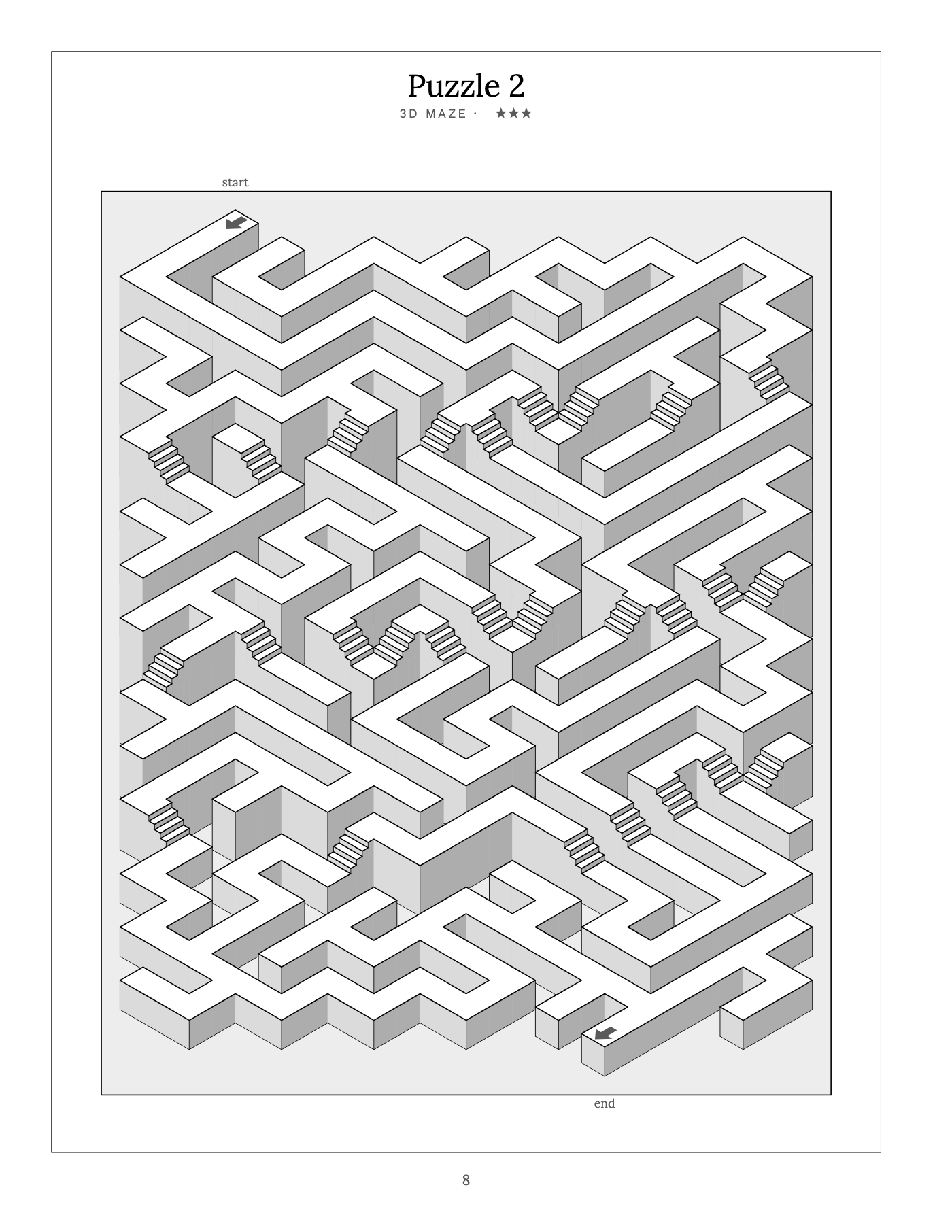
Mazes and drawing · 2 of 22
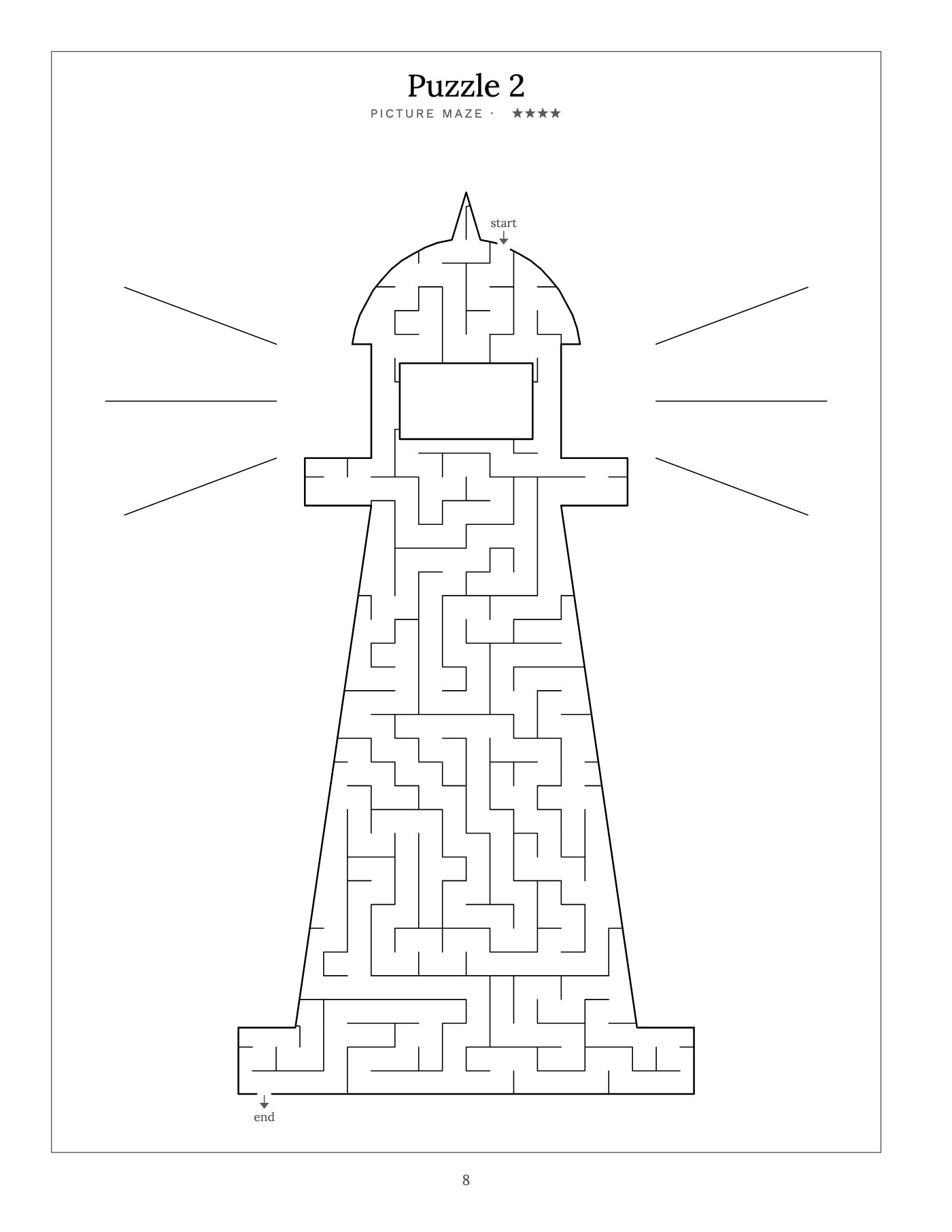
Picture maze
A maze cut to the shape of a picture. This one is a lighthouse.
Mazes and drawing · 3 of 22
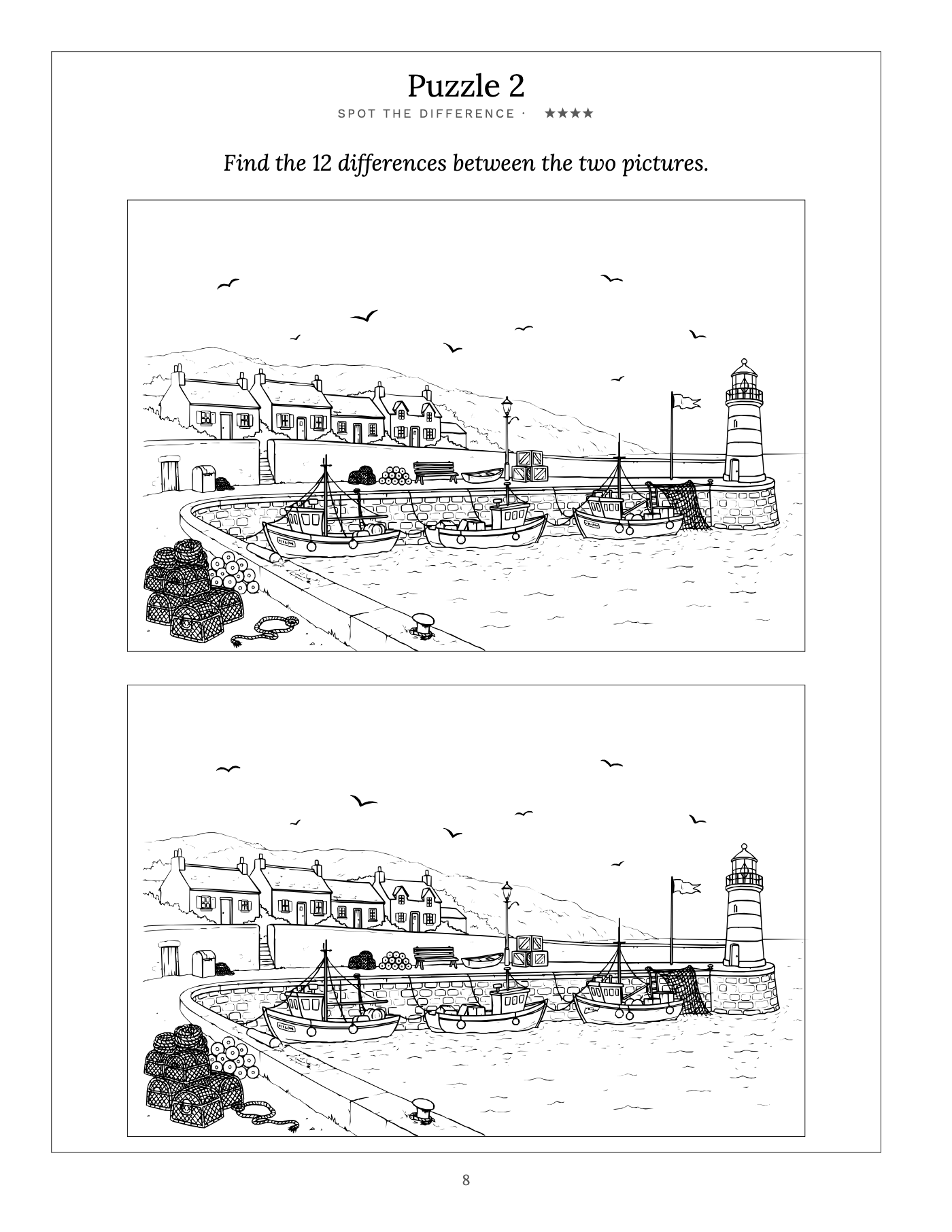
Spot the difference
Two detailed drawings, and twelve things changed between them.
Detective · 5 of 22
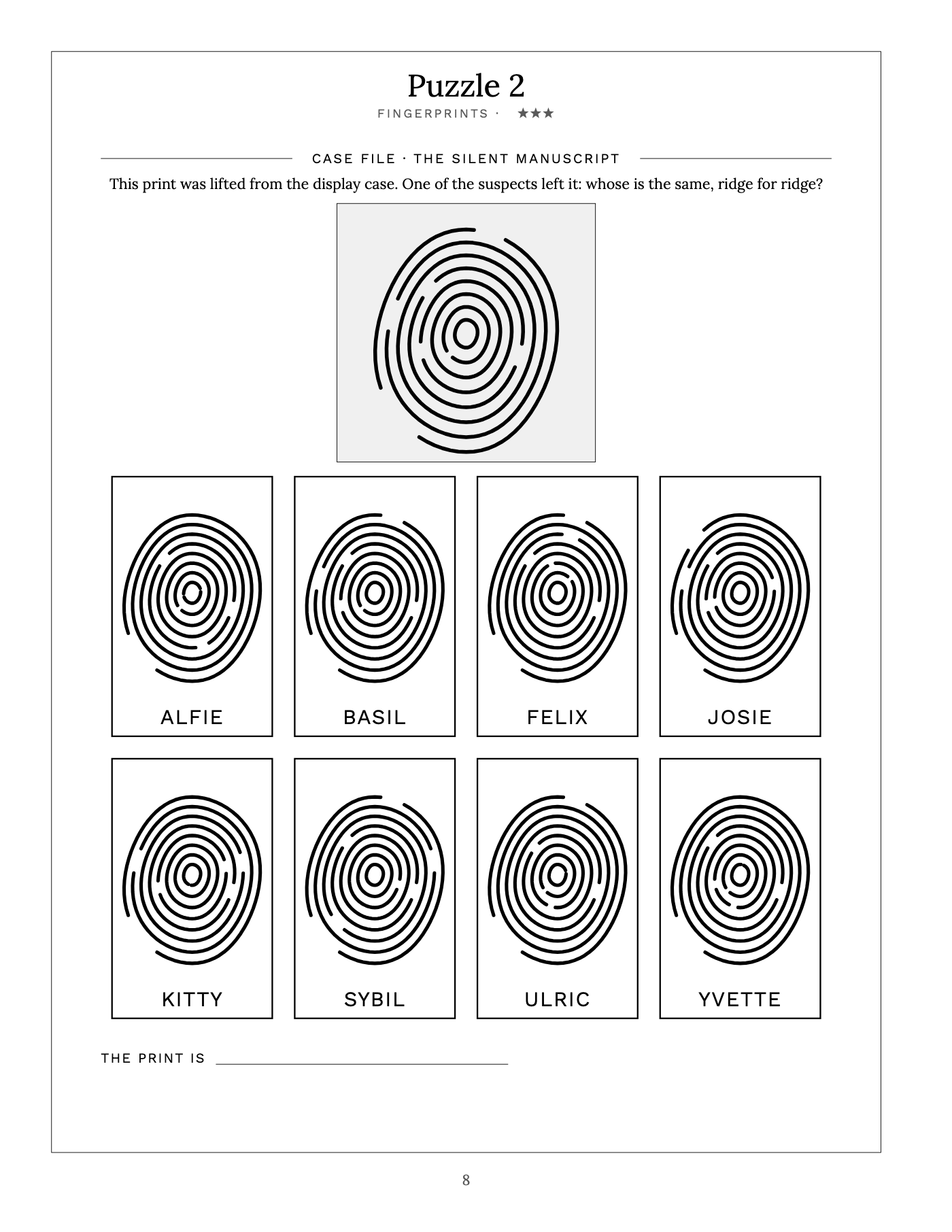
Fingerprints
One print from the scene, eight suspects. Whose is it, ridge for ridge?
Mazes and drawing · 6 of 22
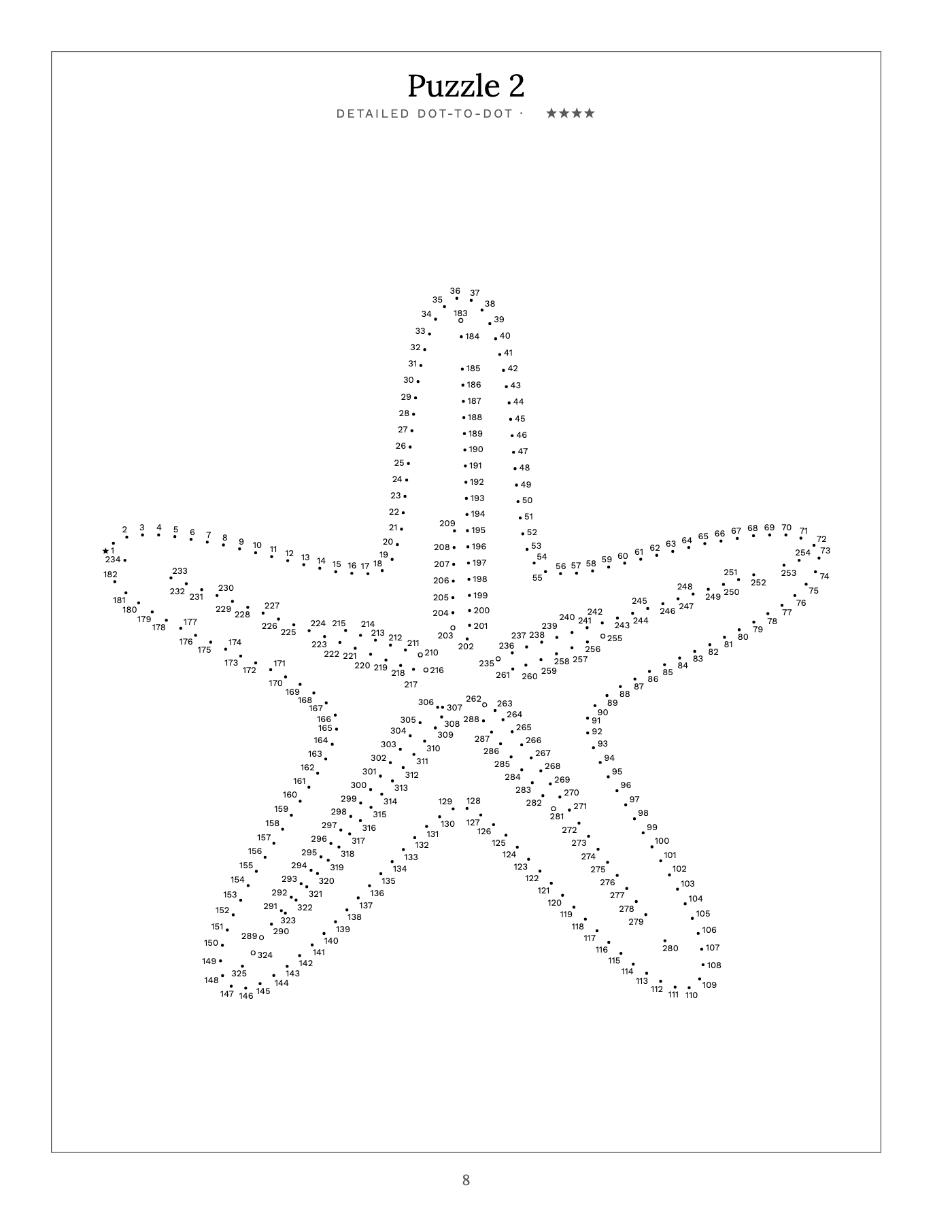
Detailed dot-to-dot
Hundreds of numbered dots. This one becomes a starfish.
Detective · 7 of 22
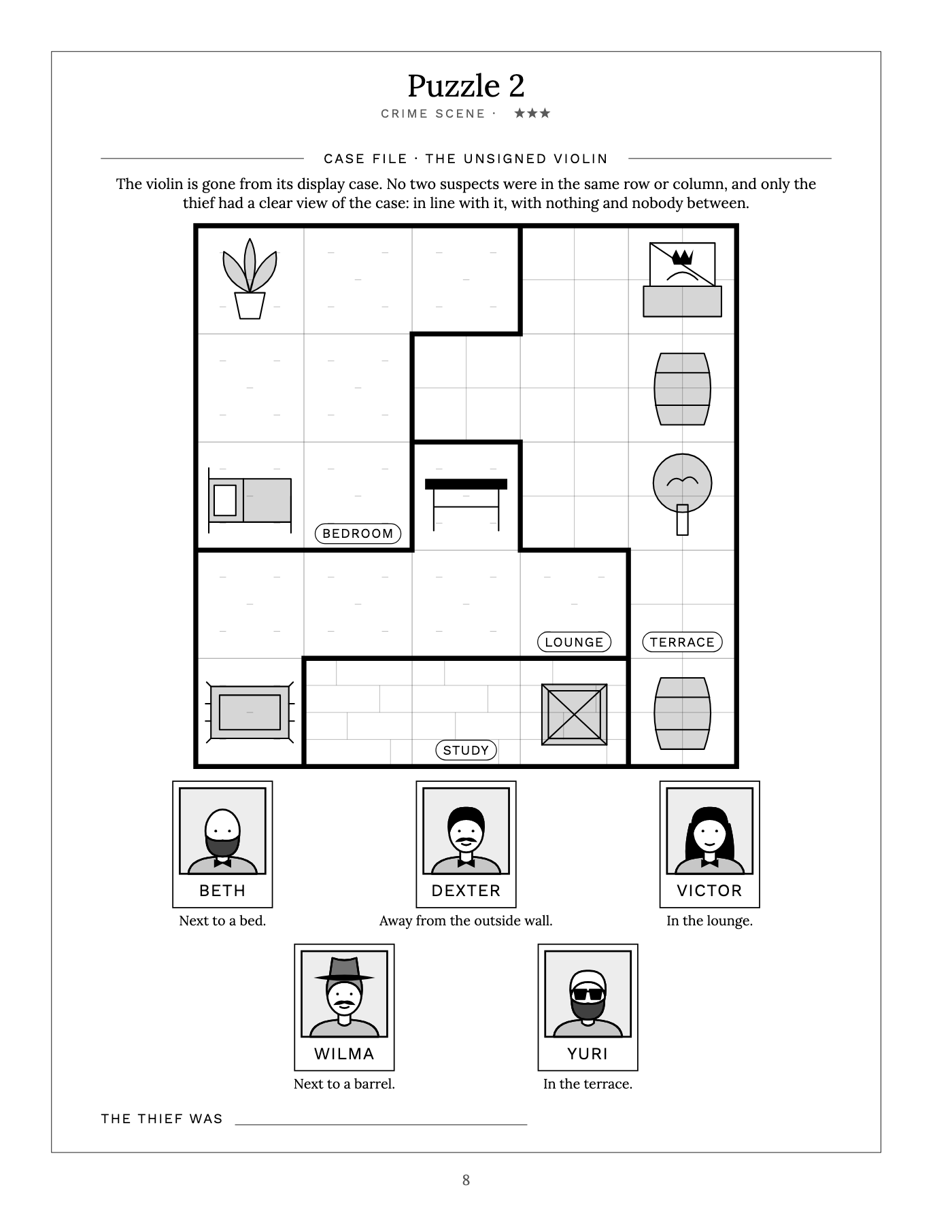
Crime scene
A plan of the rooms, five suspects, and where each one says they were.
Mazes and drawing · 8 of 22
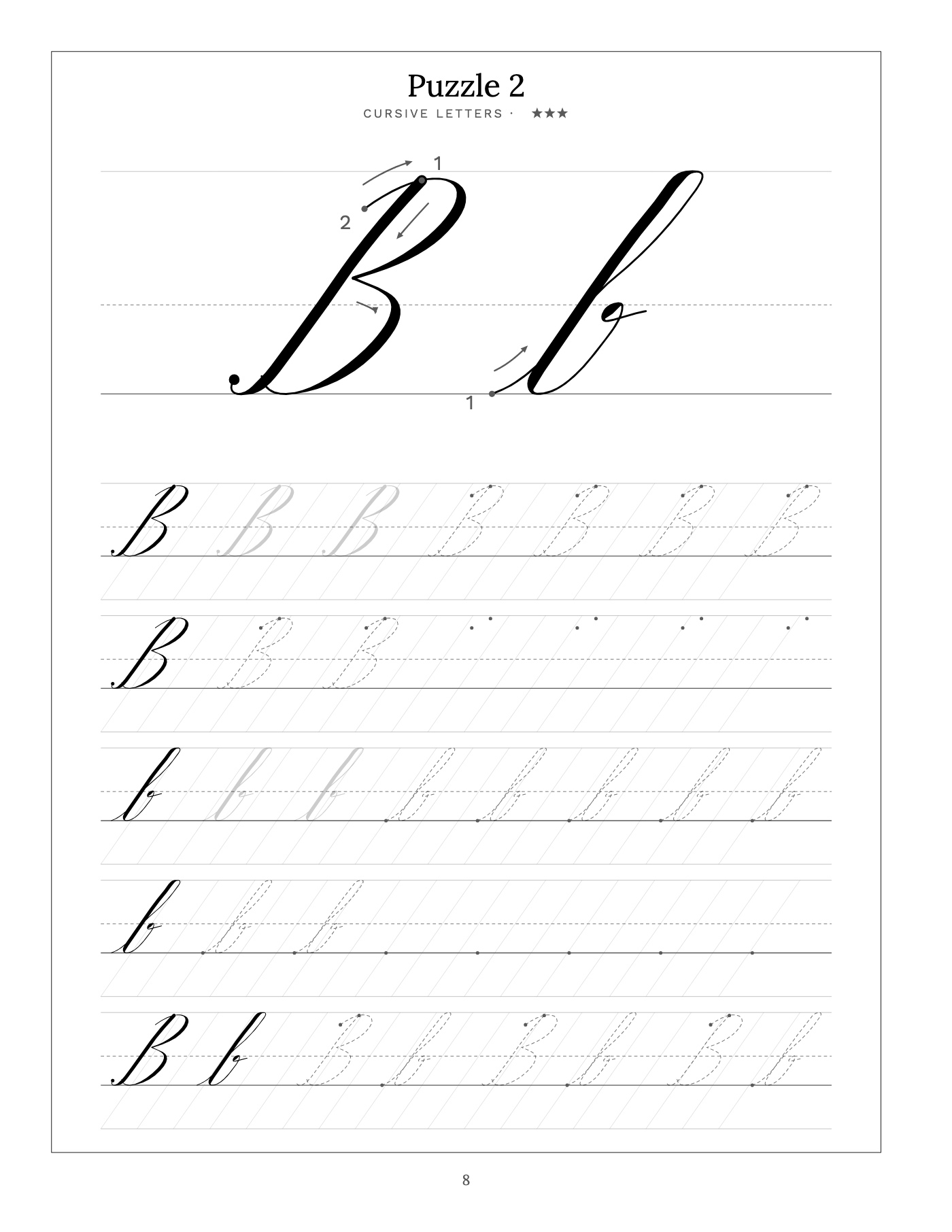
Cursive letters
A letter a page, with its strokes numbered and rows to practise on.
Detective · 11 of 22
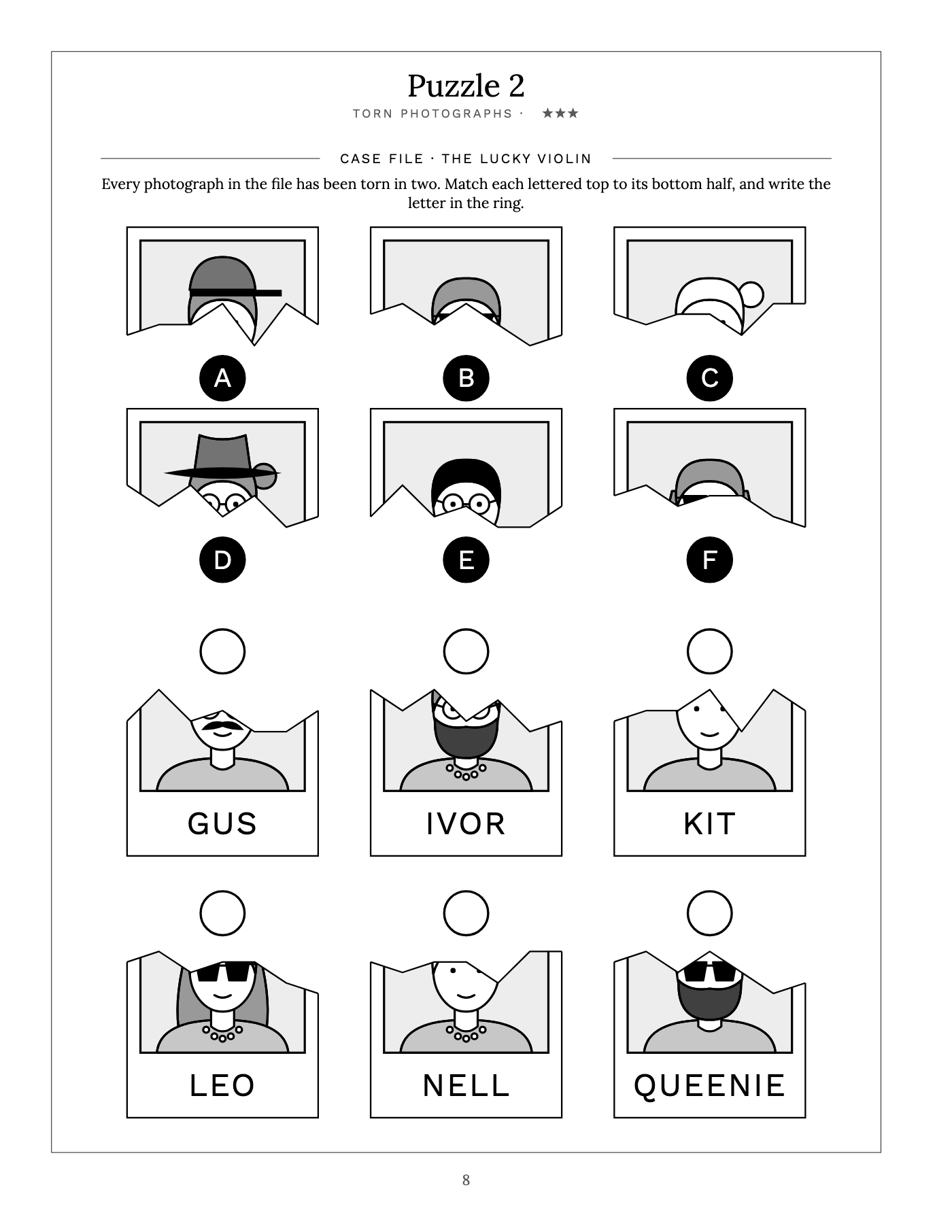
Torn photographs
Every photograph in the file has been torn in two. Match the halves.
Detective · 16 of 22
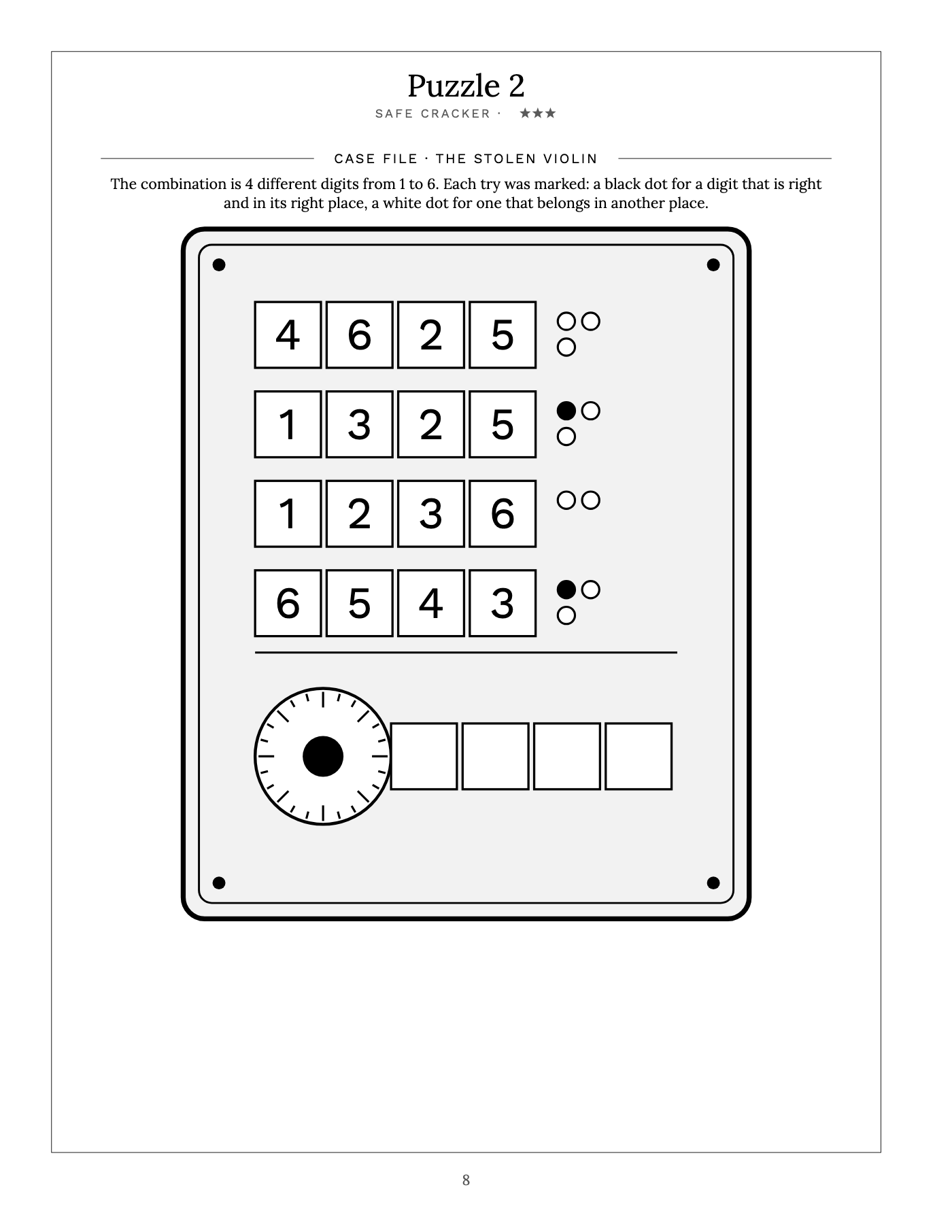
Safe cracker
Four tries at the combination, each one marked. Work out the real one.
Puzzle Bookmill, in a browser
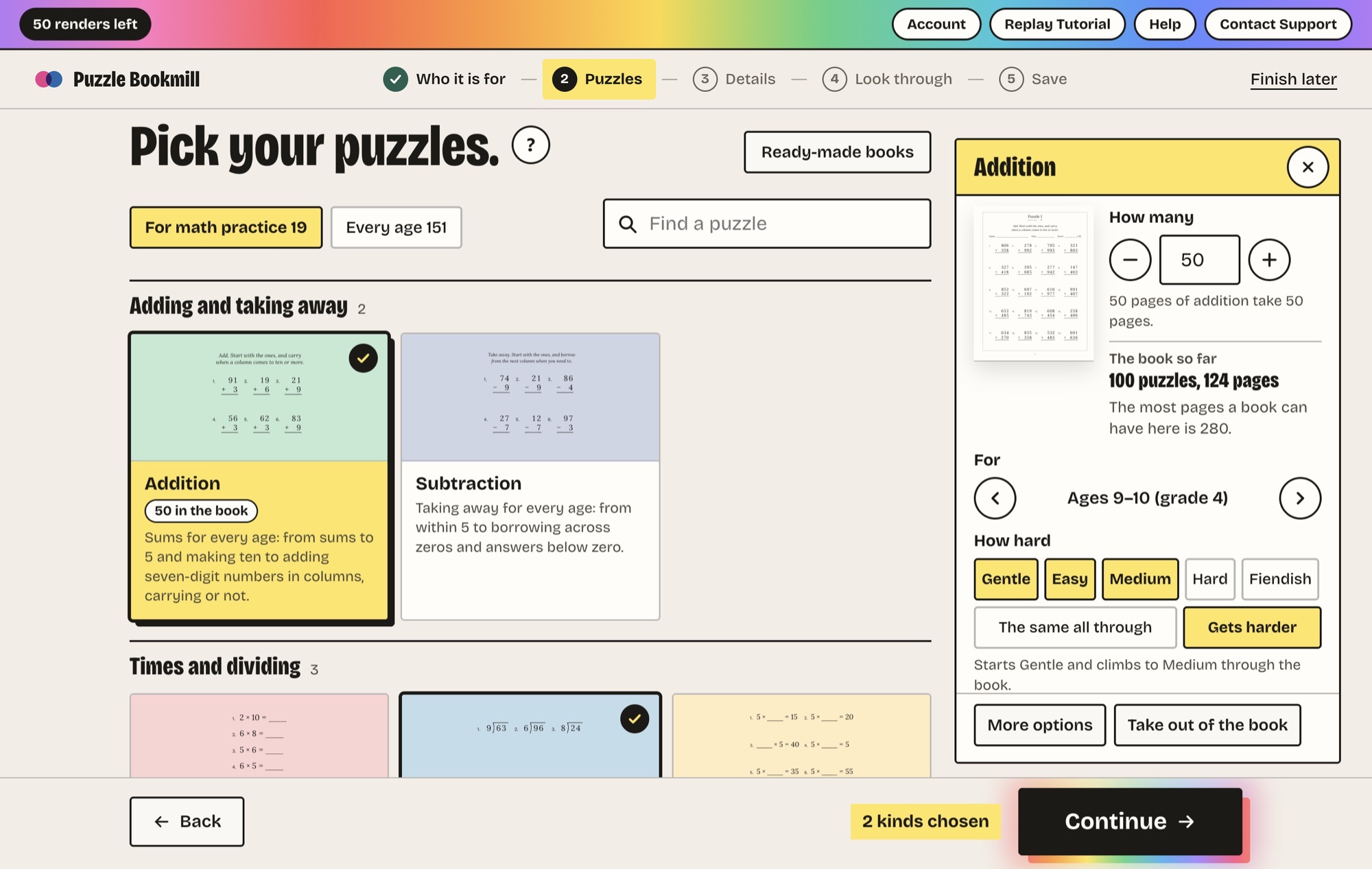
The age, asked first
Pick a math kind, and its panel asks who it is for, beside how many and how hard.
Puzzle Bookmill, in a browser
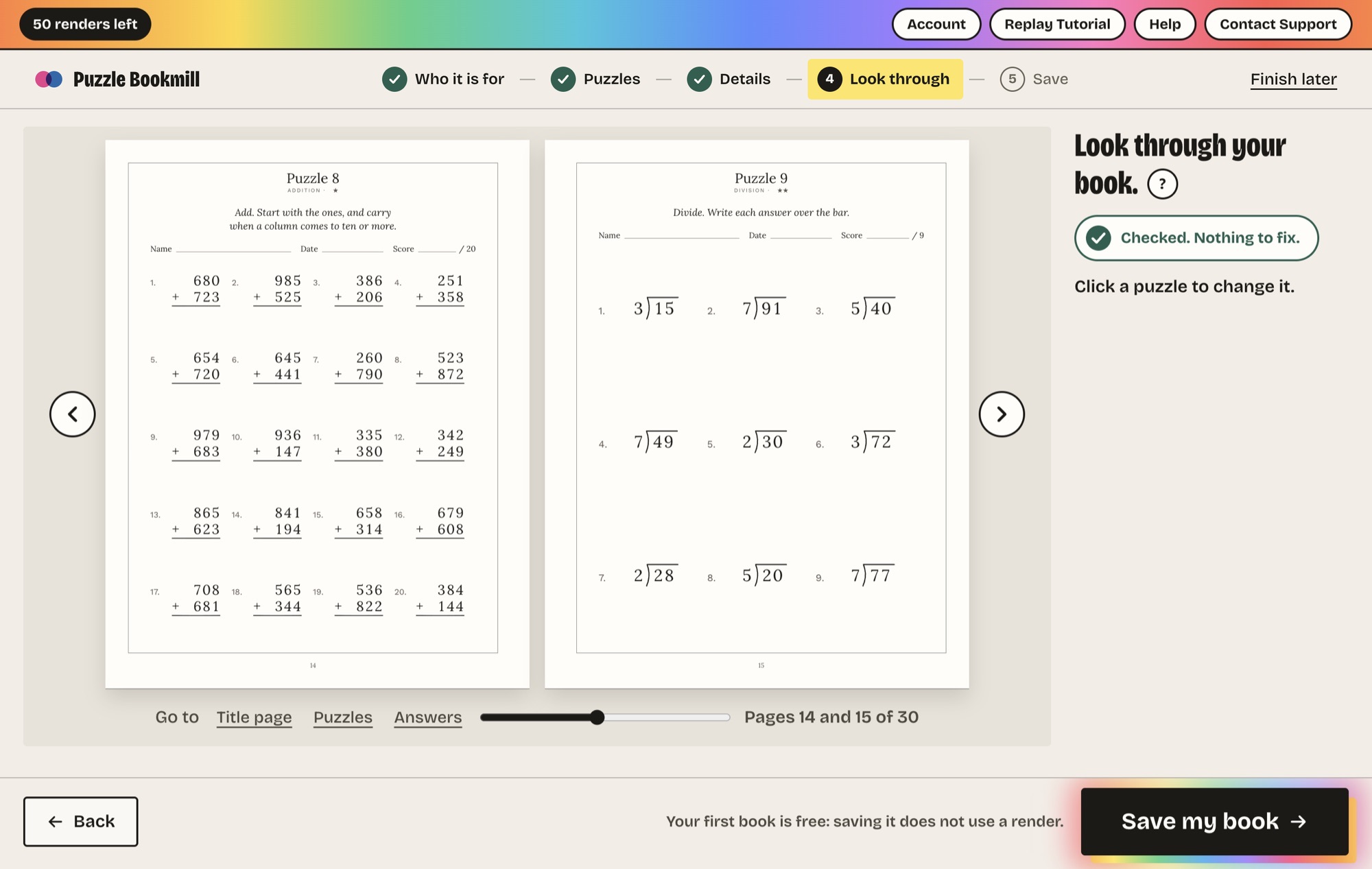
A math book, made and checked
Addition in columns beside long division, for ages 9 to 10, open at step 4 of 5.
Puzzle Bookmill, in a browser
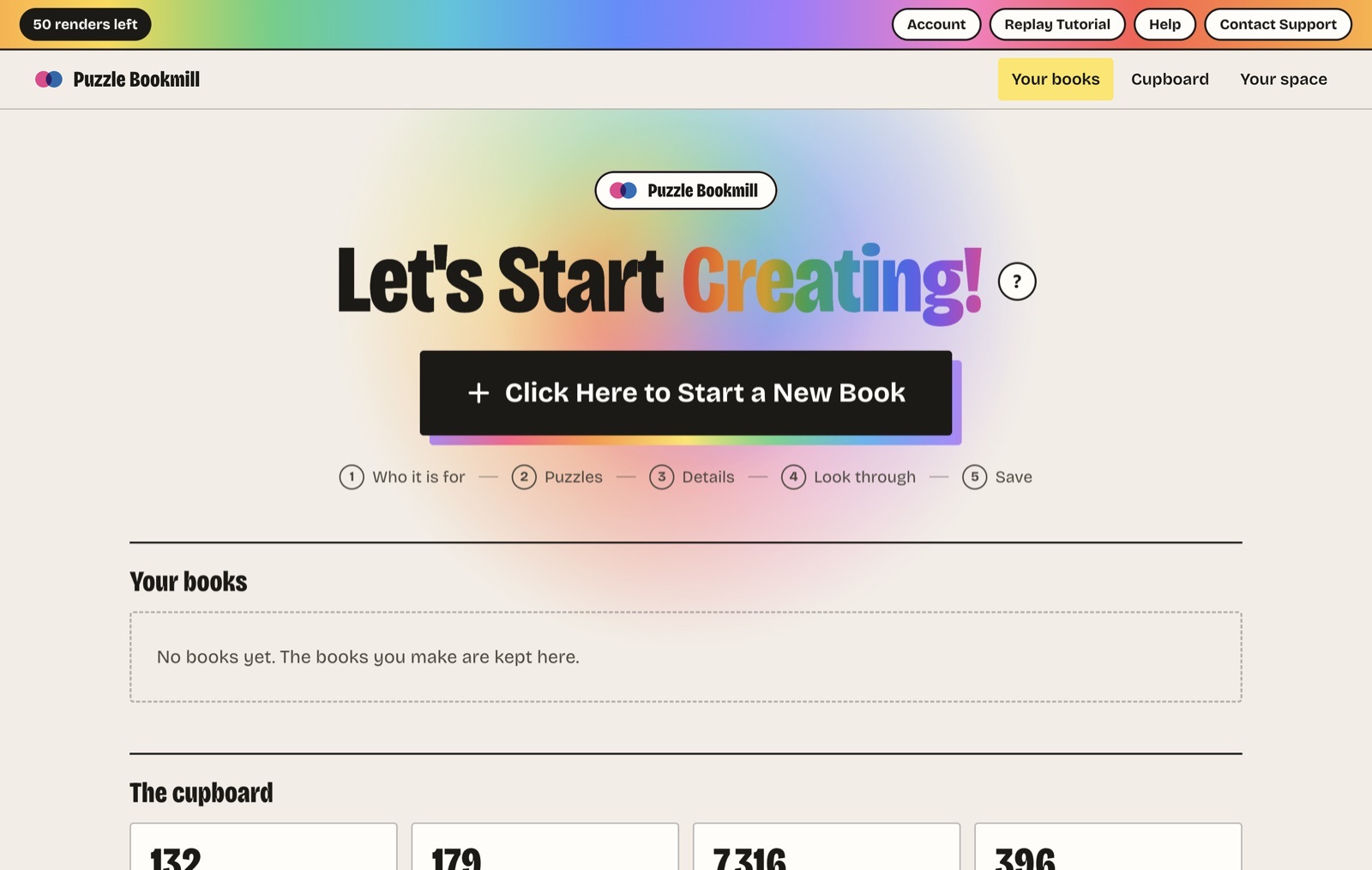
Welcome
The first thing you see: “Let’s Start Creating!” and one big button to start a new book. Your books are kept under it.
Puzzle Bookmill, in a browser
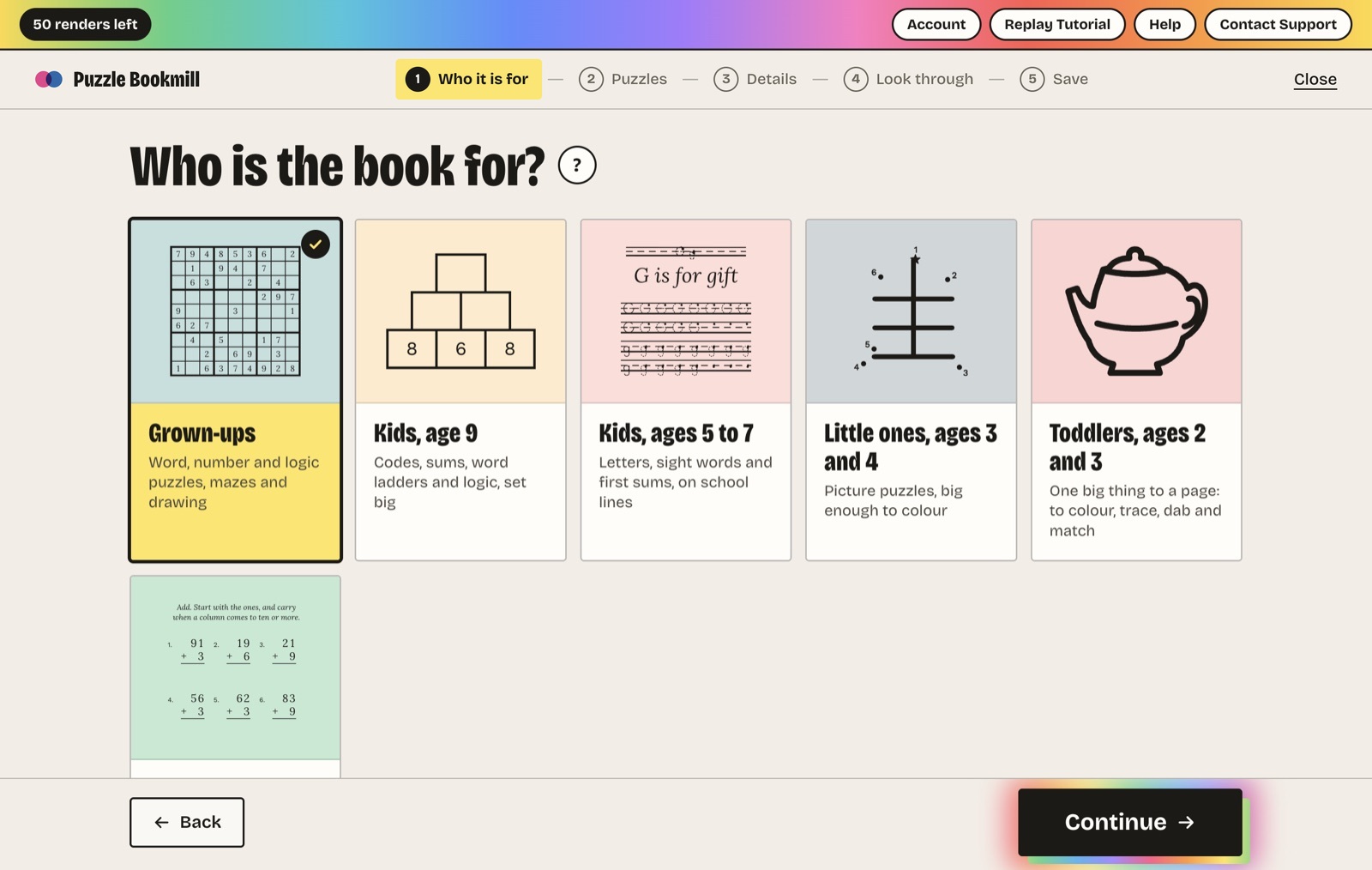
1 · Who it is for
Grown-ups, children of an age, or math practice for any age. It decides which puzzles you are offered.
Puzzle Bookmill, in a browser
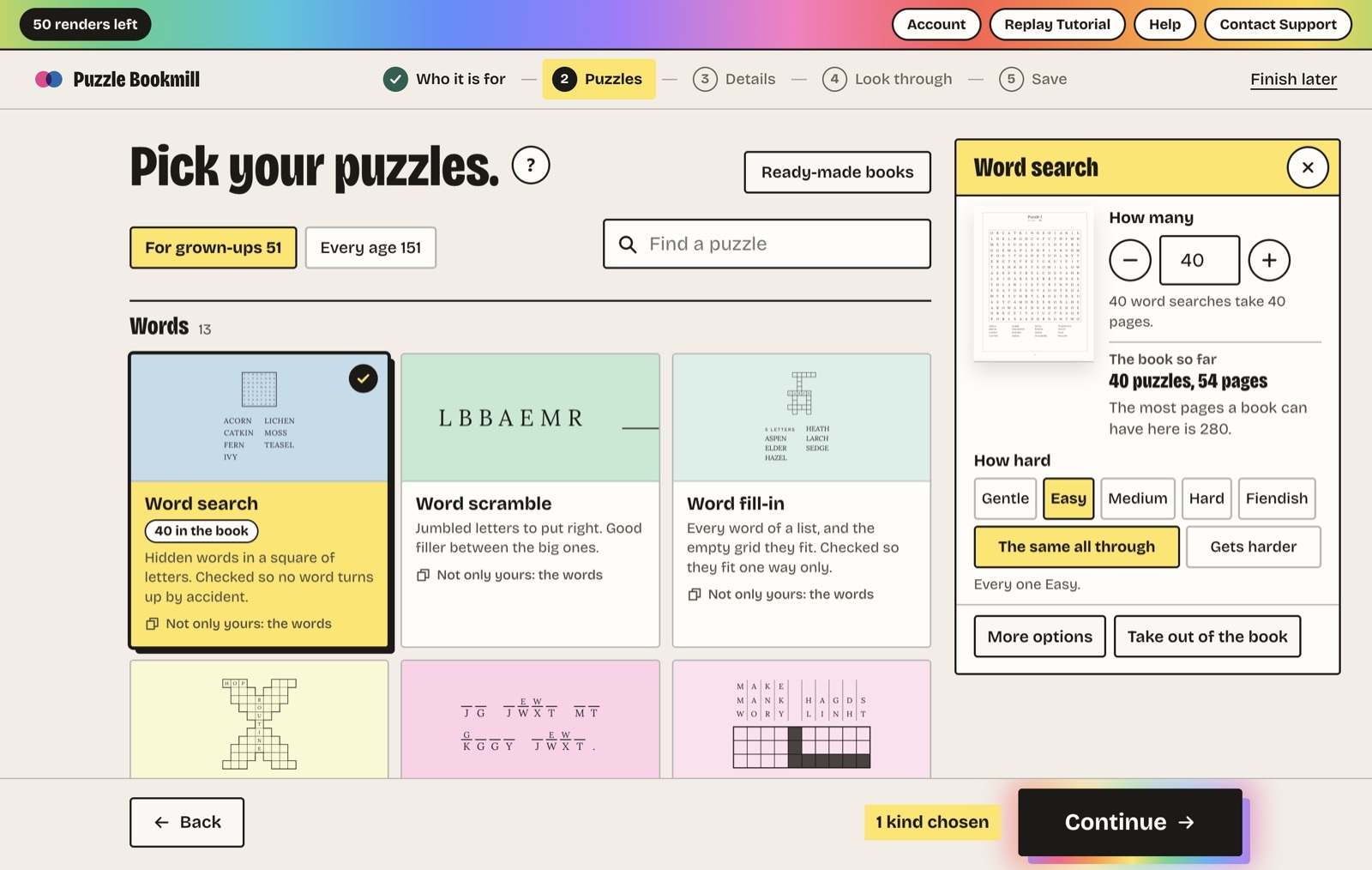
2 · Puzzles
Click a puzzle to put it in the book, and a panel opens beside it: how many, and how hard. Ready-made books are a button away.
Puzzle Bookmill, in a browser
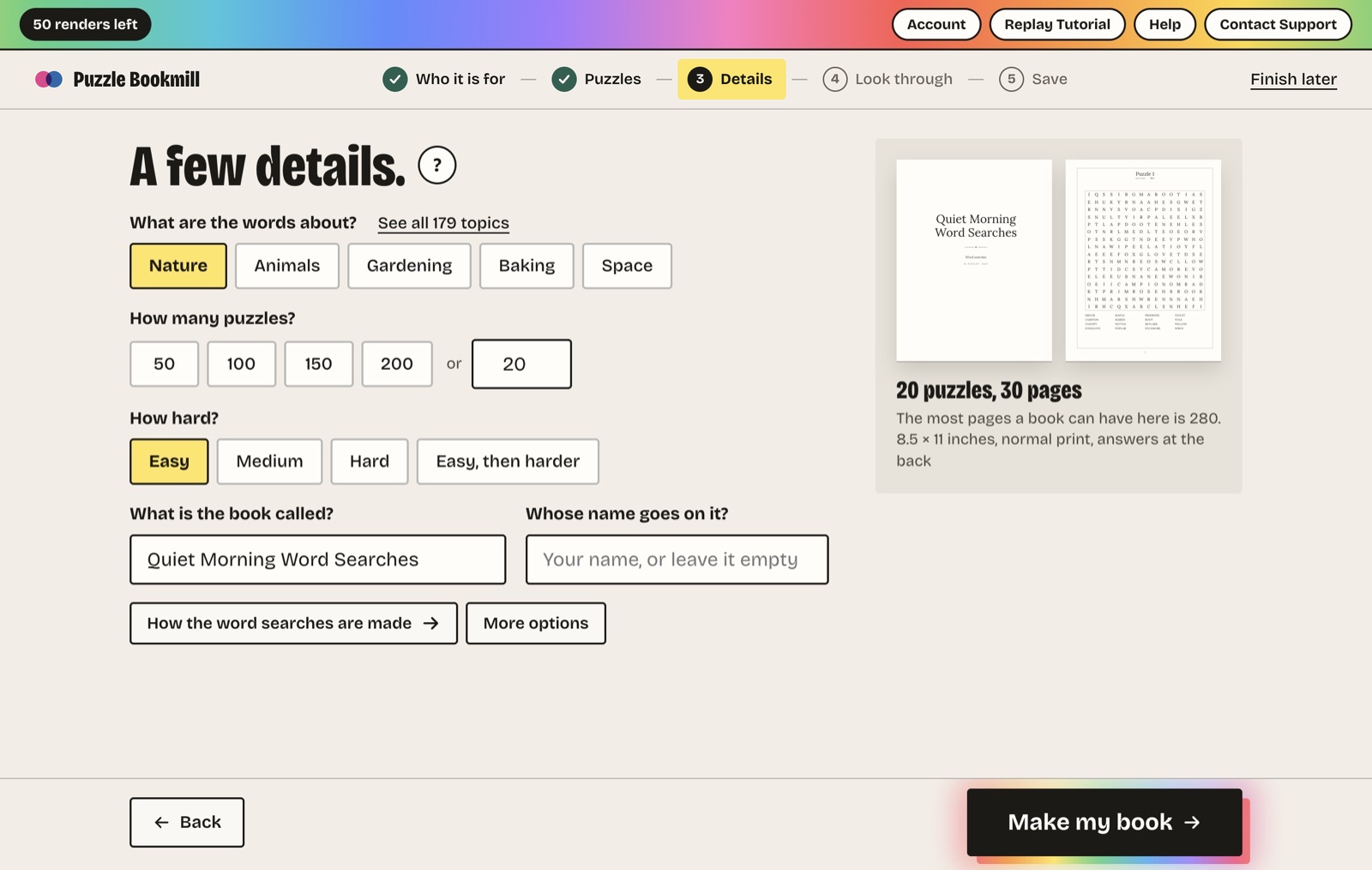
3 · Details
How many puzzles, how hard, and what the book is called, with two of its pages beside the questions, and the most pages a book can have, 280.
Puzzle Bookmill, in a browser
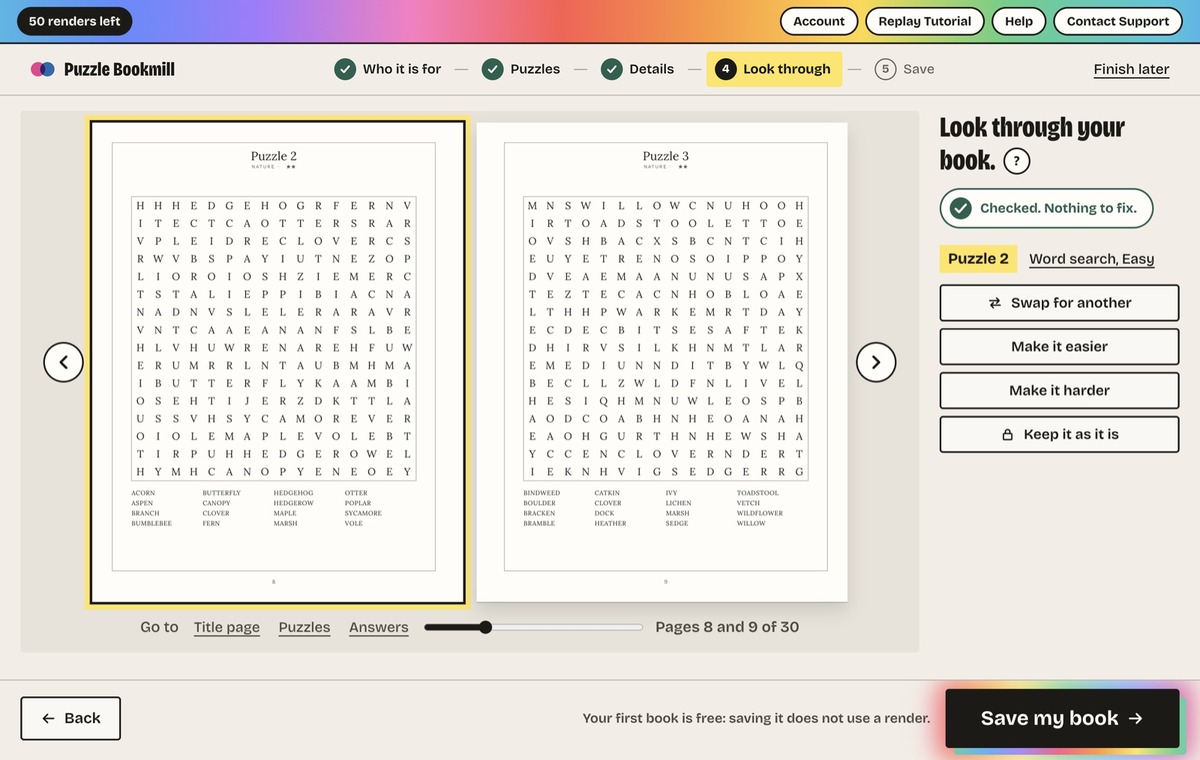
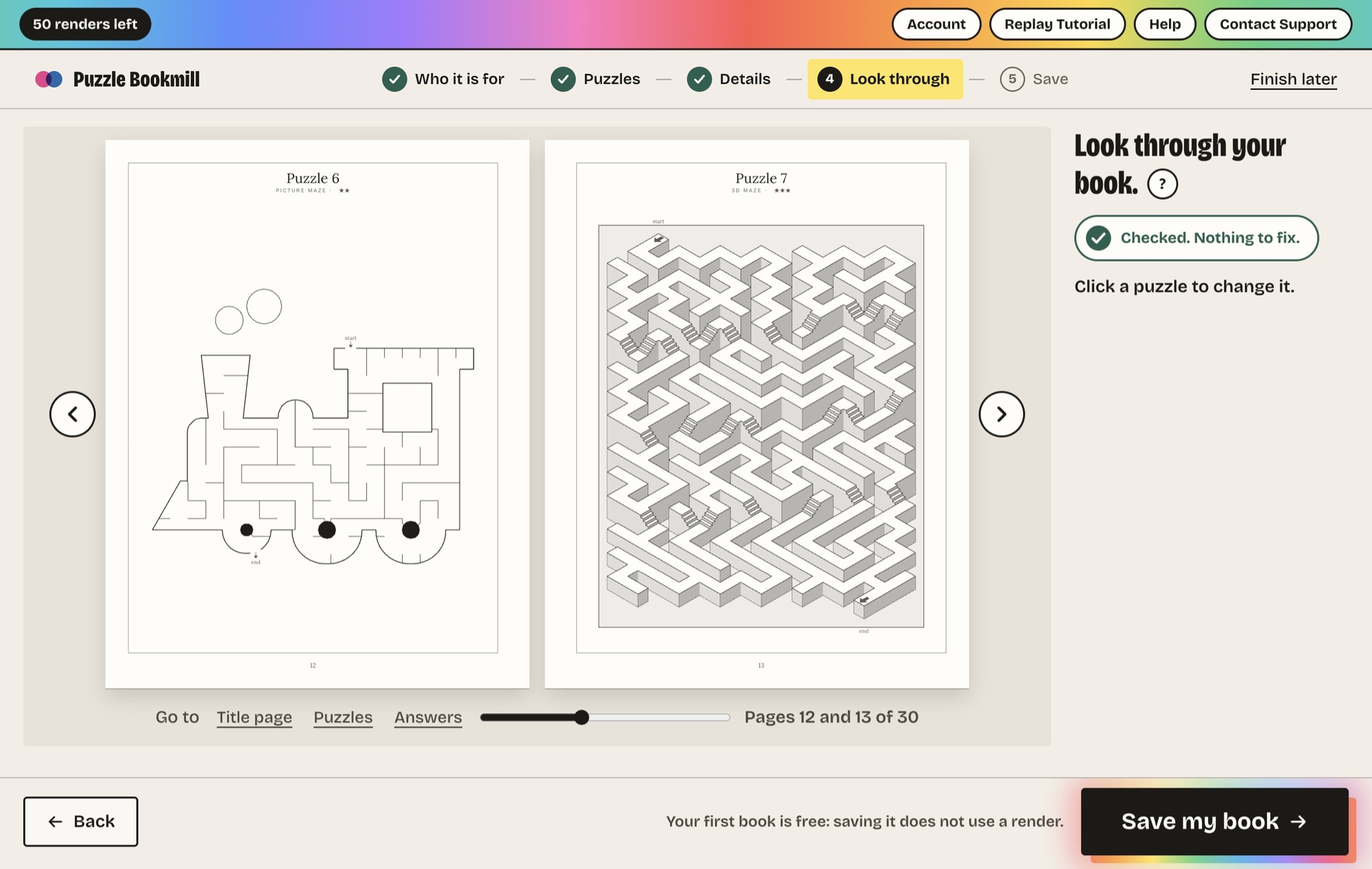
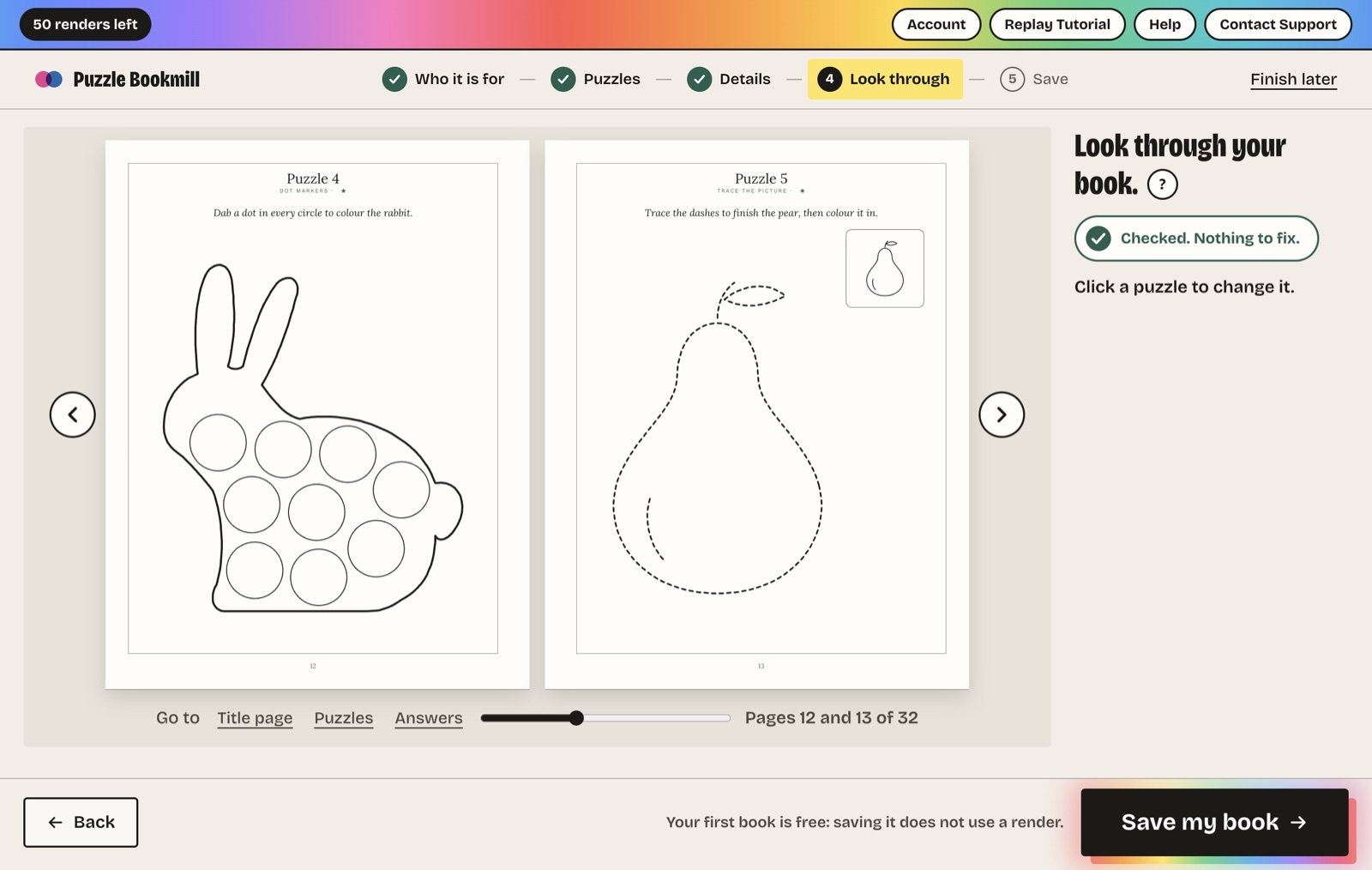
4 · Look through
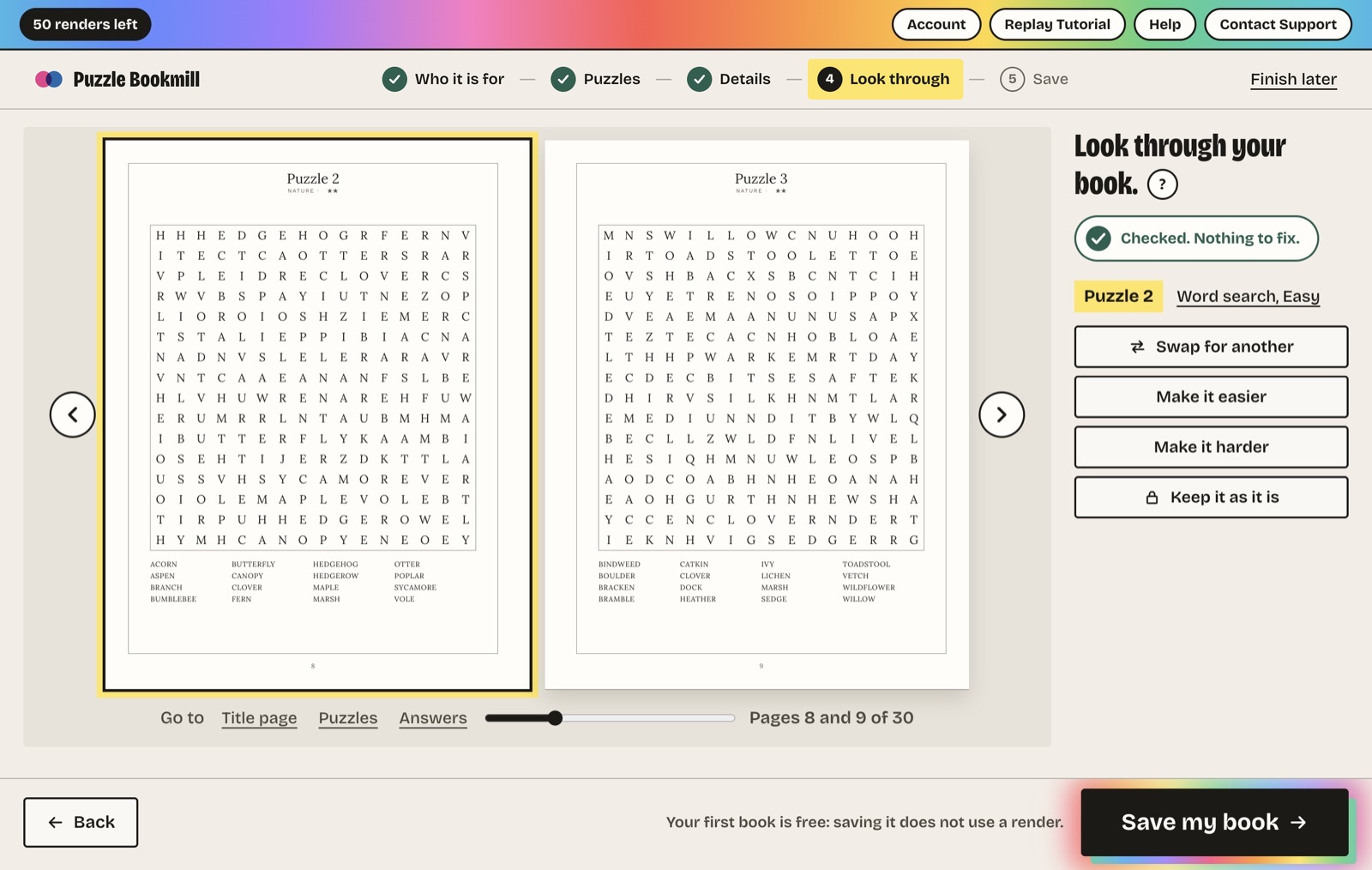
The whole book, made and checked, to look through page by page. This one is a book of mazes.
Puzzle Bookmill, in a browser
5 · Save
The files, listed and ready to download, and what to do with them next. A band says they are kept for 72 hours, then deleted, and when.
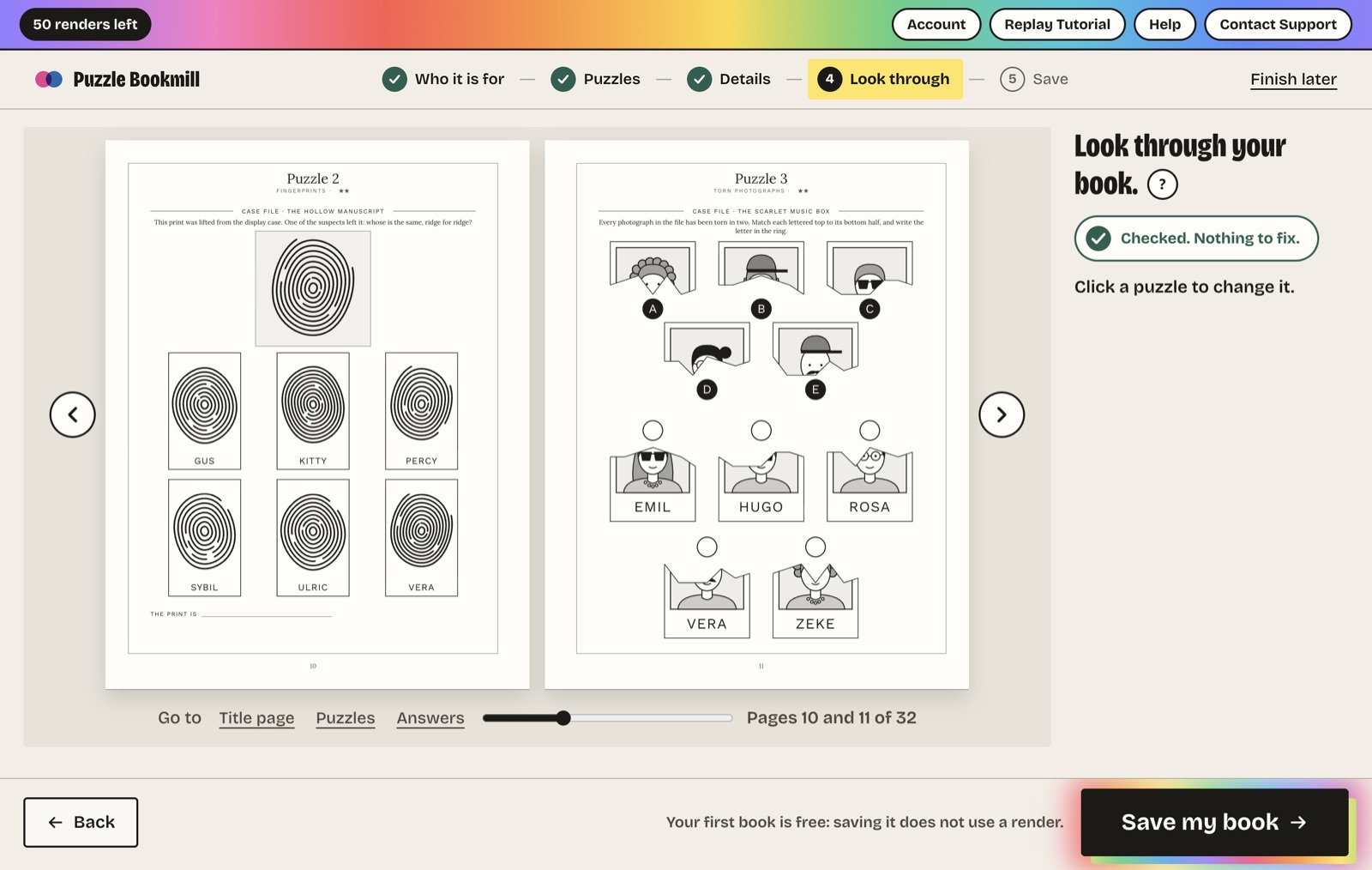
Puzzle Bookmill, in a browser
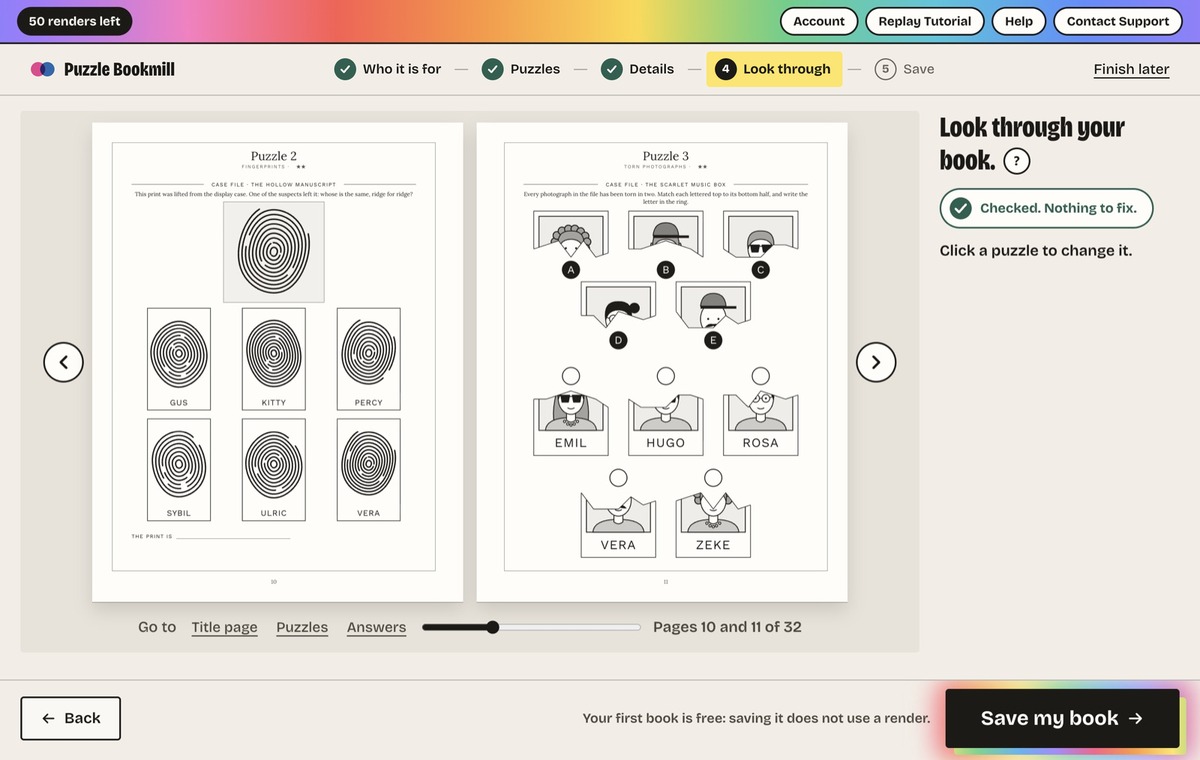
A book of detective puzzles
Fingerprints, torn photographs, line-ups and crime scenes: four of the ten Detective kinds.
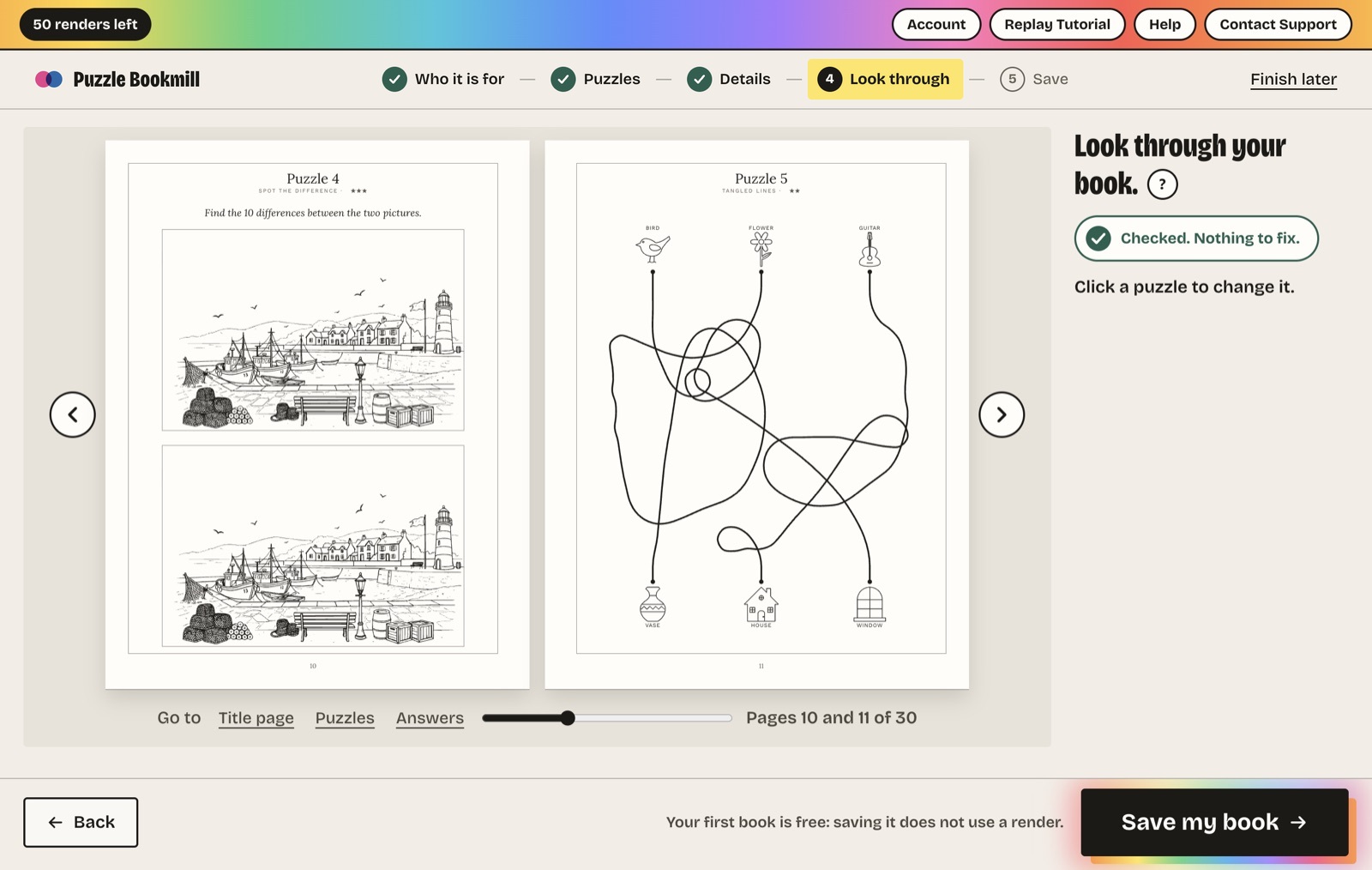
Puzzle Bookmill, in a browser
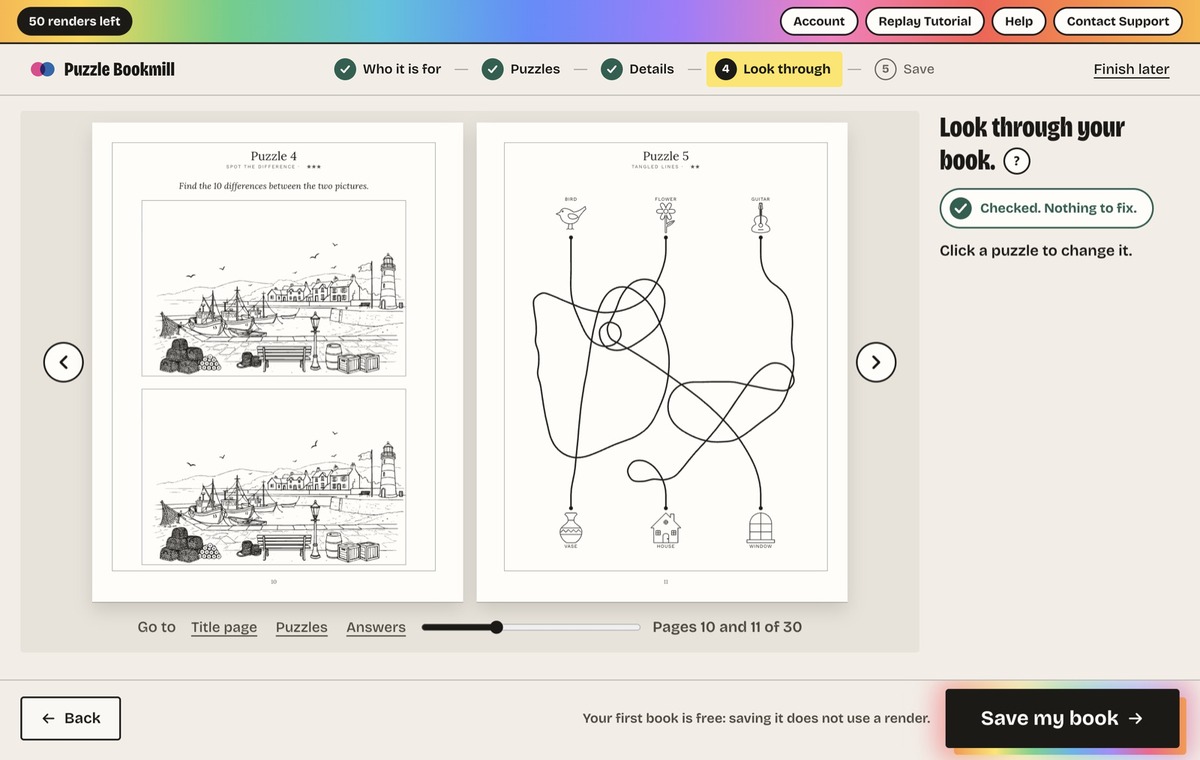
A book for sharp eyes
Spot the difference and tangled lines, side by side.
Puzzle Bookmill, in a browser
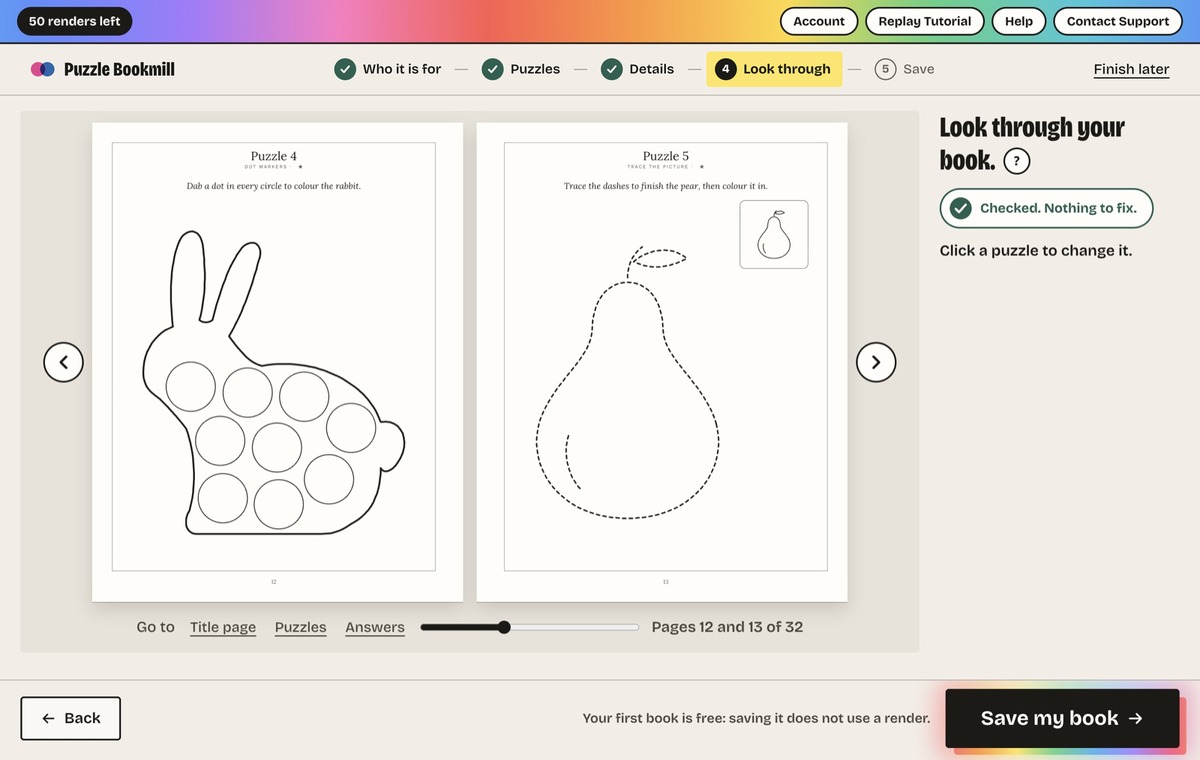
A first puzzle book
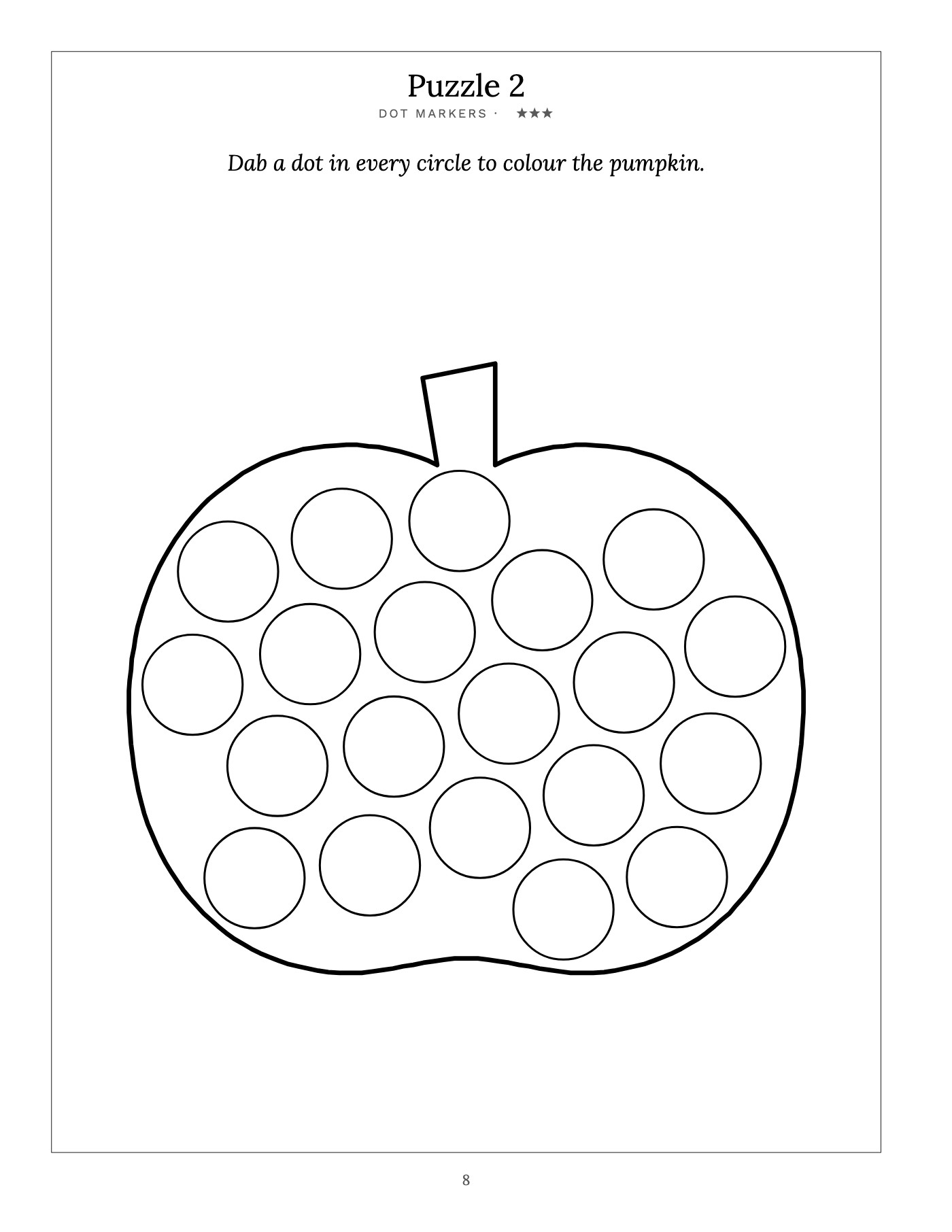
For ages 3 and 4: shadows to match, pictures to trace, dots to dab.